
In This Article
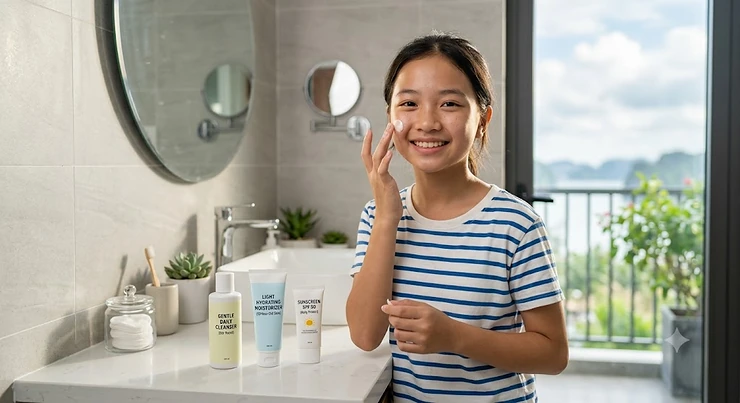
A skincare routine for a 13 year old should be simple: a gentle cleanser, a lightweight moisturizer, and daily sunscreen — nothing more. That’s it. No ten-step routines, no acid peels, no anti-aging serums borrowed from mom’s bathroom shelf.
Thirteen is a strange in-between age for skin. Hormones are starting to shift, oil production is ramping up, and for a lot of kids, the first whiteheads and blackheads show up right around this time. According to the American Academy of Dermatology, acne affects roughly 85% of adolescents at some point — so if your teen is dealing with their first breakouts, they’re in very good company.
The tricky part for parents is sorting through the noise. Walk down a beauty aisle (or scroll a few minutes of skincare content online) and it’s easy to come away thinking a 13 year old needs retinol, vitamin C serum, and a six-step glass-skin routine. They don’t. What growing skin actually needs is consistency with a small number of gentle, well-formulated products — and that’s exactly what this guide is built around.
Below, you’ll find seven real, currently available products that cover the basics: cleansing, moisturizing, sun protection, and the occasional pimple. There’s a budget-friendly option in nearly every category, plus a couple of premium picks for families who want a product made specifically with teen skin in mind.
Quick Comparison: Best Skincare Picks for a 13 Year Old
| Product | Category | Best For | Price Range |
|---|---|---|---|
| CeraVe Foaming Facial Cleanser | Cleanser | Normal-to-oily, breakout-prone skin | $10–$14 |
| Cetaphil Gentle Skin Cleanser | Cleanser | Dry, sensitive, easily irritated skin | $10–$13 |
| Bright Girl Day+Bright Facial Moisturizer | Moisturizer | First-time users, sensitive/acne-prone skin | $15–$20 |
| CeraVe AM Facial Moisturizing Lotion SPF 30 | Moisturizer + Sunscreen | Streamlined 2-in-1 routines | $14–$17 |
| Neutrogena Sheer Zinc Oxide Dry-Touch Sunscreen SPF 50 | Sunscreen | Sensitive skin, dedicated sun protection | $10–$13 |
| Mighty Patch Original | Spot Treatment | Occasional whiteheads | $12–$16 |
| Aquaphor Lip Repair + Protect SPF 30 | Lip Care | Sun protection for lips | $4–$7 |
Looking at this table, you’ll notice there’s no single “best” product — there’s a best product per step. A normal-to-oily 13 year old is usually better served by the CeraVe cleanser, while a tween with dry or reactive skin will do better starting with Cetaphil. The two moisturizer options aren’t competitors either: the CeraVe AM lotion is a smart 2-in-1 for mornings, while the Bright Girl moisturizer is built specifically for younger skin and pairs well with a separate dedicated sunscreen at night-to-day handoff.
✨ Worth Bookmarking If you’re putting together a first skincare kit, start with just three things from this list — a cleanser, a moisturizer, and a sunscreen. Add the spot patches and lip balm once the basics are a habit.
How to Choose Skincare for a 13 Year Old: 6 Things That Actually Matter
What is a good skincare routine for a 13 year old? A good routine is two or three steps, used consistently: a gentle, fragrance-free cleanser once or twice a day, a lightweight moisturizer, and a broad-spectrum SPF 30+ sunscreen every morning. Acne treatments are added only as needed, in low concentrations.
Beyond that basic structure, here’s what to actually look for on a label:
- Fragrance-free, not just “unscented.” Added fragrance is one of the most common causes of irritation in younger, more reactive skin — “unscented” products can still contain masking fragrance.
- Non-comedogenic. This means the formula is designed not to clog pores, which matters a lot once oil production increases during puberty.
- Low or no active acids to start. Save salicylic acid, benzoyl peroxide, and retinoids for if/when breakouts actually appear — and start at the lowest available strength.
- Broad-spectrum SPF 30 or higher. The FDA recommends broad-spectrum sunscreen of at least SPF 15, but most dermatologists suggest 30+ as the realistic daily minimum, since most people apply less than the tested amount.
- Texture your teen will actually tolerate. A great formula that feels greasy or stings will get abandoned within a week — texture preference is a legitimate factor, not a vanity issue.
- A brand with a track record in sensitive or pediatric skincare. CeraVe, Cetaphil, and Neutrogena all have decades of dermatologist recommendations behind them, which matters more for growing skin than trend-driven brands.
The 7 Best Products for a Teen Skincare Starter Kit
1. CeraVe Foaming Facial Cleanser
CeraVe Foaming Facial Cleanser stands out for combining a foaming texture — which most teens actually enjoy using — with a formula gentle enough not to strip young skin.
The cleanser is built around three ceramides, hyaluronic acid, and niacinamide. In practice, that means it removes the extra oil that ramps up during puberty without leaving skin feeling tight or squeaky-clean afterward — a sensation that’s often mistaken for “working” but actually signals a damaged moisture barrier. The gel-to-foam texture also makes it easy for a 13 year old to use correctly without overdoing it.
For a teen whose skin has gotten noticeably oilier or who’s started getting occasional breakouts on the forehead or nose, this is the logical starting cleanser. It’s not medicated, so it won’t over-treat skin that doesn’t need it, but it does a genuinely good job managing shine through the day. Reviewers across age groups consistently describe it as non-drying even with twice-daily use, and dermatology-focused review sites point to its fragrance-free, ceramide-based formula as a reason it’s frequently recommended for first-time skincare users.
Pros: Fragrance-free; non-comedogenic; widely dermatologist-recommended; gentle enough for daily AM/PM use Cons: Pump bottle can be slow to prime initially; foam texture may feel light for very oily skin
Price & verdict: In the $10–$14 range depending on size, this is one of the best value-for-money cleansers on the list — a near-default first cleanser for normal-to-oily teen skin.
2. Cetaphil Gentle Skin Cleanser
Cetaphil Gentle Skin Cleanser is the cleanser to reach for when a teen’s skin leans dry, sensitive, or reactive rather than oily.
It’s a creamy, non-foaming, soap-free formula built with glycerin, panthenol (vitamin B5), and niacinamide. The practical difference from a foaming cleanser is real: non-foaming formulas typically clean by lifting away dirt and oil through micellar-style action rather than lathering, which is gentler on skin that’s prone to flaking or redness. It’s also one of the few cleansers that’s genuinely usable with or without water, making it forgiving for a teen who’s still learning a routine.
This is the cleanser worth recommending to a parent whose 13 year old has eczema-prone or sensitive skin, since the formula has a long history of dermatologist use specifically for compromised skin barriers. It won’t do much to combat oiliness or active breakouts, but that’s not its job — its job is to clean without making sensitive skin angrier, and on that front it consistently delivers.
Pros: Extremely gentle; works with or without water; long dermatology track record; budget-friendly Cons: Doesn’t address oil control or active acne; some users feel it leaves a light residue if not rinsed well
Price & verdict: Around $10–$13, this is the most budget-friendly cleanser here and a safe first purchase for sensitive or dry teen skin.
3. Bright Girl Day+Bright Facial Moisturizer for Teen & Tween Girls
Bright Girl Day+Bright Facial Moisturizer is one of the only major moisturizers on the market formulated specifically for ages 8 and up, rather than being an adult product marketed down to teens.
The formula leans on squalane for hydration, plus chamomile, turmeric, and ashwagandha — ingredients chosen for their calming, anti-inflammatory properties rather than anti-aging claims that have no relevance to a 13 year old’s skin. The practical upside of a pH-balanced, lightweight gel-cream like this is that it layers easily under sunscreen without pilling, which matters for younger users who tend to apply products quickly and without much finesse.
This is the pick for parents who specifically want something not repurposed from an adult skincare line — it was developed by a board-certified dermatologist with her own tween and teen daughters in mind, which shows in small details like the non-greasy finish and the absence of fragrance oils that commonly irritate younger skin. It’s a strong option for a first “real” moisturizer, especially for acne-prone or sensitive skin.
Pros: Purpose-built for ages 8+; lightweight, non-greasy texture; pH-balanced; dermatologist-developed Cons: Smaller bottle size (50mL) means more frequent reordering; pricier per ounce than mass-market options
Price & verdict: At roughly $15–$20, it’s the most premium item on this list, but the age-specific formulation makes it a reasonable splurge for a teen’s first dedicated moisturizer.
4. CeraVe AM Facial Moisturizing Lotion with SPF 30
CeraVe AM Facial Moisturizing Lotion with SPF 30 earns its spot by solving two steps in one: hydration and sun protection.
It combines broad-spectrum SPF 30 with hyaluronic acid, niacinamide, and three ceramides in a lightweight, oil-free lotion. The real-world benefit here is compliance — a 13 year old is far more likely to actually wear sunscreen every day if it’s one pump instead of two separate products layered on top of each other. The formula is also recommended by the Skin Cancer Foundation, which adds a layer of third-party credibility beyond the brand’s own marketing.
This product is best suited to a teen who’s not actively dealing with acne and just needs a simple, no-fuss morning step before school. It’s less ideal for someone with active breakouts who needs a higher-strength dedicated sunscreen reapplied through the day (more on that below), but for daily baseline protection on the walk to school or during recess, it’s a smart, low-effort choice.
Pros: Combines moisturizer + SPF 30 in one step; non-comedogenic; ceramide-rich; Skin Cancer Foundation recommended Cons: SPF 30 may not be enough for extended outdoor time; needs reapplication like any sunscreen, which a single morning lotion doesn’t cover
Price & verdict: Around $14–$17, it offers strong value as a 2-in-1, particularly for busy school mornings.
5. Neutrogena Sheer Zinc Oxide Dry-Touch Face Sunscreen SPF 50
Neutrogena Sheer Zinc Oxide Dry-Touch Sunscreen is the dedicated sunscreen worth adding once outdoor time goes up — sports practice, beach days, or just longer recess in warmer months.
It’s a 100% mineral (zinc oxide) formula with broad-spectrum SPF 50, built with Neutrogena’s Dry-Touch technology to avoid the chalky, greasy finish that makes a lot of teens refuse to wear sunscreen in the first place. Mineral formulas like this sit on top of skin rather than absorbing into it, which is part of why pediatric dermatologists frequently steer parents of younger or more reactive skin toward zinc-based sunscreens over chemical filters, as noted in Nemours KidsHealth’s sunscreen guide.
This is the right pick for a teen who needs heavier-duty, reapply-throughout-the-day protection — practice, a pool party, or a long outdoor event — rather than just a baseline morning layer. The fragrance-free, hypoallergenic formula also makes it a solid option for sensitive or acne-prone skin that reacts to chemical sunscreen filters.
Pros: 100% mineral active ingredient; non-greasy “dry-touch” finish; fragrance- and paraben-free; water-resistant up to 80 minutes Cons: Mineral formulas can leave a faint sheer cast on some skin tones; needs reapplication every two hours per FDA guidance
Price & verdict: Typically $10–$13, making it an easy, affordable add for anyone needing dedicated, higher-SPF sun protection beyond a morning moisturizer.
6. Mighty Patch Original (Hero Cosmetics)
Mighty Patch Original is the spot treatment to keep on hand for the inevitable: a whitehead the night before a school photo, recital, or big event.
These are medical-grade hydrocolloid patches — essentially a sticker that draws fluid out of a whitehead overnight without any active medication touching the skin. The real-world value here is that it gives a 13 year old something to do with a pimple besides picking at it, which is one of the most common (and most damaging) habits dermatologists try to break in younger patients. Because it’s drug-free, it’s also one of the gentlest spot treatments available — there’s no risk of the redness or peeling that benzoyl peroxide or salicylic acid spot gels can cause on younger skin.
This is best suited for occasional, individual whiteheads rather than widespread or cystic acne, which the brand itself notes is better handled with a dermatologist’s input. For typical early-teen breakouts — a stray pimple here and there — it’s an easy, low-risk first line of defense that doesn’t require explaining “how much product” or “how often” the way a medicated treatment would.
Pros: Drug-free and gentle; discourages picking; works overnight; UV-sterilized and allergy-tested Cons: Only effective on whiteheads with visible fluid, not blackheads or cystic acne; single-use patches add up in cost over time
Price & verdict: A 72-count box runs about $12–$16, which works out to a low per-use cost for how often most teens will actually need it.
7. Aquaphor Lip Repair + Protect with SPF 30
Aquaphor Lip Repair + Protect rounds out the kit by covering a spot most teen routines skip entirely: the lips.
It’s a petrolatum-and-shea-butter balm with broad-spectrum SPF 30, designed for chapped or sun-exposed lips. Lips have no oil glands of their own, so they burn easily and chap quickly — something most 13 year olds (and plenty of adults) never think to protect. Nemours KidsHealth specifically calls out SPF lip balm as part of a complete sun-safety routine for kids, alongside hats and shade.
This is a near-zero-effort addition: a tube that fits in a backpack pocket or pencil case and gets used the same way a regular lip balm would, just with sun protection built in. It’s especially worth packing for sports practice, recess, or any day with extended time outside.
Pros: Adds SPF protection most teen routines miss; inexpensive; fragrance-free; dermatologist-recommended brand Cons: A minority of users report a noticeable taste; very emollient texture some find heavier than a typical lip balm
Price & verdict: At $4–$7, it’s the cheapest item on this list and arguably the easiest one to justify adding immediately.
✨ Quick Tip A lot of sunburn happens on lips, ears, and the back of the neck simply because they’re easy to forget. If your teen is already resistant to sunscreen, starting with a tiny habit — like SPF lip balm — can make the bigger sunscreen habit easier to introduce later.
A Simple Morning & Night Routine You Can Actually Stick To
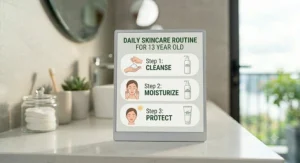
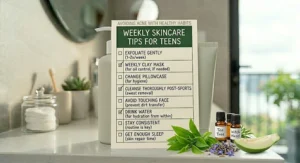
The biggest factor in whether a teen skincare routine “works” isn’t the products — it’s whether it actually gets used every day. Here’s a realistic two-step-per-session routine built from the products above.
Morning (under 2 minutes):
- Cleanse with CeraVe Foaming Facial Cleanser or Cetaphil Gentle Skin Cleanser, depending on skin type.
- Apply CeraVe AM Facial Moisturizing Lotion SPF 30, or Bright Girl Day+Bright Moisturizer followed by the Neutrogena sunscreen if doing two separate steps.
- Swipe on Aquaphor Lip Repair + Protect before heading out the door.
Night (under 2 minutes):
- Cleanse again, especially after sports or sweating.
- Apply a thin layer of moisturizer.
- If a whitehead has shown up, apply a Mighty Patch before bed.
A common first-month mistake is over-cleansing — washing the face three or four times a day to try to “fix” oiliness faster. This usually backfires, since stripping the skin too often can trigger it to produce more oil to compensate. Twice a day, plus a rinse after heavy sweating, is the limit most dermatologists recommend for this age group.
Real-Life Scenarios: Matching the Routine to Your Teen
Not every 13 year old has the same skin, so here’s how the routine adjusts for three common situations.
The sports-practice teen: Sweating daily means more frequent breakouts along the hairline and forehead. Lean on the CeraVe Foaming Cleanser for oil control, the Neutrogena Sheer Zinc sunscreen (reapplied after practice if outdoors), and keep Mighty Patches in a gym bag for post-practice whiteheads.
The sensitive-skin tween: If redness or flaking shows up easily, start with Cetaphil Gentle Skin Cleanser and the Bright Girl moisturizer, both chosen for minimal fragrance and a soothing, barrier-friendly formula. Skip active acne treatments unless a dermatologist recommends one.
The reluctant beginner: For a teen who finds skincare boring or unnecessary, the goal is to make the routine as short as physically possible. A single cleanser plus the 2-in-1 CeraVe AM lotion with SPF 30 covers cleansing, hydration, and sun protection in two steps — easy enough that it’s genuinely sustainable.
Common Mistakes Parents and Teens Make With Teen Skincare
- Jumping straight to “strong” acne treatments. Adult-strength benzoyl peroxide or retinoid products can be overkill — and irritating — for a first breakout. Start gentle and step up only if needed.
- Skipping sunscreen because skin “isn’t that pale.” Sun damage accumulates regardless of skin tone, and the AAD notes that consistent SPF use is one of the simplest things any age group can do for long-term skin health.
- Letting a teen copy an adult’s full routine. Serums, exfoliating acids, and anti-aging creams aren’t designed for developing skin and can cause unnecessary irritation.
- Picking at whiteheads instead of using a patch. Picking increases the risk of scarring and prolongs healing — a hydrocolloid patch is a much safer outlet.
- Giving up after a few days. Skin barrier and oil-production changes take weeks, not days, to respond to a new routine.
Teen Skincare vs. Adult Skincare: What’s Actually Different
| Factor | Teen-Appropriate Approach | Typical Adult Approach |
|---|---|---|
| Active ingredients | None, or low-strength (e.g., patch-based treatments) | Retinoids, AHAs/BHAs, vitamin C serums |
| Routine length | 2–3 steps | Often 5–10 steps |
| Sunscreen | Daily SPF 30+, mineral-friendly | Daily SPF 30+, often layered under makeup |
| Goal | Manage new oil/breakouts, build the habit | Treat aging, pigmentation, fine lines |
This comparison matters because a lot of teen skin “problems” — shine, the occasional whitehead, slightly enlarged pores — aren’t problems at all; they’re a normal part of puberty that a short, consistent routine manages rather than “fixes.” Adult routines are solving for entirely different concerns, and borrowing those products often introduces irritation without solving anything a 13 year old is actually dealing with.
What to Expect: A Realistic Timeline
Skincare results take time, and managing expectations up front prevents a teen from giving up too early.
- Week 1–2: Skin may temporarily look the same or slightly different as it adjusts to a new cleanser or moisturizer; this is normal.
- Week 3–4: Oiliness often becomes more manageable, and any mild irritation from a new product should have settled.
- Week 6–8: This is the realistic window for noticing fewer new breakouts, assuming the routine has been used consistently.
If acne hasn’t improved after two to three months of consistent over-the-counter use, that’s the point at which the AAD recommends seeing a board-certified dermatologist rather than continuing to experiment with new products.
Budget-Friendly vs. Premium: Is It Worth Spending More?
| Tier | Example Products | Total Routine Cost (approx.) |
|---|---|---|
| Budget | Cetaphil Cleanser + CeraVe AM Lotion SPF 30 + Aquaphor Lip Balm | $28–$38 |
| Premium | Bright Girl Moisturizer + Neutrogena Sunscreen + Mighty Patch + CeraVe Cleanser | $44–$56 |
The budget combination covers every essential step — cleansing, hydration, and sun protection — for under $40, and there’s no dermatological reason a 13 year old needs to spend more than that. The premium tier mostly buys convenience and age-specific formulation (like Bright Girl’s tween-focused ingredient list) rather than dramatically better results. For most families, starting budget and upgrading individual steps later, once you know what your teen’s skin actually needs, is the more sensible approach.
Safety & Ingredients to Avoid for Young Skin
A few ingredient categories are worth steering clear of for a 13 year old’s routine:
- High-percentage benzoyl peroxide (10%+) or prescription-strength retinoids without a dermatologist’s input — these can cause significant dryness and peeling on younger skin.
- Added fragrance and essential oils, common irritants, especially for reactive or eczema-prone skin.
- Physical exfoliating scrubs with rough beads, which can create micro-tears in still-developing skin.
- Chemical sunscreen filters like oxybenzone, if your teen has a known sensitivity — mineral options like the Neutrogena pick above are a gentler alternative.
When in doubt, fewer ingredients and simpler formulas are almost always the safer call for this age group.
✨ Don’t Miss These Picks
🔍 Building a teen skincare kit doesn’t need to be complicated or expensive. The seven products above cover every real need — cleansing, hydration, sun protection, and the occasional pimple — without introducing anything too strong for growing skin.
FAQ
❓ What is the best skincare routine for a 13 year old?
❓ Is CeraVe good for a 13 year old's skin?
❓ Should a 13 year old use anti-aging skincare products?
❓ How often should a teenager wash their face?
❓ What skincare ingredients should a 13 year old avoid?
Conclusion
A skincare routine for a 13 year old works best when it’s boring, in the best possible way: the same gentle cleanser, the same moisturizer, the same sunscreen, every single day. The seven products above — from the budget-friendly Cetaphil cleanser to the teen-specific Bright Girl moisturizer — give you everything needed to build that habit without overcomplicating it or introducing ingredients that aren’t appropriate for younger skin yet.
If breakouts persist past a couple of months of consistent use, that’s the natural point to loop in a board-certified dermatologist rather than keep experimenting with over-the-counter products. Otherwise, simple and consistent really is the whole strategy at this age.
✨ Ready to build the routine?
Start with just a cleanser and a sunscreen this week — everything else can be added once those two habits stick.
Recommended for You
- 7 Best Pregnancy Approved Brightening Serums for Glowing Skin (2026)
- 7 Safe Skincare Picks for a Pregnancy Routine That Actually Works (2026)
- Exosome Serum Worth the Price? 7 Best Picks Tested & Ranked (2026)
Disclaimer: This article contains affiliate links. As an Amazon Associate, I earn from qualifying purchases. If you purchase products through these links, we may earn a small commission at no additional cost to you.
Found this helpful? Share it with another parent who needs it! 💬🤗
