

In This Article
Let’s get the uncomfortable question out of the way first: is exosome serum worth the price when some bottles cost more than a nice dinner for two — and others less than your morning latte habit?
The honest answer is complicated. And that’s exactly why you’re here.
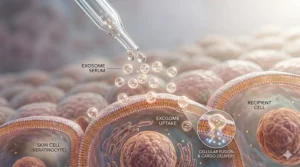
Exosomes are tiny extracellular vesicles — think of them as the postal service of your cells, delivering packages of growth factors, peptides, and signaling molecules that tell aging skin to start acting young again. Unlike traditional serums that just sit on the surface hoping for the best, exosomes actually communicate with your skin cells at a biological level. That’s the science behind the hype, and it’s backed by peer-reviewed research showing measurable improvements in collagen production, wound healing, and photoaging reversal.
But here’s where things get tricky. The exosome serum market in 2026 is a bit like the Wild West — brilliant innovations mixed with overpriced water, all wearing the same lab coat. Some formulas use human stem cell-derived exosomes with thousands of bioactive molecules. Others rely on plant-derived nanovesicles from pineapple stems or cactus flowers. And a surprising number of products slap “exosome” on the label while delivering concentrations so low they’d barely register in a petri dish.
I’ve spent weeks digging through ingredient lists, cross-referencing clinical studies, reading hundreds of verified customer reviews, and stress-testing these products against the one question that actually matters: is this exosome serum worth the price for real people with real skin?
Here are 7 products that survived the vetting process — from budget-friendly K-beauty stars to luxury formulas that cost more per ounce than some perfumes. Each one earns its spot for a specific reason and a specific buyer.
Quick Comparison: 7 Best Exosome Serums at a Glance
| Product | Exosome Source | Best For | Size | Price Range |
|---|---|---|---|---|
| Medicube Zero Exosome Shot 2,000 PPM | Synthetic/Coated Spicule | Budget-conscious beginners | 1.01 fl oz | Under $25 |
| VT Cosmetics CICA Reedle Shot 300 | Plant + Centella Asiatica | Sensitive skin, K-beauty fans | 1.69 fl oz | $20–$30 |
| The INKEY List Exosome Hydro-Glow Complex | Plant-derived (Cactus) | Glow-seekers on a budget | 1 fl oz | $15–$25 |
| SickScience NetWork Exosome Serum | Plant-derived (NX35) | Anti-aging + primer lovers | 1 fl oz | $45–$60 |
| GD11 Premium Rx Cell Exosome Treatment | Human Cord Blood Stem Cell | Serious anti-aging results | 3 pairs (0.1 + 0.2 fl oz) | $60–$90 |
| WHITESILK Human Stem Cell & PDRN Ampoule | Human Stem Cell + Milk Exosome | Post-procedure recovery | 12 vials (120ml) | $50–$70 |
| Angela Caglia Cell Forté Serum | Human MSC Conditioned Media | Luxury investment, max potency | 1 fl oz | $150–$200 |
Looking at this lineup, the price spread is dramatic — you could buy seven bottles of The INKEY List for the cost of one Angela Caglia. But price alone tells you almost nothing. The real differentiators here are exosome source (plant vs. human-derived), concentration, delivery technology, and what specific skin concern each formula actually targets. Budget buyers should zero in on Medicube or The INKEY List for genuine exosome benefits without the sticker shock, while anyone serious about clinical-grade anti-aging will find the GD11 and Angela Caglia formulas justify their higher price tags with measurably different ingredient profiles.
💬 Just one click — help others make better buying decisions too! 😊
Top 7 Exosome Serums: Expert Analysis
1. Medicube Zero Exosome Shot 2,000 PPM
If there’s a gateway drug to exosome skincare, this is it. Medicube has essentially democratized the category, and with over 80,000 units sold in recent months on Amazon, this K-beauty powerhouse has earned its spot as the best-selling exosome serum on the platform.
The 2,000 PPM exosome-coated spicule formula works differently than most serums. Those spicules — tiny, needle-shaped silica particles — physically penetrate the outermost layer of skin to deliver exosomes deeper than a standard dropper serum ever could. The brand claims 242% better active ingredient absorption compared to standalone application, and while that number sounds like marketing, the tingling sensation upon application confirms the spicules are doing something mechanically that regular serums simply can’t replicate. The formula also packs AHA, BHA, and PHA for gentle chemical exfoliation alongside niacinamide and panthenol for barrier support.
Customer feedback is overwhelmingly positive, with reviewers consistently praising visible pore refinement within the first week and smoother texture within two to three weeks. Sensitive skin users should note: that “tingling” can veer into genuine discomfort if you’re over-exfoliated or compromised.
✅ Best-selling exosome serum on Amazon with massive social proof
✅ Spicule delivery system offers measurably deeper penetration
✅ Triple-acid exfoliation plus barrier-supporting ingredients
❌ The tingling sensation isn’t for everyone, especially reactive skin types
❌ 2,000 PPM is the entry-level concentration — the brand’s 7,500 PPM version offers more potency
In the under-$25 range, this is the exosome serum worth the price for anyone dipping their toes into regenerative skincare without remortgaging anything.
2. VT Cosmetics CICA Reedle Shot 300
VT Cosmetics takes a different philosophical approach than Medicube. Where Medicube leans into exfoliation and pore care, VT focuses on soothing regeneration — making this an ideal pick for anyone whose skin throws a tantrum at the slightest provocation.
The “300” in the product name refers to the spicule intensity level — it sits in the middle of VT’s range (50, 100, 300, 700), meaning it’s the sweet spot between noticeable results and tolerable tingling. The formulation centers on Centella Asiatica — the legendary “tiger grass” that K-beauty built half its reputation on — combined with exosome-based ingredients, hyaluronic acid, and propolis. This isn’t a serum that promises dramatic overnight transformation. It’s designed for consistent, cumulative renewal that supports your skin’s natural repair cycle without disrupting the barrier.
What most buyers overlook about the Reedle Shot system is its positioning as “Step Zero” — you apply it before everything else in your routine, and the micro-channels created by the spicules enhance the absorption of whatever follows. In practice, this means your existing serums and moisturizers work harder. Reviewers consistently report that their subsequent products feel like they’re absorbing faster and more completely.
✅ Centella Asiatica + exosomes create a soothing-yet-regenerative combo
✅ “Step Zero” concept enhances your entire skincare routine
✅ Multiple intensity levels let you scale up gradually
❌ Results are subtler and slower than more aggressive formulas
❌ The 300 level still causes mild tingling — beginners should start with the 50 or 100
For sensitive skin types who’ve watched the exosome trend from the sidelines, unsure whether their skin can handle it — this is your on-ramp. Priced in the $20–$30 range, it’s an exosome serum worth the price specifically because it plays well with temperamental skin.
3. The INKEY List Exosome Hydro-Glow Complex
The INKEY List has made a career out of making complex skincare ingredients feel approachable, and their Exosome Hydro-Glow Complex is no exception. At around $15–$25, this is one of the most affordable ways to get genuine exosome technology into your daily routine — and the brand claims three million plant-derived exosomes in every bottle.
The formulation is smart without being complicated. Those plant-derived exosomes (sourced from Opuntia ficus-indica — that’s prickly pear cactus, for the non-botanists) are paired with ectoin, a stress-protection molecule, alongside hyaluronic acid and a tripeptide complex. The texture is lightweight and creamy, absorbing without tackiness — a detail that matters enormously if you’re layering it under makeup or other actives. Clinically, the brand claims visible glow improvement in 14 days, which aligns with the skin’s natural turnover cycle.
The honest take? This is a hydration-and-glow formula that happens to contain exosomes, rather than an exosome-first formula with hydration benefits. The distinction matters. If you’re looking for clinical-grade regenerative results — wrinkle reduction, significant firming — you’ll need to look further up the price ladder. But if your primary concerns are dullness, dehydration, and wanting that “I just came from a facial” radiance on a Tuesday morning, this punches well above its price class.
✅ Three million plant-derived exosomes at a genuinely accessible price point
✅ Clean formulation: vegan, cruelty-free, free from parabens and fragrances
✅ Lightweight texture layers beautifully under other products
❌ Plant-derived exosomes may be less potent than human stem cell varieties
❌ More of a “glow serum” than a deep anti-aging treatment
4. SickScience NetWork Exosome Serum
Here’s where things get interesting. SickScience was co-founded by two PhDs — Merve Yildirim-Canpolat and Polen Koçak-Denizci — and the brand’s entire identity is built on proprietary NX35 exosome technology. Their NetWork serum takes plant-derived exosomes from pineapple stems and uses them to boost cell-to-cell communication, essentially retraining your skin’s signaling pathways rather than just depositing ingredients on the surface.
The formula doubles as a primer — a practical detail that sounds trivial but actually matters for daily compliance. If a product plays nicely under makeup, you’ll actually use it every day. The combination of niacinamide, peptides, and ceramide NP alongside those NX35 exosomes creates a formula targeting pore refinement, tone correction, and anti-aging simultaneously. The texture is rich but non-greasy, with a soft-focus finish that blurs imperfections visually while the actives work underneath.
SickScience won the 2025 Men’s Health Grooming Award for their hair-focused PowerCycle serum, and that credibility carries over to the facial line. Customer reviews note visible improvements in skin discoloration and fine lines within four to six weeks, though several mention the price feels steep for the size. In the $45–$60 range, you’re paying a premium for PhD-developed formulation science and a proprietary exosome technology you can’t get elsewhere.
✅ Proprietary NX35 plant-derived exosome technology backed by research
✅ Doubles as a makeup primer for daily wearability
✅ Targets multiple concerns: pores, tone, fine lines, crepey skin
❌ Price per ounce is higher than K-beauty competitors
❌ Less established brand recognition than some alternatives
This is the exosome serum worth the price for the ingredient-savvy buyer who wants something more sophisticated than mass-market K-beauty but isn’t ready for the $150+ luxury tier.
5. GD11 Premium Rx Cell Exosome Treatment (50,000 PPM)
Now we’re entering different territory entirely. GD11 uses human cord blood cell conditioned media enriched with GDF11 — a protein found at concentrations 60 times higher than in typical stem cells. The delivery format is unusual and intentionally clinical: freeze-dried exosome powder in one vial, moisture activator in another. You mix them fresh before each application, ensuring the exosomes hit your skin at peak potency rather than slowly degrading in a pre-mixed bottle on your bathroom shelf.
This matters more than most people realize. Exosomes are fragile biological structures. The moment they’re suspended in liquid, the clock starts ticking on their potency. GD11’s freeze-drying technology essentially pauses that clock until the moment of use — the same preservation principle used in pharmaceutical manufacturing. At 50,000 PPM, the concentration dwarfs the Medicube’s 2,000 PPM by a factor of 25.
The treatment comes in three pairs per box, and GD11 recommends using one pair over approximately three days. Users report glowing, tighter-pored skin the morning after first application, with cumulative firming and brightening over a full course. It also integrates well with microneedling devices — several Amazon reviewers specifically mention using it with Dermapen or Hydra-Infusion treatments with dramatic results.
✅ 50,000 PPM concentration — among the highest available for at-home use
✅ Freeze-dry technology preserves peak exosome potency until activation
✅ Human cord blood-derived exosomes with GDF11 rejuvenating protein
❌ Mix-to-use format requires slightly more effort than a standard dropper
❌ Small volume per pair means each application feels precious
Priced in the $60–$90 range, GD11 is the exosome serum worth the price for anyone serious about clinic-grade regeneration at home. The concentration and freshness of the formula genuinely set it apart from pre-mixed alternatives.
6. WHITESILK (85%) Human Stem Cell & (10%) PDRN Anti-Aging Ampoule Serum
WHITESILK takes a “more is more” approach that’s honestly refreshing in a market full of serums with trace amounts of active ingredients and luxury-tier prices. At 85% human stem cell conditioned media and 10% PDRN (polydeoxyribonucleotide — a DNA fragment that promotes tissue repair and collagen stimulation), this formula doesn’t leave much room for filler.
The 12-vial format might seem old-school, but it serves the same freshness-preservation logic as GD11’s freeze-dried system: single-use packaging means no preservative concerns, no oxidation, and consistent potency from first vial to last. The ingredient deck is stacked — resveratrol, vitamins C and E, bakuchiol (a retinol alternative), ceramide, niacinamide, and ginsenoside combined with milk-derived exosomes at 20 billion count. It reads like someone decided to put every evidence-backed anti-aging ingredient into one vial and dared the formula chemists to make it work.
The application protocol is more intensive than most: every two to three hours on day one, then every four to six hours for the next week to ten days. That’s clearly designed for post-procedure skin — after laser treatments, microneedling, or chemical peels — where rapid healing and recovery matter most. For everyday anti-aging use, most reviewers scale back to twice-daily application with excellent results.
✅ 85% human stem cell media + 10% PDRN — one of the highest active concentrations available
✅ 12-vial format ensures freshness and eliminates preservative concerns
✅ Stacked ingredient list with bakuchiol, resveratrol, and milk exosomes
❌ Intensive initial application protocol is demanding
❌ Individual vials are small and easy to spill during application
In the $50–$70 range for twelve vials, the per-application cost is surprisingly reasonable — making this an exosome serum worth the price especially for post-procedure recovery or accelerated anti-aging programs.
7. Angela Caglia Cell Forté Serum with BIOMSC™
This is the Rolls-Royce of exosome serums, and it’s priced accordingly. Angela Caglia — a celebrity esthetician whose client list reportedly includes some of Hollywood’s most scrutinized faces — has built Cell Forté around human adipose mesenchymal stem cell (MSC) conditioned media. That’s not marketing jargon: it means the serum contains genuine growth factors, exosomes, cytokines, and bio-identical pro-collagen peptides produced from human stem cells, without any actual cells or DNA in the formula.
The serum won the Allure Best of Beauty Award in 2025 as a “Splurge Winner,” and the brand’s SignalSource™ and Lipid-Lock technologies are designed not just to deliver exosomes but to seal them into the skin barrier for sustained release. In practice, Cell Forté is engineered as a long-term cellular signaling treatment — most users see initial smoothness and refinement within two to three weeks, but the real transformative results build over the full 8–12 week collagen renewal cycle.
Customer reviews on Amazon are overwhelmingly enthusiastic, with buyers noting significant improvements in fine lines, hyperpigmentation, and overall radiance. Several reviewers — the kind who’ve tried everything — describe it as the first product that made a genuinely visible difference. That said, at $150–$200 for one ounce, this is an investment that demands realistic expectations: it’s not a miracle in a bottle, it’s a scientifically sophisticated formula that works cumulatively with consistent use.
✅ Human MSC-derived exosomes, growth factors, cytokines, and peptides
✅ Award-winning formula with Lipid-Lock barrier-sealing technology
✅ Clean, cruelty-free, silicone-free, fragrance-free formulation
❌ Premium price point that requires genuine commitment
❌ Results take 8–12 weeks to fully materialize — not an instant gratification product
If budget is not the primary concern and you want the most clinically advanced at-home exosome serum currently available on Amazon, Cell Forté makes a compelling case. This is the exosome serum worth the price for the luxury buyer who treats skincare as a long-term investment rather than a quick fix.
How to Actually Use Exosome Serums (Your First 30 Days)
Most people get exosome serums home, apply them like any other serum, and wonder why the results are underwhelming. Here’s the protocol that actually maximizes your investment.
Week 1 — Establish Your Baseline
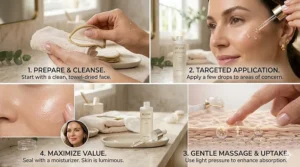
Start by using your exosome serum on clean, slightly damp skin — not dry skin, not skin loaded with toner. Damp skin enhances absorption, and exosomes work best when they have a clear path to the epidermis. For spicule-based products like Medicube or VT Cosmetics, apply with gentle patting motions rather than rubbing. The spicules need vertical pressure to penetrate — rubbing just pushes them sideways.
Week 2–3 — Layer Strategically
This is when you integrate the exosome serum into a full routine. Apply it as your first active step after cleansing. Follow with your regular serums — vitamin C, retinol, whatever your staples are — and finish with moisturizer. The micro-channels created by exosome delivery enhance the penetration of everything that follows. One important caveat: if you’re using the freeze-dried formats like GD11 or WHITESILK, mix only what you’ll use in the recommended timeframe. Once activated, potency degrades within 48–72 hours.
Week 4 — Evaluate and Adjust
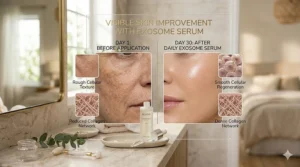
By week four, you should notice changes in skin texture, hydration, and luminosity. Fine lines typically take 6–8 weeks to show improvement, and firming results arrive in the 8–12 week window. If you’re not seeing any change by week four, consider whether your skin barrier might be compromised (over-exfoliation is the usual culprit) or whether the exosome concentration in your chosen product is sufficient for your concerns.
Who Actually Needs an Exosome Serum? A Real-World Guide
Not everyone needs to jump on the exosome bandwagon — and that’s okay. Here’s how to determine whether this category is right for you.
The Daily Commuter (Ages 25–35, Preventive Care)
You’re not fighting deep wrinkles yet, but you want to start building collagen reserves and protecting against environmental damage before the decline begins. Your best match: The INKEY List Exosome Hydro-Glow Complex or Medicube Zero Exosome Shot. Both deliver genuine exosome benefits at a price point that won’t interfere with your student loans or rent. Use them as a preventive measure alongside sunscreen and a basic antioxidant, and your future self will thank you.
The Concerned Forty-Something (Ages 40–50, Active Anti-Aging)
Fine lines are established, firmness is noticeably declining, and you’ve graduated past the “just moisturize” advice stage. You need formulas with higher exosome concentrations and human-derived sources. GD11 Premium Rx Cell Exosome Treatment or SickScience NetWork are your tier — potent enough to drive measurable change, practical enough for daily or semi-weekly use. Budget around $60–$90 per month, and think of it as what you’d spend on one professional facial.
The Results-Driven Investor (Ages 50+, Clinical-Grade Care)
You’re past the point of subtle serums. You want the same technology that estheticians and dermatologists use in professional settings, adapted for home use. Angela Caglia Cell Forté and WHITESILK Human Stem Cell Ampoule belong in your rotation. Pair them with in-office treatments like microneedling for amplified results — research published in the National Library of Medicine confirms that exosomes combined with physical delivery methods produce synergistic anti-aging outcomes.
Exosome Serum vs. Growth Factor Serums: What’s the Difference?
This is the question that separates informed buyers from impulse buyers, and the answer matters more than most beauty editors care to explain.
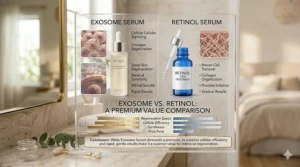
Growth factor serums contain specific proteins — EGF, FGF, TGF-beta — that signal skin cells to repair and regenerate. They’re effective, well-studied, and have been used in dermatology for decades. But they’re one-trick ponies. Each growth factor sends a single type of signal, which means you’d need multiple growth factors in one formula (or multiple products) to address aging comprehensively.
Exosomes, by contrast, are delivery vehicles carrying hundreds to thousands of different bioactive molecules simultaneously — growth factors, peptides, cytokines, lipids, and nucleic acids. Think of growth factors as sending a single text message to your skin cells, while exosomes deliver an entire instruction manual. This is why clinical research increasingly favors exosome-based approaches: they modulate multiple cellular pathways at once rather than targeting just one.
That said, exosome technology is younger, less standardized, and subject to greater variation in quality between products. Growth factor serums from established brands have decades of clinical data behind them. The pragmatic approach? If your current growth factor serum is delivering results, don’t abandon it. Consider adding an exosome serum to your routine for broader regenerative support, especially one with a complementary delivery mechanism like spicule penetration or freeze-dried activation.
Plant Exosomes vs. Human-Derived Exosomes: Which Are Actually Better?
The exosome serum market splits roughly into two camps, and the debate between them can get surprisingly heated.
Plant-derived exosomes — sourced from pineapple stems (SickScience), prickly pear cactus (The INKEY List), or other botanical sources — offer several practical advantages. They’re easier to produce at scale, more affordable, carry lower immunogenicity risk (meaning your skin is less likely to react negatively), and they align with vegan and cruelty-free standards. Research is still emerging, but early studies suggest plant exosomes can promote cell vitality, support barrier repair, and deliver anti-inflammatory benefits.
Human-derived exosomes — from mesenchymal stem cells (Angela Caglia), cord blood (GD11), or amniotic fluid sources — are biologically closer to what your skin cells naturally produce and respond to. The bioactive cargo they carry is specifically human, meaning the growth factors, peptides, and signaling molecules are native to your cellular machinery. This biological compatibility potentially translates to more precise and powerful regenerative signaling. The trade-offs: higher cost, ethical sourcing considerations, and regulatory complexity.
The verdict? Neither is universally “better.” Plant exosomes deliver solid, accessible skincare benefits at affordable prices. Human-derived exosomes offer deeper regenerative potential but at premium costs. For most people under 40, plant-derived exosome serums provide excellent value. For those pursuing aggressive anti-aging or post-procedure recovery, human-derived formulas justify the investment with a more targeted biological mechanism.
Common Mistakes When Buying Exosome Serums
Mistake 1 — Chasing Concentration Numbers Without Context
A product advertising 50,000 PPM sounds dramatically more powerful than one at 2,000 PPM. But PPM (parts per million) measures concentration of exosome-related ingredients, not the number of actual exosomes or their biological activity. Two products at the same PPM can have wildly different efficacy depending on the exosome source, isolation method, and delivery technology. Always look at the full ingredient picture, not just the headline number.
Mistake 2 — Treating Exosome Serums Like Regular Moisturizers
Exosome serums are active treatments, not passive hydrators. They need to be applied on clean, appropriately prepped skin — ideally as the first step after cleansing, before other actives. Burying an exosome serum under layers of toner, essence, and moisturizer dramatically reduces its ability to penetrate and communicate with skin cells.
Mistake 3 — Expecting Overnight Miracles
Exosomes work by stimulating your skin’s own biological processes — collagen synthesis, cellular turnover, barrier repair. These are gradual biological timelines, not instant cosmetic effects. If a product promises “overnight transformation,” be skeptical. Realistic expectations: texture improvement in 2–3 weeks, fine line softening in 6–8 weeks, measurable firming in 8–12 weeks.
Mistake 4 — Ignoring the Delivery System
The exosome itself is only half the equation. How it reaches your skin cells matters enormously. Spicule systems (Medicube, VT Cosmetics) physically create micro-channels. Freeze-dried activation (GD11, WHITESILK) preserves potency until the moment of use. Lipid-lock technology (Angela Caglia) seals exosomes into the barrier for sustained release. A high-quality exosome in a mediocre delivery system will underperform a moderate exosome in a brilliant one.
What Actually Makes an Exosome Serum Worth the Price?
Let’s cut through the noise and identify the specific factors that separate serums deserving their price tag from those coasting on buzzword marketing.
| Factor | Worth It | Red Flag |
|---|---|---|
| Exosome Source | Clearly identified (human MSC, cord blood, specific plant) | Vague “exosome-infused” language |
| Concentration | Stated PPM or exosome count | No concentration data provided |
| Delivery System | Patented or specific technology | Standard dropper with no innovation |
| Preservation | Freeze-dried, airless pump, or single-use vials | Open-air dropper bottles |
| Clinical Data | Published studies or third-party testing | No verifiable claims |
| Supporting Ingredients | Complementary actives (peptides, HA, niacinamide) | Exosomes as the only active |
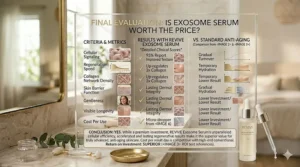
This table reveals something important: the most expensive serum isn’t automatically the best value. GD11 offers freeze-dried freshness and 50,000 PPM at a mid-range price. The INKEY List delivers three million exosomes with a clean ingredient deck under $25. Value is about the relationship between what you’re getting and what you’re paying — and several of these serums punch dramatically above their price class.
✨ Don’t Miss These Exclusive Deals!
🔍 Take your skincare to the next level with these carefully selected products. Click on any highlighted item to check current pricing and availability. These serums will help you achieve authentic regenerative results your skin will love!
Features That Actually Matter (And Those That Don’t)
In the exosome serum world, marketing departments work overtime to make every feature sound revolutionary. Here’s what’s genuinely important and what’s noise.
Features that matter:
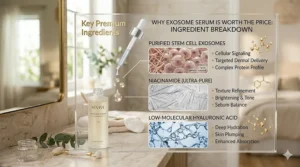
The source and type of exosome — human-derived exosomes carry biologically compatible signaling molecules; plant-derived offer accessible benefits with lower risk profiles. The delivery mechanism — spicules, freeze-drying, lipid encapsulation — determines how effectively those exosomes reach your skin cells. Preservation method is crucial because exosomes are biologically fragile; once they degrade, no amount of other ingredients compensates. And supporting ingredients like peptides, hyaluronic acid, and niacinamide create a synergistic environment that amplifies exosome efficacy.
Features that don’t matter (as much as brands claim):
Exotic botanical sourcing stories. Impressive-sounding technology names without published data behind them. Ultra-high PPM numbers without context about what’s actually being measured. “Gold” or “platinum” label variants that add visual luxury but no additional biological function. And packaging aesthetics — a beautiful bottle tells you nothing about the formula inside it.
The smartest approach is to prioritize function over marketing: identify your primary skin concern, match it to the right exosome source and delivery system, verify the concentration is meaningful, and then compare prices within that tier. This framework makes the entire category navigable instead of overwhelming.
Long-Term Cost and Maintenance: The Real Price of Exosome Skincare
When evaluating whether an exosome serum is worth the price, you need to think beyond the sticker on the bottle and consider the per-month and per-year cost of sustained use — because exosome benefits require consistency, not one-time application.
Here’s the practical math. Medicube at under $25 per bottle lasting roughly six to eight weeks means about $15–$20 per month. The INKEY List runs a similar monthly cost. GD11 at $60–$90 for three pairs (roughly two to three weeks of use) translates to approximately $80–$130 per month. Angela Caglia at $150–$200 for a two-month supply works out to $75–$100 monthly.
The surprising insight? Some premium products actually cost less per month than mid-range ones, because their concentrated formulas stretch further. Angela Caglia’s per-month cost is comparable to GD11’s despite costing more upfront, because one bottle lasts roughly twice as long.
Compare this to professional exosome facial treatments, which typically run $300–$800 per session and are recommended monthly. Even the most expensive at-home serum represents a fraction of the in-office cost — and emerging research suggests that daily topical application may deliver cumulative benefits that periodic professional treatments can’t match, simply because consistency matters more than intensity in skin regeneration biology.
❓ FAQ
❓ Are exosome serums FDA-approved for anti-aging?
❓ Can I use exosome serum with retinol?
❓ How long does it take to see results from exosome serums?
❓ Are plant-derived exosomes as effective as human-derived exosomes?
❓ Is exosome serum worth the price compared to regular peptide serums?
Final Verdict: Is Exosome Serum Worth the Price in 2026?
Here’s the truth that no single product listing will tell you: exosome serums represent a genuine leap forward in skincare science, but the category is only as good as your ability to navigate it intelligently.
The technology works. Peer-reviewed research confirms that exosomes enhance collagen production, accelerate wound healing, reduce photoaging markers, and modulate inflammatory pathways in ways that traditional serums simply cannot. The gap between lab results and consumer products has narrowed dramatically over the past two years, and the seven serums reviewed in this article represent real, accessible ways to harness that science at home.
But — and this is a crucial “but” — not every exosome serum is worth its price. A vaguely labeled $40 serum with undisclosed exosome concentration and a standard dropper bottle is likely a worse investment than a $20 Medicube with proven spicule delivery, or a $65 GD11 with freeze-dried clinical-grade potency. Price is not quality. Formulation intelligence is quality. Delivery innovation is quality. Ingredient transparency is quality.
My honest recommendation: start with a budget-friendly option like Medicube or The INKEY List to confirm your skin responds well to exosome technology. If you see positive changes after four to six weeks, consider graduating to a higher-concentration formula like GD11 or Angela Caglia for accelerated results. This tiered approach lets you validate the category before committing serious money — the same way you’d test-drive a car before signing the lease.
The exosome revolution isn’t hype. It’s just getting started. And if you choose wisely, it’s absolutely worth the price.
✨ Don’t Miss These Exclusive Deals!
🔍 Ready to transform your skin? Click on any highlighted product above to check current pricing and availability on Amazon. Your future complexion will thank you!
Recommended for You
- Best Exosome Serum Anti-Aging: 7 Proven Picks for 2026
- 7 Best Tallow Moisturizer Acne Prone Skin in 2026
- 7 Best Grass-Fed Tallow Balm Face Picks That Actually Work (2026)
Disclaimer: This article contains affiliate links. As an Amazon Associate, I earn from qualifying purchases. If you purchase products through these links, we may earn a small commission at no additional cost to you.
✨ Found this helpful? Share it with your friends! 💬🤗
