
In This Article
Somewhere around week 14, your skin starts doing things it has never done before. A faint brown shadow shows up across your cheeks like someone took a sepia filter to half your face. Your old vitamin C serum — the one you trusted for three years — suddenly has a question mark hovering over it. This is the moment most expecting moms discover that “brightening serum” and “pregnancy approved brightening serum” are not the same category at all. The first one is built for results. The second one has to be built for two.
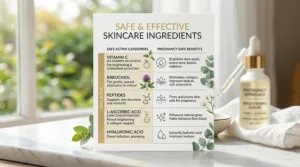
That brown shadow has a name: melasma, nicknamed the “mask of pregnancy,” and it’s startlingly common — research suggests it touches 50 to 70% of pregnant women, with some estimates running even higher. It’s harmless to your baby, but it’s also stubborn, and the obvious fixes — hydroquinone, retinoids, salicylic acid peels — are exactly the ingredients doctors ask you to set aside for nine months. That leaves a narrower, gentler lane of actives that actually work: vitamin C, azelaic acid, niacinamide. The good news is that lane is more crowded than you’d think, and seven of the best-reviewed, easiest-to-find options on Amazon happen to be sitting in it. We dug through ingredient decks, dermatologist commentary, and ACOG guidance to confirm which ones actually belong on a pregnancy approved brightening serum shortlist — and which popular bestsellers are quietly hiding the one ingredient you’re supposed to be avoiding.
What Actually Makes a Brightening Serum “Pregnancy Approved”?
A pregnancy approved brightening serum is a vitamin-C, azelaic-acid, or niacinamide-based formula that skips retinoids, hydroquinone, and high-dose salicylic acid — the three ingredient categories most consistently flagged by obstetric and dermatology groups. According to the American College of Obstetricians and Gynecologists, topical retinoids are included on the list of ingredients commonly avoided during pregnancy out of caution around absorption, and broader dermatology guidance groups retinoids, high-dose salicylic acid, and hydroquinone together as the ingredients worth steering around. Vitamin C doesn’t carry that baggage — it’s one of the few actives everyone from Mount Sinai dermatologists to ACOG-aligned guides actively recommends for pregnancy-safe brightening.
Quick Comparison: 7 Pregnancy Approved Brightening Serums
| Serum | Brightening Active | Texture | Price Range | Best For |
|---|---|---|---|---|
| TruSkin Vitamin C Serum | SAP Vitamin C | Lightweight gel | $15–$20 | First-timers, budget |
| Acure 2% Vitamin C & Ferulic | SAP + Vitamin C Ester | Oil-free gel | $10–$14 | Sensitive/acne-prone |
| CeraVe Skin Renewing Vitamin C | 10% L-Ascorbic Acid | Gel-serum | $17–$21 | Dry, barrier-stressed skin |
| La Roche-Posay Pure C10 | 10% L-Ascorbic Acid | Silky fluid | $35–$40 | Sensitive skin, dermatologist pick |
| Mad Hippie Vitamin C Serum | SAP + Ferulic Acid | Light lotion | $18–$24 | Clean-beauty minimalists |
| Naturium Vitamin C Complex | L-Ascorbic + SAP | Gel-cream | $18–$23 | Dullness + uneven tone |
| Biossance Squalane + Vit C Rose Oil | Tetrahexyldecyl Ascorbate | Facial oil | $70–$78 | Dry skin, splurge pick |
A quick read on that table: the cheap options and the expensive option are using different forms of vitamin C, not just different price tags — the gels (TruSkin, Acure, Naturium) lean on water-soluble derivatives that play well with oily and combination skin, while the La Roche-Posay and CeraVe picks use straight L-ascorbic acid, the most clinically studied (and slightly more irritation-prone) form. Biossance is the outlier, using an oil-soluble vitamin C that’s built specifically for skin that’s drying out under pregnancy hormones rather than getting oilier.
💬 Just one click — help others make better buying decisions too!😊
✨ A Quick Favor Before You Keep Reading
💬 If one of these jumps out at you, tap through and check current pricing — it genuinely helps us keep researching pregnancy-safe picks like this one. 😊
The 7 Best Pregnancy Approved Brightening Serums: Expert Analysis
1. TruSkin Vitamin C Serum for Face
TruSkin Vitamin C Serum is the one your group chat has probably already mentioned — it’s one of Amazon’s most-reviewed vitamin C serums, and for pregnancy purposes, the detail that matters most is what’s not in it. This is the classic formula, built around sodium ascorbyl phosphate, hyaluronic acid, vitamin E, aloe, and jojoba oil, and reviewers and dermatologists consulted for product testing confirm TruSkin’s Vitamin C serum does not contain retinol. That distinction is the whole game here, because TruSkin also sells a “Super Serum+” with added retinol and salicylic acid for anti-aging — a great product, just not one to reach for while pregnant. Stick with the plain-label version and you’re in safe territory.
Who it’s for: anyone testing the brightening-serum waters for the first time, or budget-conscious shoppers who don’t want to gamble $40 on something their skin might reject. Reviewers consistently report a soft, non-greasy finish and gradual fading of dark spots over several weeks, without the stinging some pure-acid formulas cause.
Pros: No retinol or fragrance; gentle SAP form of vitamin C; huge review base to learn from; genuinely cheap.
Cons: SAP vitamin C is less potent than L-ascorbic acid, so results are slower; bottle design lets in light/air over time, shortening shelf life once opened.
Price: around $15–$20 for 1 fl oz. Verdict: the safest possible “starter” pick — just double-check the label says Vitamin C Serum, not Super Serum+.

2. Acure Brightening 2% Vitamin C & Ferulic Acid Serum
Acure Brightening 2% Vitamin C & Ferulic Acid Serum is what happens when a clean-beauty brand decides simplicity is the whole pitch. The ingredient deck pairs sodium ascorbyl phosphate and tetrahexyldecyl ascorbate (a second, oil-friendly vitamin C form) with ferulic acid and pineapple and papaya fruit extracts — no retinol, parabens, sulfates, or formaldehyde anywhere on the label. Ferulic acid is doing quiet, underrated work here: it stabilizes vitamin C so it doesn’t degrade as fast in the bottle, which matters more than most shoppers realize.
Who it’s for: anyone whose skin gets reactive at the first sign of an active ingredient. The 2% concentration is intentionally modest, which makes it forgiving for the heightened skin sensitivity that shows up in the second trimester, but it also means patience — this isn’t the serum that fades a dark patch in two weeks.
Pros: Vegan, oil-free, fragrance-light; gentle enough for daily AM and PM use; one of the cheapest functional vitamin C serums on Amazon.
Cons: Lower vitamin C percentage means slower visible brightening; thin texture some dry-skinned users find they need to layer a moisturizer over almost immediately.
Price: around $10–$14 for 1 fl oz. Verdict: the best “can’t go wrong” entry-level pick if your skin is currently throwing tantrums at everything.
3. CeraVe Skin Renewing Vitamin C Serum
CeraVe Skin Renewing Vitamin C Serum earns its spot by solving a problem pregnancy skin actually has: a compromised, easily-irritated barrier. The formula is built around 10% pure L-ascorbic acid alongside three essential ceramides, hyaluronic acid, and panthenol — meaning it’s not just trying to brighten, it’s trying to keep your skin’s moisture barrier intact while it does. No retinol is involved in this particular serum (CeraVe keeps that ingredient locked into separate products), which makes it one of the cleaner mainstream drugstore picks for pregnancy.
Who it’s for: dry, sensitive, or barrier-stressed skin — which describes a lot of people by the third trimester, when oil production shifts and old moisturizers stop cutting it. The ceramide-forward formula means it layers nicely under a heavier cream without that classic “vitamin C tightness” feeling.
Pros: Dermatologist-developed; fragrance-free; ceramides double as barrier support; widely available and easy to repurchase.
Cons: 10% L-ascorbic acid can still tingle on freshly exfoliated or very reactive skin; packaging needs careful storage away from light to stay potent.
Price: around $17–$21 for 1 fl oz. Verdict: the drugstore pick that actually treats your skin barrier like it matters, not just an afterthought.
4. La Roche-Posay Pure Vitamin C10 Serum
La Roche-Posay Pure Vitamin C10 Serum is the one dermatologists keep recommending in pregnancy-skincare round-ups, and it’s easy to see why once you look at the formula: pure vitamin C combined with salicylic acid, hyaluronic acid, and the soothing dipeptide neurosensine, finished with the brand’s mineral-rich thermal spring water. That salicylic acid detail is worth a beat of honesty: ACOG-aligned guidance generally considers low-concentration, leave-on salicylic acid in OTC products acceptable, but this is exactly the kind of ingredient combo worth a quick mention to your OB or midwife before you commit to a bottle — not because it’s a known risk, just because “low-dose and fine” still deserves a second opinion when you’re the one carrying the baby.
Who it’s for: sensitive skin that still wants a clinical-strength, French-pharmacy-grade formula rather than a gentler “starter” option. The texture is famously silky — closer to a fluid than a gel — and it sits comfortably under SPF and makeup.
Pros: Backed by clinical testing; suitable for sensitive skin types; widely trusted dermatology brand; fast-absorbing texture.
Cons: Pricier than drugstore alternatives; contains a small amount of fragrance and alcohol denat, both occasional irritation triggers; the salicylic acid inclusion means it’s worth a quick check with your provider, even at a low dose.
Price: around $35–$40 for 1 fl oz. Verdict: the premium pick for people who want pharmacy-grade formulation, with one ingredient worth flagging to your doctor first.
5. Mad Hippie Vitamin C Serum
Mad Hippie Vitamin C Serum takes the opposite approach from La Roche-Posay — instead of clinical complexity, it leans into radical simplicity. The full active list is sodium ascorbyl phosphate, hyaluronic acid, tocotrienol (vitamin E), and ferulic acid, rounded out by chamomile, aloe, and grapefruit extract — and notably, there’s no retinol or salicylic acid anywhere in the ingredient list. This is the brand’s regular Vitamin C Serum, not their “Super A Retinol” line, so double-check the label the same way you would with TruSkin.
Who it’s for: clean-beauty shoppers who read ingredient labels for sport. The minimal formula means fewer chances for an unexpected reaction, which is appealing when your skin’s sensitivity threshold has quietly relocated without warning.
Pros: Short, recognizable ingredient list; chamomile calms while vitamin C brightens; cruelty-free and vegan; gentle enough for daily use.
Cons: No SPF pairing built in, so sun protection is non-negotiable on top; smaller bottle size than some competitors for the price.
Price: around $18–$24 for 1.02 fl oz. Verdict: the “if I can’t pronounce it, I don’t want it” pick — short ingredient list, zero surprises.
6Naturium Vitamin C Complex Face Serum
Naturium Vitamin C Complex Face Serum is the one to reach for if you want a noticeably more concentrated experience without going into prescription-strength territory. The formula stacks sodium ascorbyl phosphate and ascorbic acid alongside hyaluronic acid and a blend of antioxidant-rich fruit extracts — pineapple, papaya, mango, and Kakadu plum among them. One important note for pregnancy shoppers: Naturium sells a near-identical-looking bottle called “Vitamin C Super Serum Plus” that adds retinol and salicylic acid, so this is another case where the exact product name on the label matters more than the brand name.
Who it’s for: people dealing with genuine dullness and uneven tone who want something between the gentle SAP-only serums and the full-strength L-ascorbic acid options. The fruit-extract blend gives it a pleasant, almost juicy texture that a lot of reviewers describe as feeling more “active” on skin than the budget picks.
Pros: Dual vitamin C sources for layered brightening; vegan and cruelty-free; affordable for the concentration offered.
Cons: Stronger scent from the fruit extracts than some unscented alternatives; needs the correct bottle picked carefully off the shelf to avoid the retinol variant.
Price: around $18–$23 for 1 fl oz. Verdict: the mid-range pick with real brightening horsepower — just read the bottle twice before you check out.
7. Biossance Squalane + Vitamin C Rose Oil
Biossance Squalane + Vitamin C Rose Oil is the splurge on this list, and the reason people keep buying it nearly a decade after launch comes down to an almost stubborn minimalism: squalane forms the entire base, with tetrahexyldecyl ascorbate as the oil-soluble vitamin C, finished with rose extract and Chios mastic gum — seven ingredients, full stop. No water, no emulsifiers, no retinol. For skin that’s drying out the way a lot of pregnancy skin does — hormones can swing oil production in either direction — an oil-based vitamin C delivery system can feel more comfortable than a gel that tightens as it dries.
Who it’s for: dry or dehydrated pregnancy skin, and anyone who’s already a squalane convert. It layers beautifully under a heavier night cream and doubles as a hydration boost, not just a brightening step.
Pros: Ultra-short, gentle ingredient list; oil-soluble vitamin C penetrates the lipid barrier well; doubles as a moisture treatment.
Cons: Expensive relative to the simplicity of the formula; contains rose-derived fragrance compounds (geraniol, citronellol) that can be sensitizing for some skin, fragrance-sensitive people in particular.
Price: around $72–$78 for 1 fl oz. Verdict: a genuinely lovely product — just know you’re paying clean-beauty premium for elegant simplicity, not a longer active list.
Worth a quick mention: if you specifically want a brand built ground-up for pregnancy rather than a mainstream serum that happens to qualify, Belli Skincare’s Healthy Glow Facial Hydrator is a vitamin C, pregnancy-marketed option sold on Amazon — though it’s formulated more like a lightweight gel-moisturizer than a true serum, so it’s a nice layering product rather than a direct swap for the seven above.
Your First 30 Days With a New Brightening Serum
Starting a new active during pregnancy isn’t the moment to go all-in. Apply a coin-sized amount every other night for the first week, watching for redness, itching, or breakouts — pregnancy skin can react to things your pre-pregnancy skin shrugged off, thanks to a more reactive immune response. By week two, move to nightly use if your skin’s tolerating it, and by week three, you can layer it under your morning moisturizer too, as long as you’re also wearing SPF — vitamin C breaks down faster in sunlight and stops doing its antioxidant job if it’s not protected. The single most common mistake in month one: piling a new acid or exfoliant on top of the vitamin C “to speed things up.” Don’t. Give the serum its own lane for at least a month before adding anything else.
Real-World Scenarios: Matching a Serum to Your Trimester
A first-trimester shopper dealing with new nausea sensitivity to scent usually does best with something fragrance-light, like the Mad Hippie or CeraVe option — strong botanical smells can trigger queasiness fast. A second-trimester shopper noticing the first hints of melasma across the cheeks benefits most from a higher-concentration L-ascorbic acid formula like La Roche-Posay or Naturium, paired religiously with SPF, since melasma worsens with sun exposure more than almost anything else. A third-trimester shopper whose skin has gone dry and tight under a bigger belly and changing hormones tends to get the most relief from an oil-based option like Biossance, layered over a humectant serum rather than instead of one.
Ingredients to Avoid During Pregnancy (And Why They’re Flagged)
This is the section worth bookmarking. Topical retinoids — retinol, tretinoin, adapalene — sit at the top of nearly every avoidance list because, while very little is absorbed through skin, the FDA classifies oral and topical retinoids cautiously and both ACOG and the American Academy of Dermatology recommend avoiding them during pregnancy out of an abundance of caution. Hydroquinone, the gold-standard skin lightener for melasma outside of pregnancy, gets grouped alongside retinoids and high-dose salicylic acid on most avoidance lists — dermatologists quoted on the subject note that bleaching creams like hydroquinone are typically reserved for after pregnancy rather than used during it. Salicylic acid isn’t fully off-limits — lower-dose, OTC topical formulas have been reported safe by ACOG — but products built around peels or high concentrations are a different story and worth skipping. The American Academy of Dermatology also flags certain essential oils like rosemary, basil, jasmine, and sage, along with parabens and phthalates, as ingredients worth limiting, which is part of why so many of the serums above lean on short, fragrance-light ingredient decks.

How to Choose a Pregnancy Approved Brightening Serum: 6 Things to Check on the Label
- Scan for “retinol,” “retinal,” or anything ending in “-oate” near vitamin A — this is the single most common ingredient pregnant shoppers accidentally bring home, often because a “Plus” or “Super” version sits right next to the safe one on the same shelf.
- Check the vitamin C form, not just the percentage. Ascorbic acid is potent but can sting; SAP and THDA derivatives are gentler and better for reactive pregnancy skin.
- Look for azelaic acid or niacinamide as a backup active if melasma, not just dullness, is your main concern — both are endorsed for pregnancy use and target hyperpigmentation more directly than vitamin C alone.
- Avoid anything advertising itself as a “peel” or “resurfacing treatment.” These almost always carry acid concentrations above what’s considered pregnancy-appropriate.
- Confirm fragrance load if you’re nauseous. Unscented or lightly scented formulas reduce the odds of a serum becoming an unexpected trigger.
- When in doubt, screenshot the ingredient list and text your OB or dermatologist. It takes thirty seconds and removes all the guesswork the internet can’t actually settle for you.
Vitamin C vs. Azelaic Acid vs. Niacinamide: Which Pregnancy-Safe Brightener Wins for Melasma?
Vitamin C is the broad-spectrum antioxidant of the group — it brightens, supports collagen, and helps defend skin against the UV exposure that makes melasma worse, which is exactly why dermatologists recommend topical vitamin C to help lighten melasma patches during pregnancy. Azelaic acid plays a more targeted role: guidance built on ACOG recommendations notes that azelaic acid is considered safe during pregnancy and is especially helpful for hyperpigmentation, working by calming the overactive pigment-producing cells directly rather than just protecting skin from further damage. Niacinamide sits in a supporting role — it’s gentler than either and pairs well underneath a vitamin C serum, but it’s a slower, more incremental brightener on its own. If melasma specifically (not just general dullness) is your battle, azelaic acid layered under one of the vitamin C serums above is the combination most consistently mentioned by dermatologists treating pregnant patients — though none of the seven serums here include azelaic acid as a primary active, so it’s worth shopping for as a second product if that’s your main concern.
What to Expect: A Realistic Timeline for Fading Pregnancy Melasma
Week one to two brings nothing visible — this is absorption and barrier-adjustment territory, not results territory. By week four, most consistent users notice a subtle softening of dark spot edges rather than a dramatic fade; melasma is famously slow to respond to anything, pregnant or not. By week eight to twelve, visible brightening tends to show up if you’ve also been religious about SPF, since sun exposure can undo weeks of progress in a single unprotected afternoon. And here’s the honest part nobody likes hearing: melasma usually fades after a few months on its own postpartum as hormones settle, so a serum during pregnancy is often more about damage control and comfort than a guaranteed full fade before delivery.
Common Mistakes Pregnant Women Make When Shopping for Brightening Skincare
The single biggest mistake is trusting the brand name over the actual bottle in your cart — as the TruSkin and Naturium entries above show, the exact same brand can sell both a pregnancy-friendly serum and a retinol-loaded “Plus” version side by side. The second is skipping SPF entirely because “it’s just a serum day,” when vitamin C and melasma management both depend on consistent sun protection to actually work. The third is layering too many actives at once out of impatience — a vitamin C serum, an exfoliating acid, and a new moisturizer all in the same week makes it impossible to identify what’s actually irritating your skin if something goes wrong. And the fourth, ironically, is over-restricting: plenty of pregnant shoppers toss every active in their cabinet out of fear, when ingredients like vitamin C, niacinamide, and azelaic acid are specifically the ones considered safe and worth keeping.
✨ Don’t Skip the Sunscreen Step
🔍 Whatever serum you land on, pair it with a mineral SPF — vitamin C protects better when it’s not fighting unprotected UV exposure on top of everything else.
FAQ: Pregnancy Approved Brightening Serums
❓ Is vitamin C serum safe to use every day while pregnant?
❓ Can I use a vitamin C serum and niacinamide together while pregnant?
❓ Does pregnancy melasma go away after birth without treatment?
❓ Why does my vitamin C serum suddenly sting now that I'm pregnant?
❓ Is azelaic acid better than vitamin C for pregnancy melasma?
Conclusion
Pregnancy doesn’t actually shrink your skincare options as much as the internet panic suggests — it just narrows the lane to ingredients with real safety data behind them, and vitamin C happens to live comfortably in that lane. Whether you land on the no-fuss TruSkin bottle, the ceramide-backed CeraVe pick, or the splurge-worthy Biossance oil, the formula that matters most is the one you’ll actually use consistently for the next several months, paired without exception with sunscreen. Melasma is stubborn, but it’s also temporary for most people, and a gentle, retinoid-free serum is about giving your skin some support while your hormones do the rest of the work on their own timeline. When something on a label gives you pause — a salicylic acid inclusion, an unfamiliar derivative, anything — a thirty-second message to your OB or dermatologist is always worth more than a forum thread.
✨ Ready to Pick Your Pregnancy-Safe Brightening Serum?
💬 Compare current pricing on any of the seven picks above and find the one that fits your skin type and budget today! 😊
Recommended for You
- 7 Safe Skincare Picks for a Pregnancy Routine That Actually Works (2026)
- Exosome Serum Worth the Price? 7 Best Picks Tested & Ranked (2026)
- Best Exosome Serum Anti-Aging: 7 Proven Picks for 2026
Disclaimer: This article contains affiliate links. As an Amazon Associate, we earn from qualifying purchases. This content is for informational purposes only and is not a substitute for medical advice — every pregnancy and every skin type is different, so check any new product or ingredient with your OB-GYN, midwife, or dermatologist before adding it to your routine.
✨ Found this helpful? Share it with a fellow expecting mom! 💬🤗
