
In This Article
The moment you see two pink lines on that stick, a lot of things change fast. Your diet. Your sleep. Your entire relationship with your skincare shelf. If you’ve been relying on retinol to keep fine lines, uneven texture, and hormonal breakouts at bay, discovering it’s on the “avoid during pregnancy” list can feel like a small but surprisingly personal loss. You’ve got nine months — plus however long you breastfeed — without your most reliable skin ally. That’s a long time to do nothing.
Here’s the good news: you don’t have to.
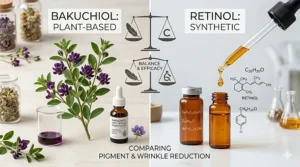
The pregnancy safe retinol substitute space has absolutely exploded in the last few years, driven largely by one standout ingredient: bakuchiol. Pronounced buh-koo-chee-ol, it’s a plant-derived compound extracted from the seeds of the Psoralea corylifolia plant — the same babchi plant used in Ayurvedic and Traditional Chinese Medicine for centuries. And unlike retinol, it doesn’t carry the systemic absorption concerns that have OBGYNs advising patients to shelf their vitamin A derivatives for the duration.
A landmark 2018 clinical study published in the British Journal of Dermatology found that bakuchiol performed comparably to 0.5% retinol in reducing wrinkles and hyperpigmentation after 12 weeks — with significantly less stinging and scaling. That’s not marketing copy. That’s peer-reviewed science. And for a pregnant woman who already has enough to worry about, the gentleness factor matters enormously.
In this guide, I’ve rounded up the 7 best pregnancy safe retinol substitute options currently available on Amazon — with real specs, honest analysis, and the kind of practical advice you won’t find on a product listing page. Whether you’re in your first trimester or deep into the breastfeeding months, there’s something here for your skin.
⚠️ Quick note: Always consult your OB-GYN or dermatologist before adding any new skincare product to your routine during pregnancy. This article is informational and does not constitute medical advice.
Quick Comparison: Top 7 Pregnancy Safe Retinol Substitutes at a Glance
| Product | Key Active | Bakuchiol Concentration | Best For | Price Range |
|---|---|---|---|---|
| VELAMO ADVANCED Bakuchiol Serum | Bakuchiol + Tremella + Acetyl Hexapeptide-8 | Not disclosed | All-in-one anti-aging | $15–$25 |
| Lupure Bakuchiol Serum | Bakuchiol + Matrixyl 3000 + Niacinamide | 1.5% | Wrinkle & texture focus | $20–$30 |
| VALITIC Bakuchiol Serum | Bakuchiol + Niacinamide + Squalane | 5,000ppm | Oily/combo skin, dark spots | $20–$35 |
| Nano Recipe Korean Bakuchiol Concentrate | Pure cold-pressed bakuchiol | 10,000ppm | DIY mixing, customization | $15–$25 |
| Monica Ann Beauty Bakuchiol Serum | Bakuchiol + Vitamin C + HA + Niacinamide | Not disclosed | Brightening + anti-aging | $25–$40 |
| Bakuchiol Peptide Night Cream | Bakuchiol + Dual Peptides + Ceramides | Not disclosed | Barrier repair, night use | $25–$40 |
| Retinol-Free Youth Restore Regime | Bakuchi Oil + Vitamin C (serum + eye cream set) | 1% Bakuchi Oil | Complete routine, gift | $30–$50 |
Reading this table: The higher ppm/percentage products (Lupure at 1.5%, VALITIC at 5,000ppm, Nano Recipe at 10,000ppm) aren’t automatically “better” — they’re stronger starting points for those who’ve used bakuchiol before or have resilient skin. First-trimester skin can be unpredictable and reactive; for newcomers, a lower-concentration formula with supportive ingredients like ceramides or hyaluronic acid is the smarter entry point. The Nano Recipe concentrate is a special case — it’s designed to be mixed into products you already own, making it uniquely versatile but requiring more user knowledge than a ready-to-use serum.
💬 Just one click — help others make better buying decisions too! 😊
Top 7 Pregnancy Safe Retinol Substitute Products: Expert Analysis
1. VELAMO ADVANCED Bakuchiol Retinol Alternative Serum (30mL / 1 fl oz)
This serum was born from a genuinely sweet origin story — a husband who wanted to help his wife age beautifully. The brand’s “Beauty with Ease” philosophy shows up in the formula: it layers multiple skin concerns into one bottle without overwhelming expecting mothers who might be dealing with sensitivity spikes.
What the specs actually mean for you: The inclusion of Tremella Fuciformis Polysaccharide (a mushroom-derived humectant that holds up to 500 times its weight in water — significantly more than standard hyaluronic acid) alongside bakuchiol means you’re getting serious hydration alongside the anti-aging work. Acetyl Hexapeptide-8 addresses micro-muscle contractions under the skin that contribute to expression lines — think of it as a very mild, topical approach to the forehead tension that stress and pregnancy hormones can amplify. Ganoderma Sinensis Extract adds antioxidant protection, and Citrus Reticulata (Tangerine) Fruit Extract brightens without the photosensitivity risks of AHAs.
What most buyers overlook about this formula: it’s genuinely layered in a way that most single-ingredient bakuchiol serums aren’t. You’re not just getting plant-based retinol action — you’re getting a humidity barrier, a peptide firmer, and an antioxidant shield in a single 30mL bottle.
Customers consistently report reduced irritation compared to their previous retinol routine, with visible improvements in skin smoothness within 4–6 weeks. Fragrance-free, paraben-free, and vegan — all the boxes that matter when you’re reading ingredient labels with new eyes.
✅ Multifunctional formula — multiple skin concerns addressed
✅ Fragrance-free & safe for sensitive pregnancy skin
✅ Tremella mushroom extract for deep, long-lasting hydration
❌ Concentration of bakuchiol not disclosed on listing
❌ 30mL bottle may feel small for daily face + neck use
Best for: First-time bakuchiol users who want a gentle all-rounder with proven supportive ingredients. Budget-friendly entry point in the $15–$25 range.
2. Lupure Bakuchiol Serum for Face (1.5% Bakuchiol, 30mL)
Lupure’s formula is one of the few on Amazon that proudly declares its bakuchiol concentration at 1.5% — a clinically meaningful level, since most of the research on bakuchiol’s retinol-comparable efficacy was conducted at 0.5%. Higher concentration = faster, more visible results, but it also requires a short skin adjustment period for those who are new to actives.
What the specs actually mean for you: The 1.5% bakuchiol is paired with Matrixyl 3000 — a peptide complex (Palmitoyl Tripeptide-1 + Palmitoyl Tetrapeptide-7) that has its own clinical backing for collagen stimulation. This is the combination that separates “bakuchiol serum” from “bakuchiol serum that does serious work.” Add 2% niacinamide for pore refinement, Centella Asiatica for barrier soothing, and Acetyl Hexapeptide-8 for expression line support, and you have a genuinely stacked formula at a price point that doesn’t punish you for being thorough.
One practical advantage worth noting: bakuchiol is photostable (unlike retinol, which degrades in sunlight and must be used at night). The Lupure serum can be used morning or night — or both. For pregnant women navigating exhaustion and already-complicated routines, the flexibility of a single active that works around the clock is genuinely useful.
Customers report smoother texture and more even skin tone within 4–8 weeks of consistent use, with minimal irritation even for those who previously experienced sensitivity with retinol.
✅ Disclosed 1.5% bakuchiol — transparent, clinically meaningful dosage
✅ Matrixyl 3000 adds independent peptide collagen support
✅ Photostable — morning or night application, no restrictions
❌ Higher concentration may cause mild adjustment period for reactive skin
❌ Newer brand with smaller review base than established names
Best for: Pregnant women who’ve used actives before and want visible anti-aging results without the guesswork. Mid-range pricing in the $20–$30 range.
3. VALITIC Bakuchiol Serum (5,000ppm Bakuchiol, 30mL / 1.01 fl oz)
VALITIC built this formula with combination and oily skin types specifically in mind — a demographic that doesn’t always get enough love in the pregnancy skincare conversation. Hormones during pregnancy can send sebum production into overdrive, and most bakuchiol serums are formulated for dry or “normal” skin. VALITIC addresses that gap.
What the specs actually mean for you: At 5,000ppm (0.5%) bakuchiol, the concentration mirrors the exact level used in the landmark 2018 study comparing bakuchiol to retinol head-to-head. It’s not a megadose — it’s the dose that science has actually validated. The real differentiator here is the 4% niacinamide, which actively targets pore appearance, sebum control, and dark spot reduction. For pregnant women dealing with melasma or pregnancy-induced hormonal acne, this dual action is rare to find in a single pregnancy-safe formula.
Squalane acts as a lightweight barrier oil that hydrates without clogging pores — a critical feature for skin that’s already producing excess oil. The botanical trio of Heartleaf (anti-inflammatory), Chamomile (calming), and Aloe (soothing) creates a genuinely calming base layer for skin that’s running hot from hormonal changes.
What most buyers overlook: this formula layers beautifully under mineral sunscreen and under makeup, making it a practical everyday product rather than a nighttime-only treatment.
✅ 4% niacinamide for pore control, sebum management, and dark spot fading
✅ Squalane-based hydration — lightweight, non-comedogenic
✅ Ideal for hormonal acne and melasma during pregnancy
❌ Some users with dry skin may need an additional moisturizer on top
❌ Vitamin C content is low — brightening benefits are modest
Best for: Pregnant women with oily, combination, or acne-prone skin, especially those dealing with melasma or pregnancy-related hyperpigmentation. Priced in the $20–$35 range.
4. Nano Recipe Korean Bakuchiol Concentrate (10,000ppm, 30mL)
This one plays by entirely different rules. Rather than a complete serum, the Nano Recipe Bakuchiol Concentrate is a cold-pressed pure bakuchiol extract designed to be mixed — two drops — into any step of your existing skincare routine. It’s essentially a bakuchiol booster, and at 10,000ppm (1%), it’s the highest concentration in this roundup.
What the specs actually mean for you: The DIY mix-in format means you’re not swapping out your existing pregnancy-safe moisturizer or serum — you’re upgrading it. Two drops into your toner, your moisturizer, or your SPF gives that product bakuchiol functionality without disrupting what’s already working. For pregnant women who have a trusted, gentle routine they don’t want to abandon, this approach is elegant. No new formulas to introduce, no new potential irritants — just one pure ingredient slotting into an existing system.
The cold-press extraction preserves the integrity of the bakuchiol, and the non-GMO, vegan certification adds transparency that matters when you’re scrutinizing every label. Customer reviews are striking: “people keep asking what I did — my cheek acne is completely gone after a month” is a representative sentiment, and it captures the subtle but real way bakuchiol works when given time.
The tradeoff is the learning curve. This isn’t a product for someone who wants to pull a bottle out of a bag and apply it directly. You need to know your routine, know your skin, and be comfortable with a slightly more active role in your skincare.
✅ Pure cold-pressed bakuchiol — no fillers, no dilution
✅ Boosts any product you already trust and know is safe
✅ Non-GMO, vegan certified, cruelty-free
❌ Requires existing skincare knowledge to use effectively
❌ Not a standalone serum — pure booster only
Best for: Skincare-savvy pregnant women who want to enhance an existing routine rather than rebuild it. Budget-friendly at $15–$25.
5. Monica Ann Beauty Bakuchiol Serum (1.7 fl oz)
Monica Ann Beauty positions this as a brightening-first, anti-aging-second formula — which is actually the smarter priority order for pregnancy. Melasma, dark spots, and uneven tone from hormonal surges are the #1 skin complaint among expecting mothers; fine lines are usually secondary. This serum acknowledges that reality in its formulation.
What the specs actually mean for you: The triple-brightening approach — bakuchiol for cell turnover, Vitamin C for antioxidant pigment interruption, and niacinamide for barrier regulation — addresses hyperpigmentation from multiple angles simultaneously. That’s not redundancy; each ingredient works through a different mechanism. Vitamin C inhibits tyrosinase (the enzyme that triggers melanin production), niacinamide interrupts the transfer of melanin to surface skin cells, and bakuchiol accelerates cell turnover to shed discolored skin faster. Together, they create a more comprehensive pigmentation response than any single ingredient achieves alone.
Hyaluronic acid rounds out the formula with hydration, pulling moisture into the skin and maintaining the plump, resilient base layer that makes everything else work better. The 1.7 fl oz / 50mL size is genuinely generous — noticeably more product than the 30mL serums at comparable price points.
Small business support is a real consideration here: Monica Ann Beauty is an independent, small-batch brand, and supporting smaller makers during pregnancy — when shopping choices feel more intentional — resonates with many buyers.
✅ Triple brightening approach for melasma and pregnancy hyperpigmentation
✅ Larger 1.7 fl oz size — better value per ml than most competitors
✅ Small business brand with personal customer service
❌ Vitamin C can oxidize over time — store in a cool, dark place
❌ Concentration details not fully disclosed
Best for: Pregnant women dealing with melasma or dark spots as their primary skin concern. Mid-to-upper pricing in the $25–$40 range.
6. Bakuchiol Peptide Night Cream (50mL / 1.7 fl oz, Airless Pump)
This is the only dedicated night cream in the roundup, and it earns its place because nighttime is when pregnant skin does its best repair work — and when the right formula can make a disproportionate difference. The airless pump is not just a convenience feature; it protects the peptide and vitamin C content from oxidation, meaning the last pump is as potent as the first.
What the specs actually mean for you: The dual-peptide complex — Palmitoyl Tripeptide-1 and Palmitoyl Tetrapeptide-7 — is the same Matrixyl 3000 pairing that appears in the Lupure serum, providing independent clinical backing for collagen stimulation. Ceramide NP + Cholesterol is a dermatologist-recognized barrier repair combination; during pregnancy, when skin barrier function can be compromised by hormonal fluctuations and dehydration, this isn’t optional — it’s foundational. Squalane provides a non-greasy occlusive layer that seals everything in overnight without the heaviness of traditional night creams.
Ferulic Acid deserves a specific mention: it’s an antioxidant that dramatically extends the efficacy of Vitamins C and E when combined with them. In practice, this means the antioxidant protection in this cream works harder and longer than a formula without it. That’s meaningful for skin that’s dealing with free radical stress from hormonal changes and environmental factors.
The “pregnancy-friendly” label on the listing is accurate in spirit — fragrance-free, no harsh actives, formulated for sensitive skin — but as always, confirm with your healthcare provider before adding new products.
✅ Airless pump preserves formulation integrity from first to last use
✅ Ceramide NP + Cholesterol for barrier repair — essential during pregnancy
✅ Ferulic Acid amplifies Vitamin C and E efficacy
❌ Night-only positioning limits usage flexibility
❌ Richer cream texture may n
ot suit very oily skin types
Best for: Third-trimester and postpartum skin focused on barrier repair and deep overnight renewal. Priced in the $25–$40 range.
7. Retinol-Free Youth Restore Regime — Serum & Eye Cream Set
The only complete two-product set in this roundup, this pairing targets something the serums above cannot: the delicate eye area. Dark circles, fine lines, and puffiness around the eyes are practically universal pregnancy complaints — and they’re almost never addressed by a face serum applied broadly. This set was built specifically for pregnant and breastfeeding women, with 1% Bakuchi Oil (the oil-form of bakuchiol, derived directly from the babchi seed) paired with Vitamin C in both the serum and eye cream.
What the specs actually mean for you: Bakuchi Oil behaves slightly differently from isolated bakuchiol extract — it carries the broader lipid profile of the seed, which adds additional emolliency and skin-conditioning properties alongside the retinol-like functional benefits. At 1%, the concentration is conservative, making this the gentlest formulation in this roundup and the most appropriate choice for extremely reactive or first-trimester skin.
The eye cream component is where this set earns its distinction. Most pregnancy skincare guides tell you what to put on your face and leave you entirely on your own for the eye contour — a thinner, more sensitive area that reacts differently to every formula. Having a matched set means you’re not mixing and matching formulations that may interact unexpectedly.
One practical caveat: stock levels appear to fluctuate on Amazon, so it’s worth checking availability at the time of purchase.
✅ Complete serum + eye cream set — rare in pregnancy-safe skincare
✅ Eye cream specifically formulated for delicate pregnancy eye concerns
✅ Conservative 1% Bakuchi Oil — ideal for very sensitive or first-trimester skin
❌ Lower concentration may mean slower visible results
❌ Stock availability can vary
Best for: Gift sets, first-trimester buyers with reactive skin, or anyone whose primary concern is eye-area aging. Set pricing in the $30–$50 range.
How to Build Your Pregnancy Safe Skincare Routine: A Practical Usage Guide
Understanding which product to buy is only half the equation. How you integrate a pregnancy safe retinol substitute into your actual routine determines whether you see results in 4 weeks or 4 months.
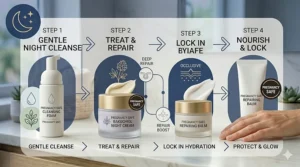
Step 1: Start Slow, Especially in the First Trimester
Pregnancy skin is unpredictable. Hormones can make previously tolerant skin suddenly reactive, and vice versa. Introduce your bakuchiol product every other night for the first two weeks, regardless of how confident you feel about the formula. This isn’t about doubting the product — it’s about giving your skin a controlled runway to adjust.
Step 2: Apply on Clean, Slightly Damp Skin
Serums penetrate more effectively on skin that still has a trace of moisture from cleansing. Pat dry, wait 60 seconds, then apply 3–4 drops of serum. This small adjustment can meaningfully improve how much active ingredient reaches the deeper dermis.
Step 3: Layer in Correct Order
The golden rule of skincare layering — thinnest to thickest — applies here. Bakuchiol serum goes on after cleansing and toning, before moisturizer. If you’re using the Nano Recipe concentrate, mix your two drops into the moisturizer itself, not the serum step.
Step 4: Don’t Skip SPF in the Morning
Bakuchiol doesn’t increase photosensitivity the way retinol does — it’s photostable. But pregnancy itself can trigger melasma and increased sensitivity to UV radiation. Mineral SPF (zinc oxide or titanium dioxide) is generally considered the most pregnancy-safe sunscreen choice. The American Academy of Dermatology provides guidance specifically on sunscreen during pregnancy.
Step 5: Avoid Mixing with Exfoliants
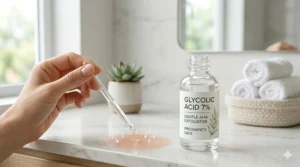
Glycolic acid, lactic acid, and strong AHA/BHA products should not be used simultaneously with bakuchiol — they reduce its efficacy by altering the skin’s pH environment. If you’re using a gentle exfoliant in your routine, alternate nights rather than layering on the same evening.
Common Mistakes to Avoid in the First 30 Days
- Using too much product: 3–4 drops covers the entire face. More is not better.
- Expecting overnight results: Bakuchiol works through cell turnover — which operates on a 28–56 day cycle. Four weeks minimum before assessing results.
- Applying to irritated or broken skin: Pregnancy can bring unexpected skin events. Apply to calm, intact skin only.
- Abandoning the product after 2 weeks: The 2-week mark is often when skin is still adjusting. Most visible improvements start at week 4–6.
Who Should Use What: Real Pregnancy Skin Scenarios
Not all pregnancy skin tells the same story. Here’s how to match the right product to the right skin moment.
The First-Trimester Sensitive Skin Profile
You’re newly pregnant, your skin is doing something it’s never done before, and you have no idea which direction it’s going to go. You need the most cautious, barrier-supportive formula possible.
Best pick: Bakuchiol Peptide Night Cream for evenings, paired with a simple mineral SPF in the morning. The ceramide + cholesterol barrier repair work is exactly what unpredictable first-trimester skin needs, and the conservative, fragrance-free formulation minimizes any risk of a reaction.
The Melasma-Concerned Second-Trimester Profile
You’ve made it to the second trimester, your skin has settled, and now you’re watching dark patches appear on your cheeks, forehead, or upper lip. Classic melasma — and it’s frustrating.
Best pick: VALITIC Bakuchiol Serum for its 4% niacinamide + bakuchiol combination, or Monica Ann Beauty Bakuchiol Serum for the triple brightening (bakuchiol + Vitamin C + niacinamide) approach. Pair either with a broad-spectrum mineral SPF every single morning — melasma is heavily triggered and worsened by UV exposure.
The Skincare Enthusiast Who’s Been Using Retinol for Years
You’re not new to actives. You’ve had a retinol routine that was working, and the pregnancy pause is genuinely frustrating from a skin health perspective.
Best pick: Lupure Bakuchiol Serum at 1.5% for clinically meaningful concentration, or the Nano Recipe Concentrate mixed into your existing moisturizer for full customization. These are products for people who understand their skin and want maximum efficacy, not hand-holding.
The Postpartum Breastfeeding Mother
You’re past delivery, still can’t use retinol (breastfeeding carries the same caution as pregnancy for retinoids), exhausted, and need something that works without a complicated routine.
Best pick: Retinol-Free Youth Restore Regime for the all-in-one serum + eye cream set — the eye cream specifically addresses the dark circles and fine lines that new-parent sleep deprivation accelerates, and the gentle 1% Bakuchi Oil concentration is safe and simple.
Why Retinol Is Off-Limits During Pregnancy — And Why the Science Isn’t Simple
Understanding why retinol is avoided during pregnancy helps you feel more confident — not fearful — about switching to a pregnancy safe retinol substitute.
The Retinol Risk: What the Evidence Actually Says
Retinol is a vitamin A derivative, and this is where the concern originates. Oral retinoids — prescription drugs like isotretinoin (Accutane) — are established teratogens with well-documented links to severe birth defects. That’s not in dispute. The concern about topical retinol is different and considerably more nuanced.
According to the American College of Obstetricians and Gynecologists (ACOG), topical retinol is absorbed minimally through the skin, and there is currently no clinical evidence that topical retinol used in cosmetic quantities causes birth defects. The caution against it is precautionary — because definitively safe pregnancy-specific clinical trials are ethically impossible to conduct, most OBGYNs recommend avoiding the entire retinoid family during pregnancy as a conservative measure. “Better safe than sorry” is a reasonable posture when the stakes involve fetal development, even if the actual risk from topical use is likely theoretical.
Why Bakuchiol Doesn’t Share These Concerns
Bakuchiol is structurally unrelated to retinol. It doesn’t belong to the vitamin A family at all. Its retinol-like effects on the skin come from a different molecular mechanism — it mimics retinol’s gene expression activity (activating the same collagen and cell turnover pathways) without being a retinoid. It is not metabolized into retinoic acid in the body.
As bareLUXE Skincare’s physician-founder explains: “The majority of topical skincare products, including bakuchiol, do not absorb into the bloodstream at levels significant enough to pose any risk to a developing baby.” That said, pregnancy-specific clinical trials on bakuchiol do not exist (again, ethically impossible), which is why the science-first answer is always: discuss with your doctor.
How to Choose a Pregnancy Safe Retinol Substitute: 6 Criteria That Actually Matter
The bakuchiol market has grown fast, and not every product is created equal. Here’s the framework I use to evaluate these formulas:
- Transparent ingredient labeling. If a brand won’t tell you the bakuchiol concentration, treat it as a red flag. Lupure (1.5%), VALITIC (5,000ppm), and Nano Recipe (10,000ppm) all disclose their concentrations. Transparency correlates with formulation confidence.
- Fragrance-free formulation. During pregnancy, fragrance is one of the most common trigger ingredients for sensitivity reactions. Synthetic fragrance contains dozens of undisclosed compounds. Fragrance-free isn’t just a preference — it’s a pregnancy skincare non-negotiable.
- Barrier-supporting co-ingredients. Bakuchiol works better in a skin environment that has a healthy moisture barrier. Ceramides, hyaluronic acid, or squalane in the formula mean you’re doing anti-aging and barrier repair simultaneously — which matters when pregnancy hormones are disrupting both.
- No unnecessary actives. High-dose salicylic acid, benzoyl peroxide, or essential oils don’t belong in a pregnancy skincare routine. Scan the full ingredient list, not just the front-of-pack claims. The Environmental Working Group’s Skin Deep database (EWG) is a useful verification tool for ingredient safety concerns during pregnancy.
- Airless or UV-protected packaging. Bakuchiol itself is stable, but many co-ingredients — Vitamin C, peptides — degrade rapidly when exposed to air and light. Airless pumps or opaque bottles protect the formula’s efficacy from the first use to the last.
- Appropriate concentration for your trimester. Lower concentrations (0.5–1%) are appropriate for first trimester or reactive skin. Higher concentrations (1.5%+) are better suited for second and third trimester, or for experienced active users.
Common Mistakes When Shopping for Pregnancy Safe Anti-Aging Skincare
Assuming “natural” means safe. Not everything plant-derived is pregnancy-safe. Essential oils, high-dose botanical extracts, and certain herbal ingredients (like sage or rosemary oil in high concentrations) carry their own cautions during pregnancy. Bakuchiol is the exception — plant-based and widely accepted as safe — but the blanket assumption that “natural = safe during pregnancy” is a dangerous oversimplification.
Ignoring the full ingredient list. A product might lead with bakuchiol but include hidden fragrance, high-dose salicylates, or essential oils further down the list. Always read the full INCI (International Nomenclature Cosmetic Ingredient) list, not just the hero ingredient claims.
Expecting bakuchiol to replace prescription retinoids one-to-one. If you were using tretinoin (prescription retinoic acid) pre-pregnancy, bakuchiol will not replicate those results at the same speed. Tretinoin is significantly more potent than OTC retinol; bakuchiol is comparable to OTC retinol at 0.5%. Set realistic expectations, particularly if you were on a prescription-strength regimen.
Choosing based on price alone. Some of the most expensive pregnancy skincare products are priced on marketing and packaging, not efficacy. Conversely, the budget-friendly picks in this roundup — VELAMO ADVANCED and Nano Recipe — are genuinely well-formulated. Price does not reliably predict quality in this category.
Bakuchiol vs. Other Pregnancy Safe Anti-Aging Alternatives
Bakuchiol gets the most attention, but it isn’t the only pregnancy safe retinol substitute ingredient worth knowing.
| Alternative | Mechanism | Efficacy vs. Retinol | Pregnancy Safety | Notes |
|---|---|---|---|---|
| Bakuchiol | Retinol-like gene expression | Comparable (12-week trials) | Widely accepted | Best-studied natural alternative |
| Peptides (Matrixyl 3000) | Collagen stimulation signal | Moderate | Generally safe | Works synergistically with bakuchiol |
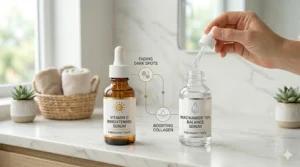
| Niacinamide (Vit B3) | Barrier + pigment regulation | Complementary | Safe | Best for dark spots, pores |
| Vitamin C (L-Ascorbic) | Antioxidant + brightening | Complementary | Safe (topical) | Degrades quickly; needs stable packaging |
| Azelaic Acid (≤10%) | Anti-pigment + anti-bacterial | Moderate | Generally safe | Particularly useful for pregnancy acne/melasma |
The honest read from this table: bakuchiol stands alone as the most comprehensively anti-aging of the pregnancy-safe options — the one that most closely replicates the multi-pathway action of retinol (collagen, cell turnover, texture, tone). Peptides, niacinamide, and Vitamin C are excellent supporting players, but they’re not equivalent substitutes. The best formulas stack bakuchiol with two or three of these co-stars — which is why the products in this roundup that include Matrixyl 3000 or niacinamide alongside bakuchiol consistently outperform single-ingredient alternatives.
✨ Don’t Miss These Exclusive Deals!
🔍 Ready to upgrade your pregnancy skincare? Click on any highlighted product above to check current pricing and availability on Amazon. These carefully selected pregnancy safe retinol substitute options will help you maintain radiant, youthful skin through every trimester and beyond!
FAQ: Pregnancy Safe Retinol Substitute
❓ Is bakuchiol completely safe during pregnancy?
❓ How long does it take to see results from a bakuchiol serum?
❓ Can I use bakuchiol while breastfeeding?
❓ What concentration of bakuchiol should I use during pregnancy?
❓ Can I combine bakuchiol with vitamin C serum during pregnancy?
Conclusion: Your Skin Doesn’t Have to Wait Nine Months
The idea that pregnancy means putting your skincare on pause is outdated, and honestly, a little unfair. Your body is doing the most extraordinary biological work of your life. Your skin deserves attention that honors that — not a shelf cleared of everything useful.
The pregnancy safe retinol substitute category, led by bakuchiol, has matured into a genuinely effective, science-backed space. The 2018 British Journal of Dermatology study wasn’t a fluke. Thousands of expecting mothers are now using these formulas with real results — smoother texture, more even tone, firmer skin — without the anxiety of wondering whether their skincare is working against the pregnancy they’re so carefully protecting.
The seven products in this guide represent a range of needs, budgets, and skin types. Start with what matches your trimester and skin profile, use it consistently for at least 8 weeks before assessing results, and keep your OB-GYN in the loop on any new product you introduce. Pregnancy skincare doesn’t have to be restrictive. It just has to be smart.
✨ Ready to start your pregnancy safe skincare journey?
Click through any of the products in this guide to check current pricing on Amazon. You — and your skin — have earned a routine that works.
Recommended for You
- 7 Best Bakuchiol Serum Retinol Alternatives That Actually Work (2026)
- Centella Asiatica Acne Scar Healing: 7 Best Products in 2026
- 7 Best Centella Asiatica Cream Sensitive Skin 2026 — Calm & Heal
Disclaimer: This article contains affiliate links. As an Amazon Associate, I earn from qualifying purchases. If you purchase products through these links, we may earn a small commission at no additional cost to you.
✨ Found this helpful? Share it with your friends! 💬🤗
