
In This Article
There’s a weed growing in the marshes of Madagascar that dermatologists have been quietly obsessed with for decades. Quietly — until K-beauty turned it into a global phenomenon, and now you can’t scroll through a skincare subreddit without tripping over the words cica, tiger grass, or gotu kola. That weed is Centella Asiatica, and if you have sensitive skin, it might just be the most important ingredient you’ll ever put on your face.
But here’s the thing. Not all centella asiatica cream for sensitive skin is created equal. The difference between a mediocre cica cream and a genuinely transformative one lies in concentration, formulation, and the specific compounds they’re delivering to your barrier. A cream that slaps “centella extract” as the 22nd ingredient is not the same animal as one where tiger grass makes up 70% of the formula.
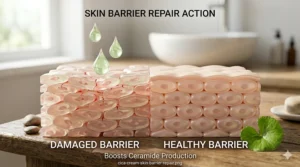
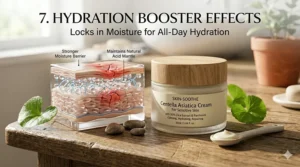
So what exactly is centella asiatica doing for your skin? Think of your skin barrier as a brick wall — and sensitive, reactive skin as a wall where half the mortar has crumbled. Centella contains four powerhouse bioactive compounds — asiaticoside, asiatic acid, madecassic acid, and madecassoside — and each one plays a distinct role in patching that wall back together. Clinical research has shown that a cream containing centella leaf extract, ceramide, and panthenol reduced sensitive skin symptom scores by 66% in just two weeks. Products containing 5% centella extract have demonstrated a 25% boost in hydration and an 18% reduction in transepidermal water loss after four weeks of use.
For rosacea sufferers, eczema warriors, and anyone who can’t walk past a fragrance counter without their face staging a protest, centella asiatica cream for sensitive skin is worth understanding deeply — not just buying blindly. This guide does the digging so you don’t have to.
Quick Comparison: 7 Best Centella Asiatica Creams at a Glance
| Product | Key Active | Centella % | Best For | Price Range |
|---|---|---|---|---|
| COSRX Centella Blemish Cream | Pure centella + madecassoside | High concentrate | Blemish-prone sensitives | $10–$15 range |
| SKIN1004 Hyalu-Cica Moisture Cream | Centella + Hyaluronic Acid | Madagascar-sourced | Dry & dehydrated skin | $15–$20 range |
| La Roche-Posay Cicaplast Balm B5 | Madecassoside + Panthenol B5 | Clinical grade | Reactive & compromised skin | $15–$20 range |
| Dr. Jart+ Cicapair Sensitive Skin Moisturizer | Cica Complex + Allantoin | Full-spectrum | Redness & rosacea | $35–$45 range |
| PURITO Centella Unscented Serum | 34,860 ppm centella | Ultra-high | Fragrance-sensitive skin | $15–$22 range |
| SKIN1004 Probio-Cica Enrich Cream | Centella + Probiotics | Rich barrier formula | Dry/combo & aging skin | $18–$25 range |
| Erborian Cica Cream | Centella Asiatica leaf water | Hydration-focus | Dull, tired sensitive skin | $30–$40 range |
These price ranges are approximate and based on research at time of writing. Please check Amazon for current pricing.
The table above makes one thing immediately clear: there’s a centella cream for every budget and every skin concern. But price alone is a terrible decision-making tool here. The COSRX at under $15 actually outperforms several options three times its price in blemish reduction. Meanwhile, Dr. Jart+’s premium price buys you something specific — a clinically calibrated redness-correction formula that budget picks genuinely can’t replicate. Use the “Best For” column, not the price column, to find your match.
💬 Just one click — help others make better buying decisions too! 😊
Top 7 Centella Asiatica Creams for Sensitive Skin — Expert Analysis
1. COSRX Centella Blemish Cream — The Holy Grail Spot Treatment
This is the one people with acne-prone sensitive skin have been recommending to their friends in hushed, reverent tones for years. And rightly so. The COSRX Centella Blemish Cream is a concentrated treatment cream (30g / 1.05 oz) that combines pure centella asiatica extract with madecassoside — and it hits hard.
The formulation is notably lean and clean: paraben-free, vegan, and stripped of the usual suspects that irritate reactive skin. What makes it stand out from the sea of “cica creams” is its focus on treatment rather than just soothing. The madecassoside directly targets inflammatory pathways, meaning it doesn’t just calm redness after the fact — it interrupts the process that creates the redness in the first place. For someone dealing with active blemishes layered on top of an already sensitive, reactive baseline, that distinction matters enormously.
What most buyers overlook: this cream works better as a targeted treatment than an all-over moisturizer. Dabbed on individual blemishes and areas of active redness at night, it’s remarkably effective. Used as a full-face moisturizer, the texture may feel too concentrated and potentially too occlusive for oilier skin types.
Customer feedback on Amazon is enthusiastic and consistent — reviewers frequently mention overnight improvement in active spots and reduced post-acne marks over weeks of regular use. Cruelty-free and produced by one of K-beauty’s most trusted brands.
✅ Precisely targets blemishes + redness simultaneously
✅ Paraben-free, vegan, cruelty-free formula
✅ Exceptional value for the concentration level
❌ Small 30g size — heavy users will burn through it quickly
❌ Better as a spot treatment than full-face moisturizer
Price range: $10–$15. For what it delivers per milliliter, this is arguably the best value centella purchase on Amazon.
2. SKIN1004 Hyalu-Cica Moisture Cream — The Everyday Hydration Workhorse
If COSRX is the surgeon, SKIN1004’s Hyalu-Cica Moisture Cream is the physical therapist — it shows up every day, consistently, and does the quiet work of rebuilding. Available in a generous 2.53 fl oz / 75ml size, this lightweight gel moisturizer pairs Madagascar-sourced centella asiatica with five forms of hyaluronic acid, creating a dual-action formula that soothes while it deeply hydrates.
The Madagascar sourcing is worth understanding. Plants grown in that island’s unique soil conditions are naturally higher in asiaticoside and madecassic acid content — which is why SKIN1004 has built their entire brand identity around it. This isn’t marketing fluff; it’s soil chemistry. Their centella is wildcrafted from untouched growing regions, which means fewer agricultural interventions and higher compound concentrations than mass-farmed alternatives.
In practical terms, the five-type hyaluronic acid complex (ranging from high-molecular surface hydration to low-molecular deep-penetration HA) means this cream works at multiple layers of the skin. For someone with sensitive skin that also skews dry or dehydrated — which is incredibly common, since compromised barriers lose water faster than healthy ones — this combination addresses both problems simultaneously rather than forcing you to layer multiple products.
The gel-cream texture is a genuine pleasure: absorbs in seconds, no tackiness, no white cast. A perfect daily driver morning and night.
✅ Five-type hyaluronic acid for multi-depth hydration
✅ Madagascar-sourced centella for higher compound potency
✅ Lightweight gel texture suits all climates and seasons
❌ Fragrance-free but not quite “bare minimum” in ingredient list — patch test recommended for extremely reactive skin
❌ May not provide enough occlusion for very dry skin in winter
Price range: $15–$20. Outstanding value given the formula complexity and generous size.
3. La Roche-Posay Cicaplast Balm B5 — The Western Dermatology Standby
Some products earn their reputation slowly, through decades of dermatologist recommendations. The La Roche-Posay Cicaplast Balm B5 is one of those. This is the tube sitting in the offices of European dermatologists, recommended to post-procedure patients, new mothers, and anyone whose skin has been, in the clinical euphemism, “compromised.” It’s also, notably, the first centella-based product many Western skincare users encounter — and it rarely disappoints.
The formula pairs madecassoside (centella’s most-studied isolated compound) with vitamin B5 (panthenol), shea butter, and LRP’s signature Thermal Spring Water. What this means in practice: madecassoside handles the anti-inflammatory and barrier-repair duties, panthenol adds another layer of moisture retention and healing, and the shea butter provides a semi-occlusive seal that locks everything in. The texture is rich — not quite an ointment, but closer to one than a cream. This is deliberately designed for skin that needs protection and time to heal, not just daily hydration.
The spec sheet won’t tell you this: Cicaplast Balm B5 is uniquely effective used as a “barrier bandage” over other actives. If you’ve over-exfoliated, used too much retinol, or experienced a reaction to another product, a thin layer of this over your entire face before bed is one of the fastest recovery tools in the sensitive-skin toolkit. Dermatologist-tested, pediatric-controlled, and safe for use on babies — which tells you everything about its gentleness profile.
✅ Clinical-grade madecassoside concentration
✅ Ideal “recovery” treatment after skin reactions or procedures
✅ Fragrance-free, paraben-free, lanolin-free
❌ Rich, slightly heavy texture — not ideal as daily moisturizer for oily skin
❌ Some users find it too occlusive for humid climates
Price range: $15–$20 for the 40ml tube. Trusted across decades — this one earns its place in every sensitive-skin bathroom cabinet.
4. Dr. Jart+ Cicapair Sensitive Skin Moisturizer — The Premium Redness Specialist
At the premium end of the centella asiatica cream for sensitive skin category sits the Dr. Jart+ Cicapair Sensitive Skin Moisturizer — and it commands its price with purpose. This isn’t the product you reach for when you want a simple moisturizer. This is the product you buy when your skin is constantly, frustratingly, visibly red, and nothing else is working.
Dr. Jart+ developed their Cicapair line around what they call “Cica Complex” — a carefully calibrated ratio of centella asiatica compounds alongside allantoin, a wound-healing ingredient with its own clinical backing. The combination doesn’t just soothe inflammation; it actively works on the microvascular issues that cause persistent redness in the first place. For rosacea-prone skin, this distinction between “calming redness temporarily” and “addressing its underlying mechanisms” is the difference between a band-aid and actual treatment.
The formula is also thoughtfully layered with skin-barrier-supportive ingredients including panthenol and ceramide precursors. This is important because rosacea and persistent redness almost always involve a compromised barrier — and patching the barrier reduces both the frequency and severity of flares over time. What most buyers overlook: the real benefits of Dr. Jart+ Cicapair aren’t visible in week one. This is a six-to-eight-week skin rehabilitation product, not an overnight fix. Users who stick with it consistently report significant, lasting reductions in baseline redness.
✅ Specifically engineered for rosacea-prone and persistently red skin
✅ Addresses both symptoms and underlying barrier dysfunction
✅ Dermatologist-tested, suitable for sensitive skin
❌ Premium price point — not entry-level
❌ Rich texture may feel heavy for non-dry skin types
Price range: $35–$45. Worth the investment if redness is your primary skin concern and cheaper options haven’t delivered.
5. PURITO Centella Unscented Serum — The Fragrance-Sensitive Skin Hero
The name says “serum,” but the PURITO Centella Unscented Serum functions as a lightweight essence-cream hybrid and deserves its place on any centella asiatica cream list for one very specific reason: at 34,860 ppm of pure centella asiatica, this delivers one of the highest raw concentrations of any product in this price category on Amazon.
Let that number sink in. Most cica creams list centella somewhere in the middle of their ingredient deck. PURITO’s formula puts it front and center — verified concentration, not marketing language. On top of that, their proprietary CICASOME technology uses liposome encapsulation to deliver centella compounds deeper into the skin layers rather than having them sit on the surface. This is the same delivery innovation that a 2026 study in Frontiers in Medical Technology found dramatically enhanced wound closure rates and collagen deposition in encapsulated centella formulas compared to standard delivery.
For anyone with fragrance sensitivity — and the number of people discovering they’re fragrance-sensitive is genuinely rising, as fragrances are the most common cause of contact dermatitis — the unscented formulation is not a minor detail. It’s the entire point. This is K-beauty engineered specifically for skin that reacts to almost everything. Clinical testing by PURITO showed 100% of test subjects reported soothed sensitive skin after four weeks of use.
✅ 34,860 ppm centella — genuinely high concentration
✅ CICASOME liposome delivery for deeper penetration
✅ Fragrance-free, vegan, cruelty-free
❌ Serum-weight texture — needs a separate moisturizer on top in dry conditions
❌ 60ml size feels small for full-face daily use
Price range: $15–$22. For the concentration and technology, this punches well above its weight.

6. SKIN1004 Probio-Cica Enrich Cream — The Richer Formula for Barrier Rebuilding
SKIN1004 makes this list twice, and for good reason — the Probio-Cica Enrich Cream addresses a completely different need than the Hyalu-Cica. Where that cream is your lightweight daily driver, this one is your heavy-duty barrier reconstruction project. Available in a 50ml / 1.69 fl oz jar, it combines Madagascar centella with probiotics, phytosterol, and fatty acids in what the brand calls a “golden ratio” for barrier repair.
The probiotics addition is more significant than it might appear. The skin microbiome — the community of bacteria living on your skin — plays a measurable role in how sensitive and reactive skin responds to environmental stressors. Research increasingly shows that disrupted skin microbiomes are common in sensitive, eczema-prone, and rosacea-affected skin. Probiotics in topical formulas help rebalance that microbial environment, meaning this cream is working on three fronts simultaneously: centella compounds for inflammation, barrier lipids for physical sealing, and probiotics for microbiome support.
The texture has acquired something of a cult following. Users consistently describe it as feeling “rich without heaviness” — a rare achievement in skincare formulation. The slightly viscous, gel-like consistency means it absorbs well even on combination skin, avoiding the pore-clogging concerns that come with some heavier barrier creams. Dermatologically tested, non-comedogenic, and free from harmful additives.
✅ Triple-action formula: centella + barrier lipids + probiotics
✅ Luxurious yet non-heavy texture suits combination skin
✅ Non-comedogenic and dermatologically tested
❌ Jar packaging exposes formula to air and bacteria over time
❌ Premium compared to other SKIN1004 options
Price range: $18–$25. Best choice in this lineup for combination or aging sensitive skin that needs serious, multi-dimensional barrier support.
7. Erborian Cica Cream — The European-Korean Fusion Classic
Erborian occupies an unusual niche: a brand founded on Korean skincare philosophy but manufactured with European cosmetic standards, sold widely across US Amazon and in Sephora globally. The Erborian Cica Cream is their flagship centella product — a rich, white cream that uses centella asiatica leaf water (rather than dry extract) as a primary vehicle, delivering the ingredient in a more water-soluble, immediately bioavailable form.
The texture is distinctly European in its approach — thicker and more emollient than most Korean gel-creams, with a finish that leaves skin visibly soft and slightly luminous rather than simply matte. For sensitive skin that skews dry, this is often the more satisfying experience. Where some K-beauty centella formulas optimize purely for soothing, Erborian layers in meaningful hydration alongside it, making this a genuinely complete moisturizer rather than a targeted treatment.
What most buyers overlook: the “leaf water” formulation approach means centella compounds are suspended in their natural aqueous matrix rather than being isolated, concentrated, and re-dissolved. Some formulation scientists argue this maintains a synergistic compound ratio that pure extracts can disrupt. Whether that translates to measurably better skin outcomes is debatable — but for users who’ve found isolated-extract cica creams irritating (a small but real segment), the leaf water approach often proves more tolerable.
Erborian has a devoted following among French pharmacy devotees and skincare minimalists who want one product that does everything gracefully.
✅ Centella leaf water for natural, synergistic delivery
✅ Rich, luminous finish perfect for dry sensitive skin
✅ European-Korean manufacturing standards
❌ Higher price point than equivalent Korean competitors
❌ Scented — not suitable for fragrance-sensitive skin
Price range: $30–$40. Premium but justified for dry, sensitive skin seeking a complete daily moisturizer with excellent sensory payoff.
✨ Don’t Miss These Exclusive Deals!
🔍 Take your sensitive skin routine to the next level with these carefully selected products. Click on any highlighted item to check current pricing and availability on Amazon. These formulas will help you achieve the calm, healthy-looking skin you deserve!
How to Build a Korean Cica Skincare Routine That Actually Works
Understanding which centella asiatica cream to buy is only half the battle. The other half is knowing where it fits in your routine — because layering order matters more in skincare than most people realize, and a transformative cica cream used at the wrong step will underperform every time.
Step 1: Start With a Gentle Low-pH Cleanser
Alkaline cleansers are a silent destroyer of sensitive skin barriers. Most traditional bar soaps sit at pH 9-10; your skin’s natural pH is around 5.5. Washing with an alkaline cleanser essentially erases the acid mantle you spent your whole day rebuilding. Before any centella cream can do its job, your cleansing step needs to be pH-appropriate — look for cleansers specifically marketed as “low-pH” or “pH-balanced.”
Step 2: Apply Your Toner or Essence (If Using)
If your routine includes a hydrating toner or centella essence — like SKIN1004’s Probio-Cica Essence Toner — this goes on after cleansing on damp skin. Pat, don’t rub. Rubbing creates micro-friction that activates inflammatory pathways in sensitive skin.
Step 3: Serums — Thinnest to Thickest
If you’re using the PURITO Centella Unscented Serum, it lives here. The lightweight, water-based serum texture needs to penetrate before your cream creates a seal over it. This sequencing is where most routine-builders go wrong — layering a gel serum over a cream means the serum can’t absorb properly.
Step 4: Your Centella Asiatica Cream for Sensitive Skin
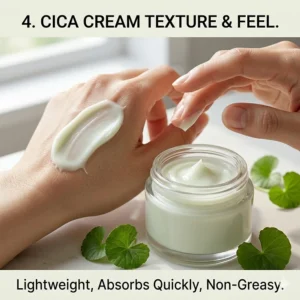
This is the step you’ve been building toward. Apply your chosen centella cream while the previous layers are still slightly damp — this “damp skin” technique dramatically improves absorption of humectants and the efficacy of active compounds. Use the amount of a small pea for the entire face; most people massively over-apply moisturizer.
Step 5: SPF (Morning Only — Non-Negotiable)
This one isn’t negotiable, and most dermatologists will tell you this is where sensitive skin care fails most catastrophically. UV exposure is one of the primary drivers of barrier disruption and inflammatory skin conditions. All the centella cream in the world won’t compensate for unprotected sun exposure. Use a mineral SPF 30+ for sensitive skin specifically — chemical sunscreens can be irritating for reactive skin types.
Common First-30-Days Mistakes to Avoid
- Over-applying product. More product does not equal more benefit. It equals clogged pores and product pilling.
- Introducing too many new products simultaneously. If your skin reacts, you’ll have no idea which product caused it. Introduce one new product at a time, waiting at least one week between introductions.
- Expecting overnight results. Barrier repair is slow. Clinical studies measure outcomes at four to eight weeks for a reason.
Real-Life Skin Profiles: Which Centella Cream Is Actually Right for You?
Theory is one thing. Here’s how the seven products above map to real human beings with real skin situations.
Profile 1: “My skin is reactive to almost everything. I break out from fragrances and can’t try most new products.”
This is the ultra-sensitive profile — the person whose skin has essentially gone into defensive lockdown. The priority is ruthless simplicity and fragrance elimination. Start with PURITO Centella Unscented Serum as your active-treatment layer, followed by COSRX Centella Blemish Cream on any active spots. Both are fragrance-free, paraben-free, and formulated specifically for reactive skin. If the serum alone provides enough hydration, skip the additional cream.
Profile 2: “I have rosacea. My face is constantly red and I’ve tried everything.”
The rosacea profile needs targeted redness intervention, not just generic soothing. Dr. Jart+ Cicapair Sensitive Skin Moisturizer was made for you. Commit to it for eight weeks minimum — rosacea-focused products require sustained use to show their best results. Pair it with a zinc-based mineral SPF to avoid UV-triggered flares.
Profile 3: “My skin is sensitive AND dry. I’m flaky and tight by afternoon.”
Dry sensitive skin is a common combination because compromised barriers lose water faster. You need both soothing and heavy-duty hydration. Erborian Cica Cream (for its emollient richness and luminous finish) or SKIN1004 Probio-Cica Enrich Cream (for its barrier-rebuilding lipid complex) will serve you best. In winter, layer either of these over the SKIN1004 Hyalu-Cica Moisture Cream for extra hydration depth.
Profile 4: “I’m generally sensitive but my main issue is blemishes and post-acne marks.”
This is the acne-prone sensitive profile — probably the most common skin type among people searching for centella products. COSRX Centella Blemish Cream as a spot treatment, with the SKIN1004 Hyalu-Cica Moisture Cream as your daily all-over moisturizer. The COSRX targets active blemishes; the Hyalu-Cica keeps your barrier intact so you’re not creating new vulnerabilities.
Profile 5: “I just over-exfoliated / had a reaction. My skin is burning and peeling.”
Emergency repair mode. La Roche-Posay Cicaplast Balm B5. Period. Strip your routine back to cleanser + this balm + SPF until your barrier is healed. No actives, no new products, nothing. Just let the madecassoside and panthenol do their work for one to two weeks.
What Makes a Great Centella Cream — Features That Actually Matter (And Those That Don’t)
Shopping for centella asiatica cream for sensitive skin is a minefield of marketing jargon. Here’s a cut-through guide on what’s worth your attention and what’s just packaging.
Features That Actually Matter
Centella concentration and position in the ingredient list. Ingredients are listed by concentration, highest to lowest. If “Centella Asiatica Extract” appears after the 10th ingredient, you’re getting trace amounts. Look for centella in the first five ingredients, or for brands that state concentration percentages explicitly (like PURITO’s 34,860 ppm).
Specific compound identification. “Centella extract” is vague. Look for formulas that identify specific compounds — madecassoside, asiaticoside, asiatic acid, madecassic acid — either in the ingredient list or in the product description. The Cleveland Clinic notes that these four actives are what make centella medicinally effective, not the plant in generic form.
Fragrance status. For sensitive skin specifically, fragrance is the most common contact allergen in cosmetics. Fragrance-free isn’t just a preference — for genuinely reactive skin, it’s often the difference between a product that works and one that makes things worse.
Complementary active ingredients. Centella works best alongside barrier-supporting ingredients: ceramides, panthenol, hyaluronic acid, niacinamide. Formulas that combine centella with these actives address multiple aspects of sensitive skin simultaneously.
pH compatibility. A centella cream at the wrong pH won’t penetrate effectively. Well-formulated Korean skincare typically maintains a skin-compatible pH of 5-6. This is rarely listed on packaging but is worth researching for products you’re serious about.
Features That Don’t Matter As Much As Brands Claim
“All-natural” or “organic” labeling. Natural doesn’t mean non-irritating — many powerful botanical allergens are entirely natural. Focus on the specific ingredient list rather than marketing certifications.
Packaging aesthetics. A gorgeous glass jar is actually worse for your centella cream than a humble squeeze tube. Air exposure degrades actives over time; opaque, sealed packaging preserves your formula far better than open-jar designs.
Celebrity or influencer endorsements. The K-beauty products most beloved by dermatologists (COSRX, SKIN1004, La Roche-Posay) are not the ones with the biggest influencer budgets. Let the ingredient lists and clinical data do the talking.
“Visible results in 24 hours” claims. Real barrier repair takes four to eight weeks. A product claiming dramatic overnight transformation is either misleading you or relying on cosmetic film-forming agents that temporarily improve appearance without addressing underlying issues.
Centella Asiatica vs. Traditional Soothing Ingredients: A Comparative View
| Ingredient | Primary Mechanism | Best For | Limitation |
|---|---|---|---|
| Centella Asiatica | Anti-inflammatory + barrier repair + collagen stimulation | Redness, rosacea, barrier damage, blemishes | Slower onset than steroids |
| Niacinamide | Barrier support, brightening, pore-minimizing | Uneven tone, large pores, mild irritation | Limited for acute inflammation |
| Ceramides | Physical barrier sealing, moisture retention | Dry, compromised, eczema skin | No anti-inflammatory action |
| Aloe Vera | Surface soothing, cooling | Mild redness, sunburn | Weak on chronic inflammation |
| Oat Extract | Surface calming, anti-itch | Eczema, allergy-triggered sensitivity | Less effective on rosacea |
The comparison above reveals centella’s real competitive advantage: it’s the only ingredient in the table that genuinely does all three jobs — soothes inflammation, repairs the barrier, and stimulates collagen. A 2021 double-blind study found that centella asiatica achieved equivalent barrier repair results to ceramides — long considered the gold standard — in workers with occupational skin dryness. That finding changed how many formulators think about cica as a primary ingredient, not just a supporting one.
Niacinamide brightens and strengthens, but it doesn’t have centella’s anti-inflammatory potency for acute redness. Ceramides seal and protect but don’t address the inflammatory cascade that created the damage in the first place. For sensitive skin that is both damaged and inflamed — which describes most of the people reading this article — centella is the most efficient single ingredient to reach for.
✨ Don’t Miss These Exclusive Deals!
🔍 Sensitive skin deserves better than guesswork. Click any of the highlighted products above to check current pricing and availability on Amazon — your skin will thank you.
Long-Term Cost & Barrier Maintenance: The ROI of Getting This Right
Here’s an uncomfortable truth about sensitive skin care: most people spend more money when they’re using the wrong products than they would if they’d invested in the right ones upfront.
The typical reactive-skin shopping cycle looks like this: buy a well-marketed product that triggers a reaction, spend money on recovery products, try another trendy launch, repeat. A proper centella asiatica cream for sensitive skin — one matched to your actual skin profile — breaks that cycle. And when you break that cycle, the math changes dramatically.
The Real Cost Calculation
Take the COSRX Centella Blemish Cream at around $12. Used as a targeted treatment (a few dabs per day, not a full-face application), a 30g jar lasts approximately six to eight weeks. That’s roughly $1.50–$2 per week for a clinically effective blemish and redness treatment. Compare that to the $25 “calming serum” that triggered a reaction, the $18 replacement moisturizer purchased in a panic, and the $30 prescription topical eventually required. The math favors the cica cream embarrassingly.
For full-face centella moisturizers, the value calculation shifts slightly. The SKIN1004 Hyalu-Cica Moisture Cream (75ml, $15–$20) at a normal use rate of roughly 0.3ml per application lasts around 125 applications — about four months of daily use. At $20, that’s $5 a month for a sophisticated, well-formulated centella moisturizer. A comparable Western-brand moisturizer with equivalent active ingredients would typically run $35–$50 for the same duration.
Maintenance: What to Do After Your Skin Calms Down
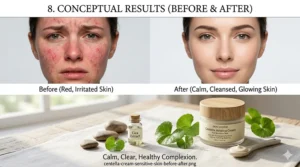
One of the most common — and most costly — sensitive-skin mistakes is abandoning a routine the moment your skin improves. The inflammatory tendency in sensitive, rosacea-prone, and barrier-compromised skin doesn’t disappear; it goes dormant. Consistent, low-stimulation maintenance is what keeps it dormant.
For long-term sensitive skin management, dermatologists typically recommend:
- Maintaining your centella moisturizer year-round, adjusting concentration (lighter in summer, richer in winter)
- Introducing actives like retinol or vitamin C only after your barrier is demonstrably healthy — and buffering them always with a centella cream on top
- Keeping a “skin diary” for the first 90 days of any new product to track changes objectively rather than relying on day-to-day perception
FAQ: Your Centella Asiatica Cream Sensitive Skin Questions Answered
❓ What is the best centella asiatica cream for sensitive skin with rosacea?
❓ Can I use centella asiatica cream every day on sensitive skin?
❓ What is madecassoside and how is it different from centella extract?
❓ Is Korean cica skincare routine suitable for eczema-prone skin?
❓ How long does centella asiatica cream take to show results on sensitive skin?
Conclusion: The Quiet Revolution in Your Medicine Cabinet
There’s something almost poetic about the fact that one of the most powerful ingredients in modern sensitive skincare is an ancient herb that’s been growing in Southeast Asian marshes for thousands of years. The Korean beauty industry didn’t invent centella asiatica — they just reintroduced it to the world with the rigorous formulation standards and clinical testing it always deserved.
If you’ve been cycling through product after product, watching your sensitive skin react and retreat, the answer might genuinely be this simple: a well-chosen centella asiatica cream for sensitive skin, consistently applied, given time to work. Not ten products. Not a complicated 12-step routine. Just the right cica cream and patience.
For most people reading this: start with the COSRX Centella Blemish Cream if blemishes are your primary concern, the SKIN1004 Hyalu-Cica Moisture Cream if daily hydration is your focus, or the La Roche-Posay Cicaplast Balm B5 if you’re in active recovery mode. Any of those three will give you a reliable, research-backed foundation to build on.
And then, crucially — give it eight weeks before judging. Skin repair isn’t measured in days.
✨ Don’t Miss These Exclusive Deals!
🔍 Ready to transform your sensitive skin routine? Click on any highlighted product name to check current pricing and availability on Amazon. Your barrier-healthy skin is waiting.
Recommended for You
- 7 Copper Peptide Cream Benefits: Transform Aging Skin 2026
- 7 Best Peptide Serums for Wrinkles That Actually Work (2026)
- 7 Best Acne Scar Reducing Serum Silicone Products (2026 Guide)
Disclaimer: This article contains affiliate links. As an Amazon Associate, I earn from qualifying purchases. If you purchase products through these links, we may earn a small commission at no additional cost to you.
✨ Found this helpful? Share it with your friends! 💬🤗
