
In This Article
Your face is not a griddle. And yet, by 1 p.m., it might feel like one — a slick T-zone, a foundation that’s slid halfway into your pores, and a compact mirror you’re starting to resent. If you have oily skin, you already know the drill. Matte foundation for oily skin is a formula engineered specifically to control shine by absorbing excess sebum and setting to a low-shine, powder-like finish rather than a dewy one. That’s the textbook definition. The lived experience is messier: some “matte” foundations turn cakey by noon, others slide right off by 3 p.m., and a shocking number just weren’t built with genuinely oily skin in mind at all.
This guide skips the marketing fluff. We pulled real, currently sold products, dug through aggregated customer review sentiment (not invented quotes), and compared specs the way a chemist-adjacent friend would over coffee — pointing out what actually matters and what’s just packaging noise. According to the American Academy of Dermatology, oily skin is largely genetic and hormonal, which means no foundation “fixes” oil production — but the right one absolutely changes how your day looks by hour six.
We’re covering seven real products spanning drugstore to prestige, breaking down long lasting matte foundation options, what actually works for matte foundation for combination skin, and why a genuinely oil-absorbing base matters more than the word “matte” printed on the bottle. By the end, you’ll know exactly which bottle deserves a spot on your counter — and which ones to skip.
Quick Comparison Table
Before we get into the weeds, here’s the lay of the land. Every product below is designed for oil control, but they land in very different price brackets and formula philosophies.
| Product | Format | Best For | Price Range |
|---|---|---|---|
| Maybelline Fit Me Matte + Poreless | Liquid | Budget everyday wear | $8-$14 |
| L’Oreal Infallible Pro-Matte | Liquid | Long wear on a budget | $12-$15 |
| Revlon ColorStay Combination/Oily | Liquid | Combination skin | $10-$14 |
| Fenty Beauty Pro Filt’r Soft Matte Longwear | Liquid | Heat & humidity | $38-$42 |
| bareMinerals BAREPRO 24HR Matte Powder | Powder | Oil-absorbing base | $38-$44 |
| NARS Soft Matte Complete Foundation | Liquid | Blurring effect | $44-$50 |
| Estée Lauder Double Wear Stay-in-Place | Liquid | Transfer-proof wear | $44-$50 |
A quick read of this table tells you most of what you need before you even open your wallet: budget doesn’t mean bad, and price doesn’t always buy longevity. Maybelline Fit Me Matte + Poreless and L’Oreal Infallible Pro-Matte punch well above their price tags for daily oil control, while Estée Lauder Double Wear Stay-in-Place and NARS Soft Matte Complete Foundation earn their premium price with formulation tech drugstore brands haven’t fully cracked yet. If you’re deciding between a powder and a liquid, note that bareMinerals BAREPRO is the only true powder here, and it behaves very differently on skin than the other six.
💬 Found a foundation that finally works for your skin type? Just one click to help someone else stop guessing too!😊
Top 7 Matte Foundations for Oily Skin: Expert Analysis
We picked these seven to cover every price point, oil level, and application preference — including a couple of options that don’t get talked about nearly as much as they should. Every product here is currently sold; shade ranges and formulas can shift, so always check availability before you buy.
1. Maybelline Fit Me Matte + Poreless — best budget pick for everyday shine control
The standout here is the clay. Maybelline reformulated this liquid foundation to include clay and micro-powders specifically to soak up sebum through the day, and it shows in how the finish behaves on a normal work schedule. It’s a lightweight, medium-coverage formula available in roughly 40 shades with SPF in some markets, and it’s built for normal-to-oily skin rather than dry. What most buyers overlook about this bottle is that its coverage is intentionally sheer-to-medium — it’s designed to be built in thin layers, not slathered on for full coverage in one pass. Reviewers consistently report that it controls shine well through the cheeks and holds up for 8-10 hours, though the T-zone tends to need a powder touch-up by the afternoon on genuinely oily skin. A common complaint in user reviews is that shade matching can run inconsistent between batches, so patch-testing before committing to a shade is worth the extra five minutes.
Pros:
- ✅ Genuinely budget-friendly without feeling like a compromise
- ✅ Clay-based formula visibly reduces shine through the cheeks
- ✅ Wide 40-shade range with a natural, skin-like finish
Cons:
- ❌ T-zone shine can return by mid-afternoon without a powder set
- ❌ Shade consistency between batches is a recurring review complaint
Priced around $8-$14, this is the foundation to start with if you’ve never tried a mattifying formula before — the value-for-oil-control ratio here is difficult to beat.

2. L’Oreal Infallible Pro-Matte — longest wear for the price
This one leans into longevity as its whole personality. L’Oreal built Infallible Pro-Matte around a 24-hour wear claim and a demi-matte finish, meaning it’s matte but not chalky-flat. Based on the spec comparison with other drugstore mattes, its water-based, oil-free formula sits closer to a “second skin” texture than a heavy paste, which is why reviewers repeatedly note it doesn’t feel thick even after several reapplications through the day. Aggregated customer sentiment is notably consistent: people with oily skin report it holding for 8-12 hours without primer or powder, with shine limited mostly to the nose late in the day. What the spec sheet won’t tell you, but reviewers note, is that it can grip onto any dry patches on the cheeks, so those with combination skin should moisturize those areas well beforehand. It comes in roughly a dozen shades — noticeably fewer than some competitors, which is worth knowing if your shade match is tricky.
Pros:
- ✅ Genuinely long wear time reported across multiple independent reviews
- ✅ Demi-matte finish avoids the flat, chalky look of older matte formulas
- ✅ Performs well even without primer or setting powder layered on top
Cons:
- ❌ Limited shade range compared to newer drugstore launches
- ❌ Can cling to dry patches if skin isn’t prepped beforehand
At around $12-$15, it’s a strong long lasting matte foundation option for anyone whose current base doesn’t survive past lunch.
3. Revlon ColorStay Liquid Foundation for Combination/Oily Skin — built specifically for T-zone shine
Revlon didn’t just make a matte foundation and slap “oily skin” on the label — this formula is labeled specifically for combination and oily skin, and it includes SPF 15 as a built-in bonus. The standout feature is its full-coverage, matte-finish formula that’s engineered to resist breakdown in oil-prone zones rather than across the whole face uniformly. Based on the spec comparison, this positions it well for people whose forehead and nose get shiny while their cheeks stay closer to normal — a genuinely common oily-skin pattern the AAD notes is tied to sebaceous gland density rather than an all-over problem. Reviewers on major retail platforms rate it consistently high (commonly in the 4.3-4.4 star range), citing reliable oil control and true-to-shade color payoff. A recurring theme in review sentiment is that it can feel slightly heavier than a lightweight tinted moisturizer, so those who prefer sheer coverage may find it richer than expected.
Pros:
- ✅ Formulated specifically for combination and oily skin types
- ✅ Includes SPF 15 without extra steps in your routine
- ✅ Strong, consistent star ratings across major retailers
Cons:
- ❌ Fuller coverage than some prefer for daily wear
- ❌ SPF content means it’s not ideal for flash photography without setting
Sitting around $10-$14, this is arguably the most directly labeled matte foundation for combination skin on the drugstore shelf.
4. Fenty Beauty Pro Filt’r Soft Matte Longwear — most heat-and-humidity resistant
Fenty’s whole pitch for this one is “Climate Adaptive Technology,” which sounds like marketing until you look at what it’s actually doing: adjusting oil absorption in real time based on environmental humidity and heat rather than mattifying the same way regardless of conditions. It’s a medium-to-full coverage, oil-free liquid available in an unusually inclusive 50-shade range, in roughly 32 mL bottles. Here’s what most buyers overlook: this formula was reportedly developed and tested under demanding conditions — long event days, hot climates, sweaty commutes — which explains why aggregated reviewer sentiment from people describing themselves as “oily or combination” skews strongly positive on longevity, with many describing it as their go-to for humid climates specifically. On paper, this means it’s less likely to break down than a foundation calibrated only for controlled indoor conditions. The trade-off, per honest reviewer feedback, is that those with normal-to-dry skin sometimes find the same matte finish reads as cakey or drying, which tells you this formula is genuinely calibrated toward oil control rather than universal flattery.
Pros:
- ✅ Adapts to heat and humidity rather than mattifying uniformly
- ✅ Exceptionally wide 50-shade range for accurate matching
- ✅ Noncomedogenic formula with strong reviewer trust for oily/combo skin
Cons:
- ❌ Can look cakey or drying on genuinely dry skin types
- ❌ No built-in SPF, so daily sun protection needs a separate step
At $38-$42, it sits in the accessible-prestige tier — a meaningful jump from drugstore, but far from the priciest option here.
✨ Don’t Miss These Exclusive Deals!
🔍 Ready to stop reapplying powder every two hours? Click through to check current pricing and availability on today’s picks — your future shine-free self will thank you.
5. bareMinerals BAREPRO 24HR Matte Powder Foundation — best oil-absorbing base for a true powder finish
This is the odd one out on this list, and intentionally so — it’s a talc-free pressed powder rather than a liquid, which changes the entire mechanism of oil control. Instead of setting to a matte finish after wearing, a powder foundation is an oil-absorbing base by design from the first swipe, physically soaking up sebum as the day progresses rather than relying on silicones to create a barrier. Based on the spec comparison with the liquid formulas on this list, that makes it a genuinely different tool: better suited to layering over a tinted moisturizer or as a standalone base for those who find liquid mattes too heavy. It’s built on a mineral base rather than the talc found in older powder foundations, which reviewers note tends to sit less obviously “powdery” on skin. What the spec sheet won’t tell you, but reviewer sentiment suggests, is that powder formats generally need a damp sponge or careful buffing technique to avoid emphasizing texture around larger pores — a legitimate learning curve if you’ve only ever used liquid foundation before.
Pros:
- ✅ Physically absorbs oil throughout the day rather than just resisting it
- ✅ Talc-free mineral formula feels lighter than older powder foundations
- ✅ Buildable coverage that layers well over other bases
Cons:
- ❌ Requires a slightly different application technique than liquid formulas
- ❌ Can emphasize texture around larger pores if applied dry with a brush
Priced around $38-$44, it’s the pick specifically for anyone whose real complaint is “I need something that actually soaks up oil,” not just something that looks matte in the mirror.
6. NARS Soft Matte Complete Foundation — best pore-blurring finish
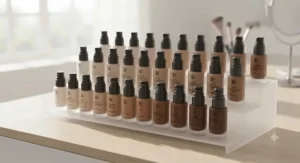
NARS built this one around its Complexion Brightening Formula, which is a skincare-forward angle for a matte product — most matte formulas historically sacrificed comfort for oil control, and this is one of the newer-generation formulas trying to do both. The standout blurring effect makeup quality here comes from how the formula diffuses light across texture and enlarged pores rather than just sitting flat on top of them, which is a meaningfully different visual result than a purely absorbent matte. It’s available across roughly 40 shades globally, a genuinely wide range for a prestige brand. Reviewers and side-by-side comparisons with competitors like Fenty and Estée Lauder note it delivers a softer, more “your skin but blurred” look rather than a flat, powder-cast matte — appealing if you want oil control without looking overly done. On the honesty side: some ingredient-tracking communities flag that certain silicone-based texturizing agents in mattifying formulas like this one can, for some users, slightly increase surface oiliness over very long wear, which is worth knowing if you have severely oily skin rather than mild-to-moderate.
Pros:
- ✅ Genuinely blurs pores and texture rather than just flattening shine
- ✅ Skincare-forward formula designed for comfort alongside oil control
- ✅ Wide 40-shade range for a prestige-tier product
Cons:
- ❌ Premium price point compared to drugstore alternatives on this list
- ❌ Silicone-based texturizers may feel less ideal for severely oily skin over very long wear
At roughly $44-$50, this is the choice for anyone prioritizing a soft-focus finish over a flat, purely absorbent one.
7. Estée Lauder Double Wear Stay-in-Place Makeup — gold standard for transfer-proof wear
This is the foundation other transfer-proof foundation formulas get benchmarked against, and it’s earned that reputation the boring, reliable way: over two decades of consistent reformulation rather than a single viral launch. It’s a 24-hour wear liquid with a flawless matte finish across more than 55 shades, marketed as heat, humidity, and perspiration resistant with a genuinely waterproof claim. Based on the spec comparison with everything else on this list, its “no creasing, caking, or settling” positioning holds up in review after review — it’s frequently cited in side-by-side comparisons as the most transfer-resistant option among prestige mattes, including in direct comparisons against Fenty and NARS. Reviewers consistently describe it as needing minimal touch-ups even through 10+ hour days, which is precisely the transfer-proof foundation behavior most oily-skin shoppers are actually chasing. The honest trade-off: that same tenacious hold means it can be genuinely difficult to remove at night without an oil-based cleanser first, and a handful of ingredient-sensitivity communities flag it as potentially worsening oiliness for some users over extremely long wear, which is worth weighing against your specific skin’s tolerance.
Pros:
- ✅ Widely regarded benchmark for transfer-proof, all-day wear
- ✅ Massive 55-plus shade range for accurate color matching
- ✅ Consistently rated highly across independent, non-sponsored reviews
Cons:
- ❌ Requires proper oil-based cleansing to remove fully at night
- ❌ Premium price point among the highest on this list
At around $44-$50, it’s the safe bet for anyone whose top priority is a foundation that simply will not budge.
Practical Usage Guide: Getting the Most Out of Any Matte Foundation
Buying the right bottle is half the equation — application technique is the other half, and it’s where most of the “this didn’t work for me” complaints actually originate. Start with a clean, oil-free base: skip heavy, occlusive moisturizers and reach for a lightweight, oil-free hydrator instead, since heavy creams underneath will fight any mattifying formula from minute one. Apply a pore-minimizing or mattifying primer specifically through the T-zone rather than all over the face; over-priming dry cheek areas can actually make matte foundation look patchy there. Use a damp makeup sponge rather than a dry brush for liquid formulas — it presses product into skin rather than dragging it, which meaningfully extends wear time on oily areas.
In your first 30 days with a new matte foundation, the most common mistake is applying too much product at once, chasing full coverage in a single pass. Build in thin layers instead, letting each one set for 60-90 seconds before adding more. Blot rather than reapply when shine appears midday — pressing a tissue or blotting paper onto oily zones removes excess sebum without disturbing the coverage underneath, whereas swiping on more foundation just adds product on top of oil. Finally, set with a translucent, oil-absorbing powder only where you actually get shiny, not across your entire face, since over-powdering dry zones accelerates the exact caking most people are trying to avoid.
Real-World Scenarios: Which Foundation Fits Your Life
The college student on a budget, commuting to campus daily: With limited funds and a need for something reliable through back-to-back classes, Maybelline Fit Me Matte + Poreless or L’Oreal Infallible Pro-Matte make the most sense — both offer genuine oil control without the premium price tag, and neither requires an elaborate routine to perform well.
The professional working long, high-stakes days in a humid city: Someone spending 10+ hours in meetings, presentations, or client-facing roles in a hot, humid climate needs longevity above all else. Fenty Beauty Pro Filt’r Soft Matte Longwear or Estée Lauder Double Wear Stay-in-Place are built for exactly this — both are explicitly engineered around heat and humidity resistance rather than just indoor, climate-controlled wear.
The combination-skin shopper tired of patchy results: If your T-zone is oily but your cheeks lean normal-to-dry, uniform matte formulas often backfire. Revlon ColorStay Liquid Foundation for Combination/Oily Skin or bareMinerals BAREPRO 24HR Matte Powder — layered more heavily where needed and lighter elsewhere — solve this mismatch far better than a one-size-fits-all approach.

How to Choose Matte Foundation for Oily Skin
Picking the right formula comes down to a handful of decision points, not guesswork:
- Check the finish claim, not just the word “matte.” Demi-matte and soft matte formulas (like NARS Soft Matte Complete Foundation) diffuse shine more gently than a flat, fully matte finish — decide which look you actually want before shopping by price.
- Match coverage to your skin’s texture. Higher coverage formulas can look heavier on textured or acne-prone skin, so buildable, medium-coverage options are usually the safer starting point.
- Consider format, not just formula. Powder foundations like bareMinerals BAREPRO genuinely absorb oil differently than liquids — worth trying if liquids have consistently let you down.
- Weigh longevity claims against your actual day length. A 6-hour office day doesn’t need a 24-hour formula; save the heavy-duty options for genuinely long days.
- Read aggregated review sentiment for your specific skin pattern. Oily-all-over and combination skin respond differently to the same formula, so search reviews from people describing your specific skin type.
- Factor in removal difficulty. The most transfer-proof formulas, like Estée Lauder Double Wear, typically need proper cleansing oil at night — plan your routine accordingly.
- Don’t ignore shade range. A technically great formula in the wrong shade will always look worse than a good-enough formula in the right one.
Long Lasting Matte Foundation: How to Make Your Base Survive a 12-Hour Day
Longevity isn’t purely about the bottle — it’s a system. A genuinely long lasting matte foundation formula, like L’Oreal Infallible Pro-Matte or Estée Lauder Double Wear, gives you a strong starting point, but pairing it with the right prep multiplies the effect. Skipping moisturizer entirely is a common instinct for oily skin, but it backfires: under-hydrated skin often overproduces oil to compensate, according to dermatologist guidance from the Cleveland Clinic, which undermines even the best formula by lunchtime. A lightweight, oil-free moisturizer followed by a mattifying primer creates the actual foundation for longevity — the makeup itself is only the top layer of a three-part system.
Setting spray matters more than most people budget for. A light mist after application locks pigments in place and meaningfully reduces the midday “melting” effect that plagues even well-reviewed formulas in genuinely hot climates. Reapplication technique matters too: touching up with powder rather than fresh liquid foundation preserves the original finish rather than layering wet product on top of set product, which is where much of the cakey, heavy look after hour eight actually comes from.
Transfer-Proof Foundation: What “Won’t Budge” Actually Means
“Transfer-proof” gets thrown around loosely in marketing, but it has a fairly specific meaning: the formula resists lifting onto fabric, masks, phones, or pillowcases after it sets, typically because of film-forming polymers or silicones that create a flexible seal over skin. Estée Lauder Double Wear Stay-in-Place built its entire reputation on this property, and it’s frequently cited as the benchmark other transfer-proof foundation formulas are measured against. Fenty Beauty Pro Filt’r Soft Matte Longwear achieves something similar through its climate-adaptive approach, adjusting to sweat and humidity rather than relying purely on a static polymer film.
What most buyers overlook is that transfer resistance and breathability are often in tension — a formula engineered to never budge is also, by definition, harder to remove and more likely to feel heavier by the day’s end. If you’re mask-wearing frequently, working out midday, or simply prone to touching your face, prioritizing a genuinely transfer-proof formula is worth the trade-off. If your day is lower-contact, a lighter long-wear formula like L’Oreal Infallible Pro-Matte may deliver enough staying power without the heavier removal routine.
Matte Foundation for Combination Skin: Balancing Oily and Dry Zones
Combination skin is arguably the trickiest category to shop for, because a single matte formula applied uniformly can genuinely make things worse — mattifying the T-zone while making already-dry cheeks look flaky and emphasized. Revlon ColorStay Liquid Foundation for Combination/Oily Skin is explicitly formulated for this pattern, but technique matters just as much as product choice here. The smarter approach for any matte foundation on combination skin is zone-specific application: a slightly heavier layer through the forehead, nose, and chin, and a lighter touch — or even a different, more hydrating product entirely — through the cheeks.
NARS Soft Matte Complete Foundation‘s blurring, skincare-forward approach also performs well here, since its softer finish is more forgiving on drier zones than a flat, fully absorbent matte would be. The core principle: combination skin rarely needs a foundation that’s uniformly matte everywhere — it needs a foundation, and an application strategy, flexible enough to treat two skin types living on one face.
Matte Foundation That Doesn’t Dry Out Skin: Separating Fact From Old Formulas
The old reputation of matte foundation — chalky, drying, aging on the skin — largely comes from older generations of powder-heavy formulas that genuinely did strip moisture. Modern matte foundation that doesn’t dry out skin generally achieves oil control through absorbent minerals and film-forming polymers rather than through drying alcohols, which is a meaningfully different mechanism. NARS Soft Matte Complete Foundation is a clear example of this shift, built specifically around a brightening, skincare-forward formula rather than pure absorption. Fenty Beauty Pro Filt’r Soft Matte Longwear likewise markets itself as comfortable rather than stripping, positioning its matte finish as compatible with skin health rather than opposed to it.
To be fully honest about the limits here: no amount of formula innovation changes the fact that oily skin needs hydration too, and skipping moisturizer under any matte foundation — however gentle — increases the odds of it looking cakey by afternoon. The American Academy of Dermatology recommends looking for “oil-free,” “non-comedogenic,” or “won’t clog pores” on labels regardless of finish, which remains the most reliable signal of a genuinely skin-friendly formula.
Oil-Absorbing Base: How Mattifying Technology Actually Works
An oil-absorbing base works through one of two mechanisms: physical absorption or a barrier film. Powder formulas like bareMinerals BAREPRO 24HR Matte Powder Foundation use finely milled minerals that physically soak up sebum as it reaches the skin’s surface throughout the day — this is why powder foundations tend to look progressively more matte (rather than more oily) the longer they’re worn. Liquid formulas, by contrast, typically rely on silicones or polymers that form a breathable film over skin, reducing how visibly oil sits on the surface without physically absorbing it the same way. Maybelline Fit Me Matte + Poreless takes a hybrid approach with added clay, which does genuinely absorb some surface oil within a liquid base.
Neither mechanism stops sebum production — that’s a physiological process the Cleveland Clinic notes is tied to your sebaceous glands and largely genetic and hormonal in origin. What a well-formulated oil-absorbing base actually does is manage the visible symptoms of that oil production for several hours at a time, which is a realistic and worthwhile goal, just not a permanent fix.
Blurring Effect Makeup: How Foundations Diffuse Texture and Pores
Blurring effect makeup works optically rather than physically — it doesn’t shrink pores (nothing topical genuinely does), it diffuses how light reflects off textured or uneven skin so pores and fine lines look softer at a glance. NARS Soft Matte Complete Foundation leans hardest into this effect among the products on this list, using its brightening formula to even out light reflection across the skin’s surface. Maybelline Fit Me Matte + Poreless offers a lighter version of the same idea through its “poreless” positioning, using micro-powders to soften the visual appearance of enlarged pores without heavy coverage.
The trade-off worth knowing: the softer and more diffused a blurring formula looks in person, the less true-matte and more demi-matte it typically reads on camera, since blurring technology often relies on light-diffusing particles that can occasionally interact with camera flash. If flash photography matters for your use case, test any heavily blurring formula under those conditions before committing.
Common Mistakes When Buying Matte Foundation for Oily Skin
The single most common mistake is assuming “matte” and “oil-free” mean the same thing — some matte-finish foundations still contain oils that simply set to a matte look initially before breaking down faster on genuinely oily skin. Always check for “oil-free” or “non-comedogenic” specifically rather than relying on the word matte alone. A second frequent error is buying based on influencer wear-tests filmed in air-conditioned studios rather than your actual climate — a formula that survives eight hours indoors may not survive two hours in humid outdoor heat, which is exactly why climate-adaptive options like Fenty Beauty Pro Filt’r exist. Shoppers also commonly skip patch-testing shade matches under natural daylight, leading to returns that could have been avoided with a five-minute in-store or doorstep check. Finally, many buyers over-invest in a single “miracle” product while neglecting skin prep entirely — even the best-reviewed matte foundation on this list will underperform on unwashed, unmoisturized, unprimed skin.
Matte Foundation vs Dewy Foundation: Which Finish Actually Suits Oily Skin
| Factor | Matte Foundation | Dewy/Luminous Foundation |
|---|---|---|
| Oil control | Strong — designed to absorb or mask shine | Weak — often accentuates natural oil |
| Longevity on oily skin | Generally longer-lasting | Tends to break down faster |
| Photo performance | Can look flat under harsh flash | Often more flattering in photos |
| Best for | Oily, acne-prone, humid climates | Dry, mature, low-oil skin |
The comparison table makes the case plainly: dewy finishes are built to enhance a glow that oily skin already has in surplus, which is precisely why they tend to look overdone rather than radiant on genuinely oily skin by midday. Matte formulas like Estée Lauder Double Wear Stay-in-Place or NARS Soft Matte Complete Foundation are working with oily skin’s natural tendencies rather than against them, absorbing or masking shine instead of amplifying it. That said, the “matte always wins for oily skin” rule isn’t absolute — some newer soft-matte hybrids borrow enough luminosity from the dewy camp to avoid looking flat, which is worth testing if you’ve found pure matte formulas too severe for your taste.
Long-Term Cost & Maintenance: What You’re Really Paying For
| Product | Price Range | Approx. Wear Time | Cost-Per-Use Insight |
|---|---|---|---|
| Maybelline Fit Me Matte + Poreless | $8-$14 | 8-10 hours | Lowest upfront cost, frequent repurchase |
| L’Oreal Infallible Pro-Matte | $12-$15 | 8-12 hours | Strong value for longevity |
| Fenty Beauty Pro Filt’r Soft Matte Longwear | $38-$42 | 10-14+ hours | Higher upfront, fewer touch-ups needed |
| Estée Lauder Double Wear Stay-in-Place | $44-$50 | 12-24 hours | Premium price justified by minimal reapplication |
Looking at the numbers, the real long-term cost isn’t just the bottle price — it’s how often you’re buying setting powder, blotting papers, and touch-up products alongside a foundation that doesn’t hold up on its own. A $12 bottle that needs constant powder touch-ups may cost more monthly than a $40 bottle that needs none. Total cost of ownership for oily-skin shoppers should factor in the accessories you’re no longer buying, not just the sticker price on the foundation itself.
Safety, Regulations, and Compliance: What Labels Actually Mean
For anyone with oily or acne-prone skin, the most meaningful label to look for isn’t “matte” — it’s “non-comedogenic,” “oil-free,” or “won’t clog pores,” all of which the American Academy of Dermatology recommends checking regardless of finish. All seven products featured here carry at least one of these designations, though the specific ingredients used to achieve that claim vary between brands and aren’t independently regulated to a single legal standard in the U.S. Fragrance-free labeling is a separate, additional consideration worth checking if you have reactive or sensitive-oily skin, since fragrance is a common irritant even in otherwise gentle formulas. Sun protection is also worth double-checking rather than assuming: only some of the formulas on this list, like Revlon ColorStay Liquid Foundation for Combination/Oily Skin, include built-in SPF, so a separate sunscreen step is essential for the others.
Frequently Asked Questions
❓ Does matte foundation work for oily skin long term?
❓ Is powder or liquid matte foundation better for oily skin?
❓ Can matte foundation cause breakouts?
❓ How do I make matte foundation last all day on oily skin?
❓ Is expensive matte foundation actually better for oily skin than drugstore options?
Conclusion
Oily skin isn’t a flaw to correct — it’s a skin type to work with, and the right matte foundation makes that partnership far less frustrating. If you’re just getting started or watching your budget, Maybelline Fit Me Matte + Poreless and L’Oreal Infallible Pro-Matte deliver genuinely reliable oil control without asking much of your wallet. If your days run long and hot, Fenty Beauty Pro Filt’r Soft Matte Longwear and Estée Lauder Double Wear Stay-in-Place are built specifically for that endurance test. And if your skin doesn’t fit neatly into one category, Revlon ColorStay Liquid Foundation for Combination/Oily Skin, bareMinerals BAREPRO 24HR Matte Powder, and NARS Soft Matte Complete Foundation each solve a more specific piece of the puzzle — combination balance, physical oil absorption, and pore-blurring finish, respectively.
No single bottle eliminates sebum production, and no amount of marketing changes that basic biology. What changes your day is picking a formula that’s honest about what it does, paired with skin prep that actually supports it. Start with the product that matches your specific pattern of oiliness, apply thin layers over a properly moisturized base, and blot rather than pile on more product when shine reappears. That combination, not any single miracle bottle, is what actually gets you through a 12-hour day looking like yourself.
Recommended for You
- 7 Best Light Coverage Foundation for Everyday Picks – 2026
- 7 Best Full Coverage Foundation For Oily Skin Picks (2026)
- Best Cushion Foundation for Oily Skin in 2026: 7 Picks
Disclaimer: This article contains affiliate links. As an Amazon Associate, I earn from qualifying purchases. If you purchase products through these links, we may earn a small commission at no additional cost to you.
✨ Found this helpful? Share it with your friends! 💬🤗
