
In This Article
Let’s name the problem before we solve it: most bronzers are built for skin that’s already got some color to play with, and pale skin just doesn’t have that luxury. Swipe on the wrong shade and instead of a sun-kissed glow, you get a streak that reads more “traffic cone” than “beach vacation.” If you’ve ever caught yourself scrubbing bronzer off in a bathroom mirror at 7 a.m., you already know exactly why finding a genuinely reliable bronzer for pale skin that avoids orange tones feels like searching for a unicorn.
Here’s the short answer: bronzer for pale skin that avoids orange tones typically means a cool-to-neutral, taupe-leaning formula with minimal red or orange pigment, applied in a shade only one to two steps darker than your natural complexion. That’s the 40-word version. The long version — the one that actually helps you shop smart — involves understanding pigment chemistry, undertone matching, and which real, purchasable products get this balance right. That’s what this guide covers.
We researched real formulas across drugstore and prestige counters, cross-referenced aggregated customer sentiment, and broke down the spec sheets so you don’t have to gamble another $30 on a compact that turns your cheeks the color of a construction sign. Along the way, we’ll also dig into cool-toned bronzer for fair skin, why a taupe bronzer works differently than a classic bronze one, and how to keep the whole look subtle instead of costume-y. Let’s get into it.
Quick Comparison Table: Bronzers for Pale Skin at a Glance
| Product | Formula Type | Undertone | Price Range | Best For |
|---|---|---|---|---|
| Milani Baked Bronzer | Baked powder | Cool-neutral | Under $15 | Budget beginners |
| e.l.f. Putty Bronzer | Cream powder-gel | Neutral | Under $15 | Oily skin, everyday wear |
| NYX Professional Makeup Matte Buttermelt Bronzer | Matte powder | Cool | Under $15 | Matte finish fans |
| Physicians Formula Murumuru Butter Bronzer | Cream-powder hybrid | Neutral-warm (light) | $15-$25 range | Dry or sensitive skin |
| Benefit Cosmetics Hoola Matte Powder Bronzer | Matte powder | Neutral | $25-$35 range | All-purpose reliability |
| Rare Beauty Warm Wishes Effortless Bronzer Stick | Cream stick | Cool | $25-$35 range | Fingertip application |
| Guerlain Terracotta The Bronzing Powder | Pressed mineral powder | Cool | Around $60-$70 | Special-occasion polish |
Looking at the spread above, there’s a clear pattern: the products that consistently avoid orange on pale skin tend to be labeled “cool” or “neutral” rather than the classic golden-bronze shades marketed toward tan or medium skin. Budget picks like the Milani Baked Bronzer and e.l.f. Putty Bronzer prove that price doesn’t dictate undertone accuracy nearly as much as marketing wants you to believe. Where the higher price tags earn their keep is in pigment refinement and blendability — the Guerlain Terracotta The Bronzing Powder, for instance, uses finer-milled pigment that’s harder to overdo, which matters a lot when your margin for error is razor thin on fair skin.
💬 Found a shade match that finally works? Give this guide a share — it might save someone else from an orange-cheek disaster.
Top 7 Bronzers for Pale Skin: Expert Analysis
Coverage below spans budget to splurge, powder to cream, and matte to satin finishes, so whatever your routine looks like, there’s a real option that fits it.
1. Milani Baked Bronzer — best budget pick with cool undertone
The Milani Baked Bronzer opens our list because it does something a lot of drugstore bronzers don’t: it skips the heavy red-orange pigment load that makes cheap bronzer look like rust. The baked manufacturing process — pigment cured onto a terracotta dish rather than pressed as loose powder — gives it a slightly marbled, multi-tonal finish that mimics how real sun exposure actually looks, uneven and soft rather than flat.
In practice, that marbling means the shade shifts subtly depending on how much product you pick up, so a light touch stays believable while a heavier hand still won’t tip into orange the way a single flat pigment would. Based on the formula composition, this is a strong option for beginners specifically because the baked texture is nearly impossible to apply too heavily by accident.
Reviewers consistently report that the cooler-leaning shades in the range wear well over 6-8 hours without oxidizing (turning warmer or darker as it mixes with skin oils), which is a common complaint with cheaper bronzers that aren’t formulated for longevity.
Pros:
- ✅ Baked texture prevents heavy-handed application
- ✅ Multi-tonal finish looks like real, uneven sun exposure
- ✅ Budget price point removes the risk of experimenting
Cons:
- ❌ Shade range is limited compared to prestige lines
- ❌ Pan can feel fragile and crumble if dropped
Priced under $15, the Milani Baked Bronzer is one of the lowest-risk ways to test whether a cool-toned bronzer works for your skin before spending more elsewhere.
2. e.l.f. Putty Bronzer — most foolproof for oily or combination skin
The e.l.f. Putty Bronzer uses a cream-to-powder hybrid texture, which sounds like a gimmick until you actually blend it and realize why it’s stuck around as a cult favorite. The formula is infused with argan oil and vitamin E, which sounds like a skincare footnote but actually affects how the bronzer sits on skin — oilier bases tend to grip pigment better with a slightly tacky, putty-like texture instead of sliding around like a loose powder would.
What most buyers overlook about this model is that its lighter shades genuinely skew neutral rather than the golden-orange most cream bronzers default to, likely because e.l.f. formulates its lighter shade range specifically to avoid the “one shade fits all” trap that plagues cheaper cream products.
Aggregated customer sentiment across major retailers frequently praises the blendability with just fingertips, no brush required, which matters if your routine is a five-minute rush out the door.
Pros:
- ✅ Cream-powder hybrid grips well on oily skin
- ✅ Lighter shades lean neutral, not golden-orange
- ✅ Blends easily with fingers, no tools needed
Cons:
- ❌ Can look patchy over very dry or flaky patches
- ❌ Pigment payoff is inconsistent between batches
At under $15, the e.l.f. Putty Bronzer delivers outsized value, especially for anyone whose skin runs oily enough to eat through pricier formulas by noon.
3. NYX Professional Makeup Matte Buttermelt Bronzer — best true matte finish
The NYX Professional Makeup Matte Buttermelt Bronzer earns its spot because the brand actually labels a shade “Light Medium Cool,” which sounds obvious but is rarer than it should be in an industry that still treats “cool-toned” as an afterthought tacked onto a warm-first shade range. A fully matte finish (zero shimmer, zero shine) is doing real work here for pale skin specifically: shimmer particles catch light and can make a warm-leaning bronzer look even more orange under indoor lighting, so cutting shimmer entirely removes one whole layer of the “why does this look orange” problem.
Here’s what to weigh: matte formulas can also look slightly flat or chalky on very dry skin, so this one performs best when applied over a hydrated, moisturized base rather than bare, dehydrated skin.
Reviewers frequently mention 12-hour wear claims holding up in practice, with the caveat that touch-ups are still needed after heavy sweating.
Pros:
- ✅ Explicitly labeled “Cool” shade for accurate matching
- ✅ Zero shimmer avoids light-catching orange cast
- ✅ Long-wear formula holds through a full workday
Cons:
- ❌ Can look chalky on dry, under-moisturized skin
- ❌ Matte finish reads flatter than dimensional bronzers
In the $12-$15 range, the NYX Professional Makeup Matte Buttermelt Bronzer is arguably the most direct answer to anyone specifically hunting for a cool-toned bronzer for fair skin without a prestige price tag.
4. Physicians Formula Murumuru Butter Bronzer — best for dry or sensitive skin
The Physicians Formula Murumuru Butter Bronzer takes a different approach entirely, building the pigment into a base of murumuru butter (an Amazonian moisturizing ingredient) rather than a dry mineral powder. That matters in practice because dry skin tends to grab and cling to pigment unevenly, which is exactly how streakiness and orange patches happen — a more emollient base helps the color diffuse evenly instead of sitting in dry patches at double intensity. On paper this means the lightest shade in the range should be one of the gentler options for fair, dehydration-prone skin, and reviewers do report that the formula feels more like a tinted moisturizer than a traditional bronzer. The trade-off, and it’s worth weighing honestly, is that emollient formulas generally wear down faster over oily zones like the T-zone, so this isn’t the pick for anyone who runs shiny by midday.
Pros:
- ✅ Murumuru butter base hydrates while adding color
- ✅ Diffuses evenly, reducing streaky patch application
- ✅ Dermatologist-tested formula suits sensitive skin
Cons:
- ❌ Wears down faster on oily or combination skin
- ❌ Slightly dewy finish isn’t ideal for full-matte fans
In the $15-$20 range, the Physicians Formula Murumuru Butter Bronzer is a genuinely smart pick if your bronzer struggles have always been more about flaking and patchiness than orange cast specifically.
5. Benefit Cosmetics Hoola Matte Powder Bronzer — most consistent all-purpose bronzer
The Benefit Cosmetics Hoola Matte Powder Bronzer has been a best-seller for over a decade, and based on the spec comparison against newer competitors, it’s easy to see why it hasn’t been dethroned: the formula sits in a genuinely neutral zone that neither leans hard warm nor hard cool, which sounds like it should be a compromise but actually makes shade-matching more forgiving for people who aren’t 100% sure whether they’re cool or neutral undertoned.
The brand explicitly recommends its lightest shades for fair skin tones spanning warm, cool, and neutral undertones, a rare bit of shade-range honesty in an industry that usually oversells universal fit. What most buyers overlook is the maracuja oil infusion, which keeps the ultra-fine powder from looking cakey or dry-set on skin, a common complaint with older matte bronzer formulas.
Reviewers consistently praise the waterproof, transfer-proof claim, with a common theme in aggregated feedback being that it survives humid weather and workouts better than similarly priced competitors.
Pros:
- ✅ Neutral undertone works across cool and warm skin
- ✅ Maracuja oil prevents cakey, dry-powder look
- ✅ Waterproof formula holds up in humidity and sweat
Cons:
- ❌ Higher price point than most drugstore alternatives
- ❌ Shade jump between Light and Original can be steep
At around $30, the Benefit Cosmetics Hoola Matte Powder Bronzer sits comfortably as the “safe bet” pick — the one to reach for when you don’t want to think too hard about the decision.
6. Rare Beauty Warm Wishes Effortless Bronzer Stick — best cream stick for cool undertones
The Rare Beauty Warm Wishes Effortless Bronzer Stick deserves a specific callout here because its shade range originally launched skewing warm, and the brand’s own newer shade additions were built specifically to correct that gap — the shade in this range labeled as a soft tan with cool undertones exists precisely because the original warm-only range wasn’t cutting it for cooler complexions.
That’s a useful case study in itself: even brands with strong formulas sometimes get undertone representation wrong on the first pass, and the smart move as a shopper is to check which specific shade name carries the “cool” designation rather than assuming the whole line works uniformly. The liquid-like cream stick format melts into skin on contact, which based on the spec sheet should translate to a more second-skin, less “painted on” finish than a powder — exactly the subtlety pale skin usually needs.
Aggregated reviews highlight that it blends seamlessly with fingers and resists settling into fine lines, though the formula is pigmented enough that a light hand is essential.
Pros:
- ✅ Dedicated cool-undertone shade corrects earlier gaps
- ✅ Cream stick blends seamlessly with just fingertips
- ✅ Doubles as a subtle bronze eyeshadow wash
Cons:
- ❌ Pigmented formula requires a light, careful hand
- ❌ Fewer cool-toned shades than warm ones overall
In the $24-$26 range, the Rare Beauty Warm Wishes Effortless Bronzer Stick rewards anyone willing to read shade descriptions carefully instead of grabbing the first stick on the shelf.
7. Guerlain Terracotta The Bronzing Powder — best splurge for refined, cool pigment
The Guerlain Terracotta The Bronzing Powder closes out the list as the prestige option, and it earns that placement through a genuinely distinctive structural choice: the line is built in three intensities — Light, Medium, and Deep — each offered in both Cool and Warm undertone versions, meaning fair skin isn’t an afterthought squeezed into a single “light” shade but an intentional category with its own undertone logic.
What the spec sheet won’t tell you, but longtime users note, is that the pigment milling on prestige powders like this one tends to be finer than mass-market alternatives, which translates into a more forgiving, blurred application where small application errors don’t read as obviously.
The formula’s naturally-derived ingredient base, including moisturizing argan oil, also means it sits more like a second layer of skin than a dusted powder, which is part of why the brand has kept essentially the same core formula since 1984 with only refinements around the edges. Based on the spec comparison against the rest of this list, this is the pick for someone who wants the least margin for error and is willing to pay prestige pricing to get it.
Pros:
- ✅ Dedicated Light Cool shade built for fair skin
- ✅ Finely milled pigment forgives small application slips
- ✅ Argan oil base gives a skin-like, non-powdery finish
Cons:
- ❌ Around $60-$70 range is a steep buy-in
- ❌ Six-shade system can be confusing to navigate first
At the higher end of the market, the Guerlain Terracotta The Bronzing Powder is less an everyday impulse buy and more an investment piece for anyone who’s already tried the cheaper options and wants the refined version.
Practical Usage Guide: Getting a Subtle, Believable Bronze
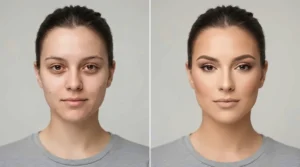
Even the best bronzer for pale skin that avoids orange tones can go sideways with the wrong technique, so let’s fix the habits before the products take the blame. Start with a clean, moisturized face — dry patches grab pigment unevenly and are the single biggest cause of blotchy, orange-looking application, regardless of which formula you’re using. Use a fluffy, tapered brush rather than a flat one; the extra surface area distributes pigment more thinly, which is exactly what pale skin needs since thin, buildable layers read as natural while one heavy swipe reads as costume makeup. Apply in a loose “3” shape along the hairline, cheekbones, and jawline, tapping off excess product before it ever touches your face — most of the orange-cast horror stories online trace back to skipping this tap-off step entirely. A common mistake in the first 30 days of using a new bronzer is applying it in the same spots you’d apply blush; bronzer belongs where the sun naturally hits (temples, nose bridge, tops of cheeks), while blush stays on the apples of the cheeks. Finally, set with a light dusting of translucent powder if you’re using a cream formula, which helps prevent the color from oxidizing warmer as the day goes on.
Real-World Scenarios: Matching the Bronzer to Your Life
Picture three different people shopping for the same keyword and landing on very different right answers. First, the college student on a budget who wears makeup daily between classes: the Milani Baked Bronzer or e.l.f. Putty Bronzer make sense here specifically because the low price removes the pressure of “getting it perfect” on the first try, and both are forgiving enough for a five-minute morning routine. Second, someone with dry, sensitive skin who’s dealt with flaking and patchy bronzer for years — the Physicians Formula Murumuru Butter Bronzer directly addresses that pain point through its emollient base, and it’s worth the slightly higher price if flakiness has been a recurring frustration. Third, someone prepping for a wedding, big event, or professional photos where the margin for error needs to be as small as possible — this is where the Guerlain Terracotta The Bronzing Powder or Rare Beauty Warm Wishes Effortless Bronzer Stick earn their higher price tags, since both were built with more refined pigment specifically to reduce visible application mistakes under close-up scrutiny like a camera lens.
Buyer’s Decision Framework: A Quick Checklist
If you’re still torn, run through this simple priority checklist. If your top priority is price and low risk, choose a drugstore baked or matte powder like the Milani Baked Bronzer or NYX Professional Makeup Matte Buttermelt Bronzer, because the low cost of entry makes experimentation painless. If your top priority is dry or sensitive skin, choose a cream-based formula like the Physicians Formula Murumuru Butter Bronzer, because emollient bases prevent the patchy application that plagues dry skin with powders. If your top priority is a foolproof, second-skin finish for special occasions, choose a prestige option like the Guerlain Terracotta The Bronzing Powder, because finer pigment milling forgives more application mistakes. And if your top priority is speed and a five-minute routine, choose a cream stick like the Rare Beauty Warm Wishes Effortless Bronzer Stick, because fingertip blending skips the brush step entirely.
What Is Bronzer for Pale Skin That Avoids Orange Tones?
Bronzer for pale skin that avoids orange tones refers to bronzing products formulated with cool-to-neutral pigment bases — typically taupe, ashy brown, or muted terracotta — rather than the red-orange pigment common in bronzers designed for tan or olive skin. The goal is a shade only slightly darker than your natural complexion, applied thinly enough to mimic real sun exposure. This category exists because pale skin has less natural pigment to buffer strong warm tones, so even a small amount of orange-leaning pigment reads dramatically on a lighter base. Understanding where your natural coloring falls on a scale like the Fitzpatrick scale — a widely used dermatological classification of skin’s response to sun exposure — can actually help explain why the same bronzer looks completely different on two people who both call themselves “fair.”
How to Choose the Right Bronzer for Pale Skin
- Identify your undertone first. Cool undertones (pink, blue-red hints) need cool-toned or taupe bronzers; neutral undertones have more flexibility, and warm undertones can often handle slightly more golden pigment without it reading orange.
- Check the shade name, not just the swatch photo. Terms like “Light Cool” or “neutral” in the official product description are more reliable than a swatch photo, which is often shot under warm studio lighting that misrepresents the true pigment.
- Favor matte or satin over heavy shimmer. Shimmer particles catch light and visually intensify warm undertones, which is part of why several picks on this list default to matte or subtle satin finishes.
- Test in daylight, not bathroom lighting. Warm incandescent bulbs (common in bathrooms) make every bronzer look warmer than it will outside, which is a frequent source of buyer’s remorse.
- Buy the lightest shade in any range first. You can always build intensity with a second layer, but you can’t easily undo a shade that’s too dark or too warm once it’s blended in.
- Consider your skin’s finish, not just its tone. Oily skin generally handles powder formulas better, while dry skin benefits from cream or cream-powder hybrids that won’t cling to flaky patches.
- Read aggregated review sentiment for your exact shade. General product reviews are less useful than shade-specific feedback, since undertone accuracy can vary significantly across a single product’s range.
Basic color theory explains a lot of this: warm and cool are, at their core, about where a pigment sits relative to yellow-orange versus blue-red on the color wheel, and understanding that framework — covered in more depth on color theory — makes shade-shopping feel less like guesswork and more like an informed decision.
Cool-Toned Bronzer for Fair Skin vs Warm-Toned Bronzer
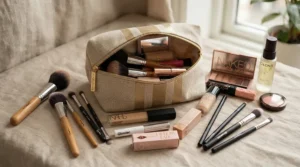
The core difference between a cool-toned bronzer for fair skin and a traditional warm-toned bronzer comes down to the underlying pigment mix. Warm-toned bronzers lean on red-orange iron oxide pigments to mimic a deep tan, which works beautifully on medium-to-deep skin that has enough natural pigment to absorb and diffuse that warmth. On pale skin, that same red-orange base has nothing to blend into, so it sits closer to the surface and reads as a distinct orange cast rather than a natural tan. Cool-toned bronzers swap some of that red-orange pigment for grey-brown or taupe pigment, which mimics shadow and depth rather than warmth — visually, this tricks the eye into perceiving dimension and a healthy flush without the telltale orange tint. Neither formula is objectively “better”; they’re built for different starting points, and the mismatch — not the bronzer itself — is usually what causes bad results. If you’ve tried multiple warm bronzers and consistently ended up disappointed, switching categories entirely to a cool-toned formula, rather than just trying another warm shade, is often the actual fix.
Common Mistakes When Buying Bronzer for Pale Skin
The most frequent mistake is choosing a bronzer more than two shades darker than your natural skin tone, chasing a dramatic result in one product instead of building gradually with a lighter shade. A close second is ignoring the finish entirely and focusing only on color — a shimmery warm bronzer will almost always look more orange on pale skin than a matte version of the exact same pigment, purely because shimmer amplifies whatever undertone is already there. Shoppers also frequently trust in-store testers under warm lighting, which distorts how a shade will look once you’re standing in daylight or under office fluorescents. Another overlooked issue is skipping shade-specific reviews — a bronzer line can have both excellent cool shades and terrible warm ones, so a five-star average rating doesn’t guarantee the specific shade you’re eyeing will work. Finally, many buyers apply bronzer with the same brush used for foundation, which tends to be too dense and deposits far more pigment than a fluffy bronzer brush would, turning a subtle wash of color into a heavy, unnatural stripe.
Taupe Bronzer: Why It’s the Secret Weapon for Fair Skin
If there’s one word worth remembering from this entire guide, it’s taupe. A taupe bronzer swaps the traditional orange-brown pigment base for a cooler, grey-tinged brown, and that small chemical shift changes everything about how it reads on pale skin. Because taupe pigment mimics natural shadow rather than warmth, it can be used more heavily than a traditional bronzer before it starts to look artificial — which is genuinely useful for anyone who wants a more sculpted, contoured look rather than just a light wash of color. Several products on this list, including the cool shades within the Guerlain Terracotta The Bronzing Powder range and the NYX Professional Makeup Matte Buttermelt Bronzer, lean into this taupe-adjacent pigment strategy specifically to serve fair, cool-undertoned skin. The trade-off worth knowing: a true taupe bronzer can look slightly grey or ashy on skin with warm undertones, so this is very much a targeted solution for cool and neutral complexions rather than a universal fix.
Features That Actually Matter (And Those That Don’t)
Marketing copy loves to highlight shimmer, “24-hour wear,” and elaborate ingredient lists, but not all of it moves the needle for the specific problem of pale skin and orange cast. What actually matters: the explicit undertone label on the shade (cool, neutral, or warm), the finish (matte reduces orange-amplifying light reflection), and the pigment-to-base ratio, since a more diluted, sheer formula is inherently more forgiving than a highly saturated one. What matters less than the marketing suggests: exotic-sounding “natural” ingredients, which sound appealing but rarely affect undertone accuracy at all, and elaborate packaging, which has zero bearing on how a formula performs on skin. Long-wear claims are worth something, but reviewers consistently note that even 12-hour wear formulas need a light touch-up after heavy sweating or an oily midday shine, so treat “long-wear” as a helpful bonus rather than a guarantee.

Frequently Asked Questions
❓ Does bronzer make pale skin look orange no matter what?
❓ What's the difference between bronzer and contour for fair skin?
❓ How do I know if I need a cool or warm bronzer?
❓ Can I use bronzer every day without damaging my skin?
❓ What's the best way to apply bronzer for a subtle, natural look?
Conclusion
Finding a genuinely reliable bronzer for pale skin that avoids orange tones isn’t about luck — it’s about understanding undertone, finish, and pigment base well enough to shop past the marketing copy. Whether you land on the budget-friendly Milani Baked Bronzer, the dry-skin-friendly Physicians Formula Murumuru Butter Bronzer, or the prestige Guerlain Terracotta The Bronzing Powder, the underlying logic stays the same: cooler, more taupe-leaning pigment, applied thinly, in a shade close to your natural tone. For a deeper dive into shade-specific testing across even more formulas, this pale-skin bronzer roundup from Marie Claire UK is a solid next read. And if flaking or patchy application has been part of your struggle, it’s also worth brushing up on general skin care basics that affect how any makeup, bronzer included, sits on the skin. Whichever pick you land on, the goal stays the same: a natural sun-kissed look that reads like your own skin, not like a product sitting on top of it.
Recommended for You
- Cream Bronzer vs Powder Bronzer for Dry Skin: 7 Best Picks (2026)
- Contour Stick for On-The-Go Touch-Ups: 7 Best Picks for 2026
- Contour Palette for Beginners: 7 Easy Picks to Try in 2026
Disclaimer: This article contains affiliate links. As an Amazon Associate, I earn from qualifying purchases. If you purchase products through these links, we may earn a small commission at no additional cost to you.
✨ Found this helpful? Share it with your friends! 💬🤗
