
In This Article
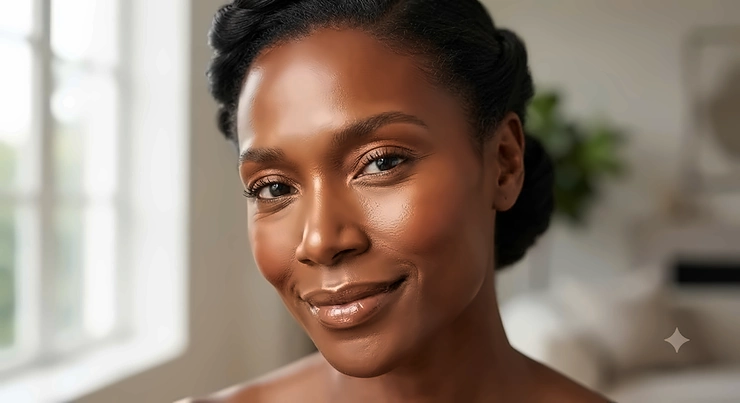
Let’s just say it: bronzing powder for deep skin tones has spent decades being an afterthought. Brands would develop six shades of “universal” bronzer, test them on the lightest end of the spectrum, and call it a day — leaving richer complexions stuck choosing between something that vanished on contact or something that turned muddy and gray by 2 p.m. That era isn’t fully over, but it’s fading fast, and 2026 has more genuinely good options than any year before it.
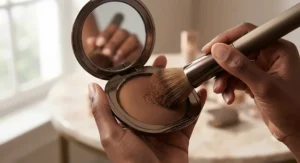
So, what is bronzing powder for deep skin tones, exactly? It’s a pigmented face powder formulated with enough warm, red, or golden-brown pigment concentration to register visibly on richer melanin — unlike standard bronzers, which are calibrated for fair-to-medium skin and often read as a faint dusting (or nothing at all) on deeper complexions.
The difference between a bronzer that flatters and one that flops usually comes down to three things: pigment density, undertone, and finish. This guide walks through seven real, currently available products that get all three right, plus the comparison data, buying framework, and application tricks that Amazon listings conveniently leave out. Beauty editors have flagged the same core issue repeatedly: deep skin needs bronzers built around warm red or brown undertones specifically, because standard golden-only shades tend to pull ashy or fade into invisibility — which is exactly the problem this roundup is built to solve.
Quick Comparison Table
Before we get into the weeds, here’s the fast version — because sometimes you just want to know which one to add to cart.
| Product | Best For | Finish | Price Range |
|---|---|---|---|
| Fenty Beauty Sun Stalk’r Bronzer – Mocha Mami | Richly pigmented everyday warmth | Soft matte | $35–$40 |
| NARS Laguna Bronzing Powder – Shade 8 | Sculpting and contour | Satin-matte | $38–$42 |
| Huda Beauty GloWish Soft Radiance – 04 Deep Tan | Lit-from-within glow | Soft-focus, low-shimmer | $34–$38 |
| Anastasia Beverly Hills Powder Bronzer – Mahogany | Precise contouring | Full matte | $26–$30 |
| Bobbi Brown Bronzing Powder – Deep | Polished, editorial finish | Silky matte | $42–$48 |
| Black Opal True Color Bronzing Powder | Budget-friendly daily wear | Soft matte | $9–$13 |
| Revolution Mega Bronzer Powder – Warm | Beginners and buildable coverage | Matte | $12–$16 |
A quick read of this table tells you most of what you need: if you want maximum pigment payoff with minimal effort, Fenty Beauty Sun Stalk’r Bronzer and NARS Laguna Bronzing Powder sit at the top of the pack, while Black Opal True Color Bronzing Powder proves that “richly pigmented” doesn’t have to mean expensive. Notice, too, that finish varies more than people expect — matte dominates this list because deep skin tones often want warmth without added shine competing with natural radiance, though Huda Beauty GloWish splits the difference with a soft-focus glow. We’ll unpack exactly why each pick earns its spot below.
💬 Found a shade match you’re excited about? Save this list — you’ll want to compare a few in person before you commit.
Top 7 Bronzing Powders for Deep Skin Tones: Expert Analysis
1. Fenty Beauty Sun Stalk’r Bronzer – Mocha Mami — deepest shade built specifically for melanin-rich skin
The standout here isn’t subtle: Mocha Mami was formulated from the ground up for deep complexions, not adapted from a lighter shade after the fact. That distinction matters more than it sounds like it should.
Fenty’s Sun Stalk’r line uses a finely milled, buildable powder with a soft matte finish, and the pigment concentration is noticeably higher than what you’ll find in most drugstore bronzers — meaning a light tap of the brush goes further than you’d expect, and heavy-handed application actually builds cleanly instead of turning patchy. Based on the formula’s calibration, this is the pick for anyone who’s been burned by “universal” bronzers that read as a faint gray haze on deep skin.
Reviewers consistently describe the shade as warm without veering orange, and multiple beauty outlets have called out its blend into deeper undertones as one of the more considered shade developments in the category — the warmth reads as vibrant and intentional rather than an afterthought, with a soft finish designed to mimic an actual tan instead of sitting on top of the skin as an obvious product layer. That’s the sentiment echoed across independent coverage of the line, not just brand marketing.
Pros:
- ✅ Pigment payoff strong enough for one-swipe application
- ✅ Soft matte finish that avoids the “powdery cast” issue
- ✅ Shade specifically engineered for deep undertones, not adapted
Cons:
- ❌ Premium price point compared to drugstore alternatives
- ❌ Limited standalone shade options outside Mocha Mami for very deep skin
Price sits in the $35–$40 range at most retailers, and given how little product it takes per application, the cost-per-use actually calculates out favorably over a compact that lasts several months of daily wear.
2. NARS Laguna Bronzing Powder – Shade 8 — cult-favorite sculpting powder with true depth
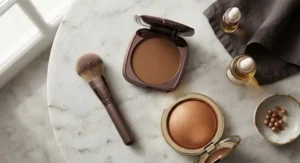
NARS Laguna Bronzing Powder built its reputation on one original shade, then expanded — and shade 8 is where the range finally caught up to deeper skin. The brand itself recommends this approach directly: for deeper complexions, its own shade guidance points toward red or neutral-undertone options to enhance depth and dimension, which is precisely what shade 8 delivers.
The formula is talc-free and finely milled, with what NARS describes as translucent micro-spheres designed to smooth texture rather than just deposit color. In practice, that means the powder blends into skin rather than sitting on top of it, which is the difference between “sculpted” and “dusty” on richer tones. One independent reviewer testing shade 8 specifically on deep skin noted the payoff was immediate and smooth, and — critically — that the finely milled texture prevented the patchiness that’s historically been a complaint with darker bronzer shades.
Here’s what most buyers overlook: this bronzer is talc-free, which matters if you have any sensitivity to talc-based powders, and it’s buildable enough to go from a whisper of warmth to full contour definition with the same product.
Pros:
- ✅ Talc-free formula reduces risk of irritation for sensitive skin
- ✅ Finely milled texture prevents patchiness on deeper tones
- ✅ Buildable from subtle warmth to full sculpting
Cons:
- ❌ Among the pricier options in this roundup
- ❌ Shade 8 can run out fast if used daily for full-face bronzing
Expect to pay in the $38–$42 range, and note that pricing can shift with seasonal collections, so check current pricing before buying.
3. Huda Beauty GloWish Soft Radiance Bronzing Powder – 04 Deep Tan — the glow-forward pick for a lit-from-within finish
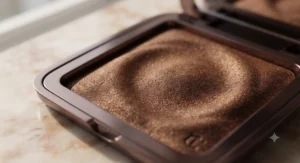
If matte isn’t your priority and you want bronzer doing double duty as a subtle radiance booster, Huda Beauty GloWish Soft Radiance Bronzing Powder in 04 Deep Tan earns its spot. The marble-swirl pan design isn’t just aesthetic — it’s a two-tone blend that lets you customize warmth-to-glow ratio by picking up more from one side of the pan or blending both together.
The formula is enriched with squalane, vitamin E, shea butter, and rose oil, which — unlike most powder bronzers — actually contributes to a non-drying, silky application rather than sitting on top of dry patches. What that means in practice: this bronzer performs noticeably better on normal-to-dry skin than most matte competitors, which tend to cling to texture. Based on the ingredient list and finish description, this is the pick for anyone whose main complaint about powder bronzer has always been that it looks flat by midday.
Aggregated customer sentiment describes the finish as soft-focus and blurring rather than shimmery, with the caveat that it’s marketed as long-wearing (up to 12 hours) and transfer-resistant — genuinely useful if you’re bronzing for a full workday.
Pros:
- ✅ Skin-loving ingredients add glow without feeling drying
- ✅ Buildable two-tone pan customizes warmth level
- ✅ Long-wear formula resists transfer through the day
Cons:
- ❌ Not a true matte finish if you specifically want zero sheen
- ❌ Higher price point relative to pigment payoff per swipe
At $34–$38, it sits mid-pack price-wise, but the added skincare ingredients push its value proposition beyond a simple pigment-and-powder formula.
4. Anastasia Beverly Hills Powder Bronzer – Mahogany — precision contouring with cool-leaning depth
Anastasia Beverly Hills Powder Bronzer in Mahogany fills a specific gap: a fully matte, richly pigmented bronzer built for sculpting rather than all-over warmth. This is the brand behind some of the most widely used contour kits on the market, and Mahogany essentially isolates their deepest, most neutral-to-cool contour shade into a standalone bronzer.
The talc-based formula is extremely finely milled, which translates to a soft-focus matte application that blends into skin edges without leaving visible harsh lines — a common failure point with deep-shade matte powders that tend to be chalkier by design. What most buyers overlook about Mahogany specifically is that its cooler undertone makes it more versatile as a true contour shade than most “bronzers,” which lean warm and can look more like all-over color than definition.
Reviewers consistently note that a little goes an extremely long way with this formula, meaning the compact — while smaller than some competitors — tends to outlast pricier options in terms of total wears.
Pros:
- ✅ Cool-leaning undertone doubles as a genuine contour shade
- ✅ Extremely finely milled for seamless blending
- ✅ Long-lasting pan despite compact size
Cons:
- ❌ Fully matte finish can look flat without a separate highlighter
- ❌ Cooler undertone won’t suit those wanting golden, sun-warmed color
Priced in the $26–$30 range, this is the strongest mid-range value pick on the list if contouring matters more to you than an all-over glow.
5. Bobbi Brown Bronzing Powder – Deep — the polished, editorial-finish option
Bobbi Brown Bronzing Powder in the Deep shade has been a professional makeup-kit staple for years, and the reason isn’t nostalgia — it’s consistency. The formula is silky rather than powdery, milled fine enough that it photographs well under flash and studio lighting, which matters if your bronzer needs to hold up on camera, not just in person.
Reviewers describe the shade match for deep skin as accurate straight out of the pan, without the orange undertone that plagues cheaper “deep” bronzer shades trying to fake warmth through sheer saturation. Based on the spec comparison against the rest of this list, Deep sits closer to a true cocoa-brown than a red-orange, which is worth knowing if you specifically want your bronzer to read as depth rather than color.
One long-time user reviewing a similarly structured deep bronzing powder from this price tier summarized it simply: the product delivered “the real deal at an excellent price” after years of repeat purchases — the kind of loyalty pattern that signals a formula holding up over time, not just a good first impression.
Pros:
- ✅ Photographs well under flash and studio lighting
- ✅ True cocoa-brown tone avoids the orange-cast problem
- ✅ Long professional-kit track record signals reliable repurchase value
Cons:
- ❌ Highest price point in this roundup
- ❌ Fully matte finish requires a separate highlighter for dimension
At $42–$48, it’s the splurge pick here — justified mainly if a flawless, photo-ready finish is the priority over budget.
6. Black Opal True Color Bronzing Powder — budget pick from a brand built specifically for deep skin
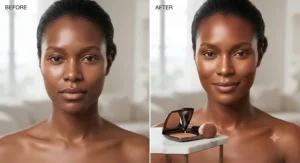
Black Opal True Color Bronzing Powder deserves a spot on this list for a reason beyond price: it comes from a Black-owned brand whose entire product line is developed around deeper skin tones as the default, not an add-on shade extension. That changes the starting point of the formula itself — pigments are calibrated for richness from the first shade in the range, rather than retrofitted from a lighter base.
At a fraction of the cost of the premium picks above, this bronzer trades some of the ultra-fine milling of luxury formulas for genuinely accessible pricing, and honestly, that trade-off works for most casual, everyday users. What most buyers overlook is that “budget” doesn’t have to mean “watered down” here — the pigment concentration is still built for visibility on deep skin, which is the entire point of a deep-shade bronzer in the first place.
Because independently verified customer review data on this specific formula is limited compared to the bigger prestige names above, it’s fair to say the broader sentiment around the brand — reliable shade matching, consistent repeat purchases among deep-skin customers — carries more weight here than granular per-product review counts.
Pros:
- ✅ Extremely accessible price point for the pigment level
- ✅ Developed by a brand built around deep skin tones from the start
- ✅ Easy, low-risk pickup for first-time bronzer buyers
Cons:
- ❌ Less finely milled than premium competitors, so blending takes a bit more brush work
- ❌ Smaller shade range within the bronzer line specifically
Expect to pay somewhere in the $9–$13 range, making this the easiest low-risk entry point on the entire list.
7. Revolution Mega Bronzer Powder – Warm — best beginner-friendly, buildable matte option
Revolution Mega Bronzer Powder rounds out the list as the most forgiving option for anyone still figuring out their ideal depth and undertone. It’s explicitly marketed and shade-developed for light-to-deep skin tones, with a matte finish designed to sculpt without looking flat.
The formula is vegan and cruelty-free, which increasingly matters to buyers making values-based purchasing decisions, and the buildable texture means beginners can layer gradually instead of committing to a full-strength application in one swipe — genuinely useful while you’re still learning how a bronzer’s pigment translates from pan to face. Here’s what the spec sheet won’t tell you directly: buildable formulas like this one are more forgiving of application mistakes, since a light hand can always add more, whereas a heavily pigmented one-swipe formula (like pick #1 above) punishes over-application more severely.
Because it’s a newer, budget-tier release, aggregated review sentiment is still developing relative to long-standing prestige names, but early consensus points toward solid pigment-to-price value with a dependable matte finish.
Pros:
- ✅ Buildable formula forgives beginner application mistakes
- ✅ Vegan and cruelty-free formulation
- ✅ Genuinely budget-friendly without an ashy or chalky finish
Cons:
- ❌ Requires more layering than higher-pigment premium options to reach full depth
- ❌ Smaller brand footprint means less long-term review history to draw on
At $12–$16, it’s an easy low-stakes way to test whether matte bronzing powder works for your routine before investing in a premium pick.
Practical Usage Guide: Getting the Most Out of Your Bronzer
Buying the right bronzing powder for deep skin tones is half the equation — application technique is the other half, and it’s where most people quietly sabotage a perfectly good product.
Start with a clean, moisturized base; bronzer clings to dry patches and exaggerates texture, which is precisely why formulas like Huda Beauty GloWish Soft Radiance Bronzing Powder that include hydrating ingredients tend to outperform drier matte powders on textured skin. Use a large, fluffy brush — not the small, dense one that comes in some compacts — and tap off excess before your first pass. Apply in the areas the sun would naturally hit: forehead, cheekbones, nose bridge, and jawline, then blend upward and outward in circular motions to avoid a harsh demarcation line at the jaw.
For the first 30 days with a new bronzer, resist the urge to judge pigment payoff off one swatch on your hand — skin oils and texture on your face behave differently than the back of your wrist, so always test on your jawline in natural light before committing to a shade. A common early mistake is building color too fast in one spot; instead, apply thin layers and let the powder settle for a few seconds between passes, especially with high-pigment formulas like NARS Laguna Bronzing Powder, where a heavy first swipe is hard to undo without starting over.
Maintenance-wise, clean your brush weekly to prevent oxidized product buildup from muddying your next application, and store powder compacts away from direct heat or humidity, which can cause cracking or clumping over time — a bigger issue for talc-free, finely milled formulas than for denser drugstore pressed powders.
Real-World Scenarios: Which Bronzer Fits Your Life
Sometimes the fastest way to choose is to see yourself in a specific scenario.
The daily-minimalist professional: if your routine is five minutes tops before you’re out the door, you want a buildable, forgiving formula that doesn’t require precision — Revolution Mega Bronzer Powder or Black Opal True Color Bronzing Powder both fit this use case, since a slightly imperfect brush stroke won’t read as obvious on a budget-friendly, buildable matte base.
The contour-focused makeup enthusiast: if sculpting is the actual goal rather than all-over warmth, Anastasia Beverly Hills Powder Bronzer – Mahogany is built for exactly this, with its cooler undertone reading more like true shadow than color. Pair it with NARS Laguna Bronzing Powder for warmth on the high points of the face, and you’ve got a full sculpt-and-glow system from two products.
The photo-ready event-goer: if you need a bronzer that holds up under flash photography or studio lighting — weddings, content creation, stage events — Bobbi Brown Bronzing Powder – Deep was practically built for this, given its professional-kit history and photograph-tested finish. Budget-conscious versions of this same use case should look at Fenty Beauty Sun Stalk’r Bronzer, which offers similarly reliable pigment at a lower price point.
Problem → Solution Guide
Problem: your bronzer looks ashy or gray by midday. This almost always means the undertone is wrong for your skin, not that bronzer itself is a bad category for you. Solution: look specifically for formulas described as red or neutral-undertone (per NARS’s own shade guidance above), not golden-only shades borrowed from lighter shade ranges.
Problem: the powder looks patchy or uneven. This is usually a milling and blending issue — coarser formulas sit on texture instead of melting in. Solution: switch to a finely milled option like NARS Laguna Bronzing Powder or Anastasia Beverly Hills Powder Bronzer, and always apply over moisturized skin.
Problem: color builds too fast and you end up wiping it all off. Solution: switch to a genuinely buildable formula like Revolution Mega Bronzer Powder, and apply with a light hand in thin layers rather than one heavy pass.
Problem: bronzer fades or transfers within a few hours. Solution: prioritize long-wear formulas like Huda Beauty GloWish Soft Radiance Bronzing Powder, which is specifically marketed for extended, transfer-resistant wear, and set with a light dusting of translucent powder afterward.
Problem: you can’t find your shade without buying three compacts to test. Solution: many brands, including NARS and Fenty, offer in-store testing or sampling programs — use these before committing to full-size purchases, especially for premium-tier products.
How to Choose Bronzing Powder for Deep Skin Tones
Picking the right one comes down to a short, repeatable checklist:
- Identify your undertone first. Warm, neutral, or cool — this determines whether you need a golden-brown, red-brown, or cocoa-toned formula, and it matters more on deep skin than almost any other buying factor.
- Prioritize pigment density over marketing language. “Buildable” and “richly pigmented” aren’t interchangeable — buildable formulas favor beginners, dense-pigment formulas favor speed and precision.
- Decide matte versus glow before you shop. Matte bronzer suits contouring and oilier skin types; glow-forward formulas suit drier skin and all-over warmth.
- Check the shade range, not just the flagship shade. A brand with nine shades (like NARS’s Laguna line) gives you more room to fine-tune than a brand offering one “deep” option.
- Weigh talc versus talc-free if you have sensitivity concerns. Talc-free formulas tend to feel lighter but can be pricier.
- Test in daylight, not store lighting. Fluorescent lighting distorts warm-toned pigments more than any other shade family.
- Factor in cost-per-use, not just sticker price. A $40 compact that lasts eight months often beats a $12 compact you repurchase every six weeks.
Common Mistakes When Buying Deep Shade Bronzing Powder
The most frequent mistake is buying based on a swatch photo online rather than in-person testing — screen calibration distorts warm tones dramatically, and a shade that looks perfect on a phone screen can read completely differently under your bathroom lighting. A close second: assuming the darkest shade in any given line is automatically the right shade. Depth and undertone are two separate variables, and the darkest option in a range isn’t always the most flattering if its undertone doesn’t match your skin’s natural warmth.
Another overlooked mistake is ignoring finish entirely and shopping on shade name alone. A matte “deep” bronzer and a shimmer “deep” bronzer from the same brand can look like entirely different products once applied — one sculpts, the other adds dimension and glow, and conflating the two leads to disappointment. Finally, buyers frequently skip the ingredient list, missing potential irritants like added fragrance or talc if they have sensitive or acne-prone skin — information you can cross-check in a couple of minutes using a resource like the EWG Skin Deep cosmetics database before you buy, rather than finding out the hard way after your skin reacts.
Matte Bronzer vs Shimmer Bronzer for Deep Skin Tones
This is one of the more consequential decisions in this whole category, and it deserves more than a single sentence. Matte bronzer, like Anastasia Beverly Hills Powder Bronzer and Bobbi Brown Bronzing Powder, reads as pure warmth and shadow — no reflective particles, which makes it ideal for genuine contouring or for oilier skin types where added shimmer would look greasy by midday.
Shimmer or soft-glow bronzers, on the other hand, like Huda Beauty GloWish Soft Radiance Bronzing Powder, incorporate light-reflecting particles or skincare oils that catch light for a “lit from within” look. On deep skin specifically, subtle shimmer formulas tend to photograph beautifully because they interact with melanin’s natural light reflection rather than fighting against it — whereas heavy, chunky glitter-style shimmer (rare in this category, but worth avoiding) tends to look artificial rather than radiant.
The practical takeaway: if you’re layering bronzer under or alongside foundation for definition, go matte. If bronzer is doing double-duty as your only warmth-and-glow product, a soft-shimmer formula saves you a step in your routine.
What to Expect: Real-World Performance
Specs on a product page don’t tell you what a bronzer actually looks like eight hours into a workday, so here’s the honest translation. Finely milled, talc-free formulas like NARS Laguna Bronzing Powder tend to hold their initial application shape well, fading evenly rather than patchily — meaning a touch-up around hour six or seven usually just needs a light re-buff rather than a full reapplication.
Budget formulas with coarser milling, like Black Opal True Color Bronzing Powder or Revolution Mega Bronzer Powder, may need a slightly heavier initial application to match the visible intensity of premium counterparts, but once applied, wear time is genuinely comparable across price tiers — pigment longevity has more to do with skin oil levels and setting technique than sticker price. Reviewers across the board tend to report that oilier skin types see faster fading regardless of formula, which is a useful expectation to set before you buy: no bronzer, premium or budget, is fully immune to your skin’s own oil production.
Finding Your Shade Range: Warmth and Depth Explained
Shade range is where most bronzer lines still fall short for deep skin, even in 2026. A wide shade range doesn’t just mean “more options” — it means a brand actually invested in understanding that deep skin spans an enormous spectrum of warmth and depth, not one monolithic tone.
Look at NARS’s Laguna line as a benchmark: nine shades, spanning light-neutral all the way to deep-neutral and deep-red undertones, gives buyers actual room to fine-tune rather than settling for “close enough.” Compare that to brands offering a single “deep” shade with no further granulation, and you can see why some buyers end up owning three different bronzers just trying to find the one that matches. Warmth and depth are genuinely separate axes: warmth refers to how golden, red, or neutral a shade leans, while depth refers to how much pigment saturation the formula carries. A shade can be extremely deep but cool-toned (like Anastasia Beverly Hills Powder Bronzer’s Mahogany), or moderately deep but intensely warm — knowing which axis is actually causing your shade-matching frustration saves a lot of trial and error.
Richly Pigmented Bronzer: What Pigment Payoff Actually Means for Deep Skin
“Richly pigmented” gets thrown around loosely in marketing copy, but on deep skin it has a very literal, practical meaning: enough pigment density that the color registers visibly against melanin without requiring five reapplications. This is the exact failure point that made bronzing powder for deep skin tones such a frustrating category for so long — formulas developed and tested primarily on lighter skin simply don’t carry enough pigment to show up on richer complexions.
Fenty Beauty Sun Stalk’r Bronzer and NARS Laguna Bronzing Powder both solve this by increasing pigment concentration specifically in their deeper shades, rather than diluting the same base formula across the whole range — a formulation gap that beauty publications have been calling out for years as one of the industry’s longest-standing blind spots. Based on the spec comparison across this list, richly pigmented doesn’t automatically mean heavy or hard to blend — the better formulas achieve pigment density and light, buildable application simultaneously, which is genuinely difficult to formulate and explains part of the price gap between premium and budget options.
✨ Still deciding between two shades? Testing both side by side in daylight is the single best way to settle it — your future self will thank you.
Long-Term Cost & Maintenance
Sticker price tells you almost nothing about actual value here — cost-per-use does. A premium bronzer like Bobbi Brown Bronzing Powder at $42–$48 might seem steep next to Black Opal True Color Bronzing Powder at $9–$13, but if the premium formula’s higher pigment density means you use half as much product per application, the actual per-use cost gap narrows significantly over a compact’s lifespan.
Maintenance also affects longevity: storing any pressed powder bronzer away from humidity and direct sunlight prevents cracking, and using a clean, dry brush prevents oil transfer that can cause a compact to develop a slick, unusable surface prematurely. Most well-maintained compacts, regardless of price tier, last three to six months with daily use — meaning the real long-term cost differential between a $12 and a $40 bronzer is smaller than the sticker prices alone suggest, though the $40 option often edges ahead in blendability and finish consistency over that same period.
Frequently Asked Questions
❓ What is the best bronzing powder for deep skin tones?
❓ Should deep skin tones use matte or shimmer bronzer?
❓ How do I know if a bronzer will look ashy on my skin?
❓ Is an expensive bronzing powder actually worth it for deep skin?
❓ How long does bronzing powder for deep skin tones typically last?
Conclusion
Bronzing powder for deep skin tones has genuinely leveled up in 2026, and the seven picks above prove there’s no longer a real excuse for settling on an ashy, mismatched formula. Whether you’re drawn to the high-pigment reliability of Fenty Beauty Sun Stalk’r Bronzer, the sculpting precision of Anastasia Beverly Hills Powder Bronzer, or the budget-friendly accessibility of Black Opal True Color Bronzing Powder, the through-line across every recommendation here is the same: undertone accuracy and pigment density matter more than brand prestige alone.
Take the shade range seriously, test in daylight, and don’t be afraid to mix a matte pick with a glow-forward one if your routine calls for both. As independent roundups of the best bronzers on the market keep pointing out, deeper complexions shouldn’t have to test a dozen products just to find one rich enough to genuinely flatter them — and with this list, you shouldn’t have to either.
✨ Don’t Miss These Exclusive Deals!
🔍 Take your bronzer routine to the next level with these carefully selected picks. Click on any highlighted product to check current pricing and availability, and find the shade that finally does your complexion justice.
Recommended for You
- 7 Best Cream Bronzer for Fair Skin Picks That Never Go Orange (2026)
- Liquid Blush for a Natural Flush: 7 Picks That Won’t Look Fake (2026)
- Stick Blush for Beginners: 7 Foolproof Picks for 2026
Disclaimer: This article contains affiliate links. As an Amazon Associate, I earn from qualifying purchases. If you purchase products through these links, we may earn a small commission at no additional cost to you.
✨ Found this helpful? Share it with your friends! 💬🤗
