
In This Article
Picture your first attempt at contouring: a brush loaded with way too much bronzer, a mirror that lied to you in “flattering” bathroom lighting, and a jawline that ended up looking less “sculpted cheekbones” and more “smudged chimney sweep.” Almost everyone who’s ever picked up a compact has a version of this story. That’s exactly why choosing the right contour palette for beginners matters so much more than influencers let on — the wrong formula turns a five-minute routine into a twenty-minute blending crisis, and the right one turns it into a genuinely satisfying little ritual.
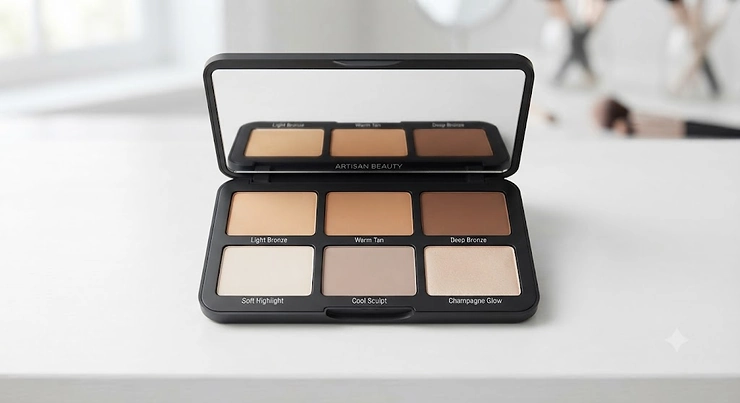
So, what is a contour palette for beginners? It’s a multi-shade compact — usually a few bronzer or shadow tones paired with a highlight shade — formulated with softer, buildable pigment so new users can shade, blend, and brighten the face without the harsh lines or guesswork that come with single, high-pigment sticks.
Contouring itself isn’t some TikTok invention, either. The technique traces back to 16th-century stage actors who smeared chalk and soot across their faces so audiences in the cheap seats could actually read their expressions, a history worth a quick read if you’re curious where all this theatrical shading came from. What’s changed since then is the formula, not the concept: today’s easy contour palette for beginners options are engineered to forgive a heavy hand, not punish it.
Below, we’re breaking down seven real products across budget, mid-range, and premium price points, how to actually apply them using face mapping, which brushes are worth owning, and where cream and powder formulas each pull ahead. Grab a mirror with decent lighting — let’s get sculpting.
Quick Comparison Table
| Palette | Formula | Price Range | Best For |
|---|---|---|---|
| e.l.f. Cosmetics Contour Palette | Powder | Under $15 | Tightest budget, first-timers |
| NYX Professional Makeup Highlight & Contour Pro Palette | Cream | $15–$25 range | Deeper skin tones, cream beginners |
| Smashbox Step-By-Step Contour Kit | Powder | $35–$45 range | Learning technique through labeled steps |
| Anastasia Beverly Hills Contour Kit | Powder | $30–$40 range | Blendability and shade range |
| Charlotte Tilbury Filmstar Bronze & Glow | Powder | $60–$70 range | Special occasions, gifting |
Looking at this lineup, the split between drugstore and prestige isn’t just about price — it’s about how much margin for error each formula gives you. The e.l.f. Cosmetics Contour Palette and similar budget powders are genuinely low-risk ways to learn the motions before you commit real money, while something like Anastasia Beverly Hills Contour Kit rewards a slightly steadier hand with noticeably better blendability. If you’re still nervous about cream products in general, note that only one entry above uses cream — that’s on purpose, since most total beginners find powder more forgiving to correct mid-application.
💬 Found a formula that caught your eye? Bookmark this table — you’ll want to compare it again before you check out.
Top 7 Contour Palettes: Expert Analysis
1. e.l.f. Cosmetics Contour Palette — best all-around budget pick
The standout here is simple: it’s one of the cheapest ways to actually learn contouring without gambling real money on a formula you might hate. The compact holds four powder shades — a shimmer highlight, a yellow-toned setting powder, a bronzer, and a matte contour shade — all soft enough to layer without much fuss. What that means in practice is you get a genuinely complete mini system (highlight, set, bronze, contour) for less than the cost of a fast-food combo meal, which takes a lot of pressure off your first few tries.
Based on the spec sheet and how it’s formulated, this palette is aimed squarely at light-to-medium skin tones and people who want to practice blending technique before upgrading. Reviewers consistently report that the powders feel softer and blend more easily than the price suggests, with several longtime users calling it a surprisingly capable dupe for pricier kits. A recurring theme in user feedback, though, is that the contour shade runs warm and can look muddy or too dark on very fair or very deep skin without careful blending.
Pros:
- ✅ Extremely low financial risk for total beginners
- ✅ Soft, blendable texture reviewers say punches above its price
- ✅ Doubles as a subtle eyeshadow quad in a pinch
Cons:
- ❌ Shade range doesn’t stretch well to fair or deep skin tones
- ❌ Less staying power through a long day than pricier formulas
At around $10 or less, this is close to risk-free — treat it as tuition for learning where your face actually needs shadow before spending more.
2. Wet n Wild MegaGlo Contouring Palette — lowest price point to start experimenting
What stands out immediately is the price: this is one of the cheapest multi-shade contour compacts sold at mainstream drugstores, which makes it an obvious starting point if you’re not sure contouring is even for you yet. It typically pairs a couple of bronzing or contour tones with a highlight shade in a compact designed for quick, everyday application rather than heavy editorial sculpting.
Here’s what to weigh: because it’s priced so low, the packaging and pan sizes are modest, so this isn’t a palette you’ll be reaching for years from now — it’s a low-stakes way to test whether you like the process of shading and highlighting at all. To be transparent, verified, in-depth customer review data on this specific palette is thinner online than for bigger legacy brands, so treat aggregated sentiment here as directional rather than exhaustive; what is consistent across the feedback that does exist is that shoppers appreciate how easy it is to find in stores and how little guilt there is in an application that doesn’t turn out perfectly.
Pros:
- ✅ Among the lowest prices for a multi-shade contour compact
- ✅ Widely available at mainstream drugstores
- ✅ Low financial pressure while you’re still learning technique
Cons:
- ❌ Smaller pan sizes mean it won’t last as long as pricier kits
- ❌ Less publicly available review depth than legacy brands
If your goal is simply “do I even like doing this,” this is one of the least expensive ways to find out.
3. Physicians Formula Bronze Booster Highlight & Contour Palette — comes with its own contour brush
The standout feature is right there in the box: this palette actually includes a dedicated angled contour brush, which solves one of the biggest early-beginner problems — not owning the right tool yet. It’s built around the brand’s “Glow Activator” formula, a blend of vitamins and antioxidants layered into a blendable, buildable bronzer-and-highlight duo available in both matte and shimmer finishes.
What that combination means in practice is you’re not stuck improvising with an eyeshadow brush or your fingers on day one; you get a targeted tool sized specifically for cheekbone hollows and jaw shading. Based on the brand’s own hypoallergenic, dermatologist-tested positioning, this is a sensible pick for people with reactive or sensitive skin who still want to experiment with bronzing. Reviewers commonly note that the matte version reads more like a true contour, while the shimmer version leans closer to an all-over glow than a defined shadow — worth knowing before you buy, since only one of those does what a beginner usually means by “contour.”
Pros:
- ✅ Includes a dedicated contour brush, no extra purchase needed
- ✅ Formulated to be hypoallergenic and dermatologist tested
- ✅ Buildable finish works for both subtle and more defined looks
Cons:
- ❌ Shimmer version can look too glowy for daytime contouring
- ❌ Only two tones per compact limits shade customization
Priced in the mid-teens to high-teens range, the included brush alone makes this one of the better value plays on this list.
4. NYX Professional Makeup Highlight & Contour Pro Palette — widest shade range in a cream formula
This palette’s standout is its shade count: eight creamy, refillable pans spanning cool and warm neutral tones, which is unusually generous for something aimed at everyday users rather than professional artists. The pans can be removed and swapped, and the shades are designed to be mixed and layered rather than used in rigid pairs, so you’re not locked into one predetermined contour-and-highlight combo.
What most buyers overlook about a cream palette like this is that it actually meshes into the skin faster than powder in some ways — there’s no risk of a chalky, cakey top layer — but it demands more blending speed, since cream sets faster on the skin than loose powder sits on top of it. Because the range covers deeper, neutral undertones specifically, this is a genuinely solid option for medium-to-deep skin tones who’ve struggled to find a contour shade that doesn’t look ashy or orange. Reviewers frequently point to the matte finish and shade breadth as reasons this outperforms other drugstore-tier cream options, particularly for oilier skin types that need a matte hold.
Pros:
- ✅ Eight shades cover a genuinely wide range of undertones
- ✅ Refillable pans reduce long-term waste and cost
- ✅ Matte cream finish suits oilier skin types well
Cons:
- ❌ Cream requires faster, more confident blending than powder
- ❌ Can look heavy if not set with a translucent powder after
In the $15–$25 range, this is the pick if cream vs powder contour is a question you’re actively trying to answer for your own skin.
5. Smashbox Step-By-Step Contour Kit — literally teaches you the technique as you go
The standout here is built into the name: this is a step-by-step contour kit designed with labeled pans that walk you through highlight, contour, and bronze in sequence, which is genuinely useful when you don’t yet have the muscle memory for where each shade goes. It holds three highly pigmented powders in one compact, a format professional makeup artists have used and recommended for years.
Here’s what the labeling actually solves in practice — instead of guessing which pan does what, you’re following a numbered sequence, which shortens the learning curve dramatically compared to an unlabeled six-pan palette. Based on the spec comparison with cheaper drugstore trios, the pigment payoff here is noticeably stronger per swipe, meaning a little product goes further, which can offset some of the higher sticker price over time. Reviewers and professional users alike consistently cite the sequential design as the reason they recommend this specific kit to people who’ve never contoured before, more so than for its shade range, which is more limited than some competitors.
Pros:
- ✅ Sequential, labeled pans remove the guesswork for new users
- ✅ Trusted and used by professional makeup artists
- ✅ Strong pigment payoff means less product used per application
Cons:
- ❌ Noticeably pricier than most drugstore contour trios
- ❌ Single shade range limits options across different skin tones
At roughly $35–$45, this is the pick if you learn best by following instructions rather than trial and error.
6. Anastasia Beverly Hills Contour Kit — best blendability across a genuine shade range
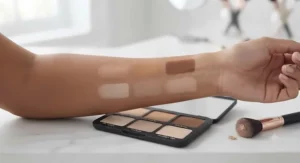
The standout feature is the six-shade layout itself: three contour tones and three highlight tones, split between matte and shimmer finishes, which gives you real flexibility to match cooler or warmer undertones as the seasons change your skin tone. The pressed, buildable powder formula is designed to adhere and blend with minimal streaking, a detail that matters enormously for anyone still building confidence with a brush.
What the spec sheet doesn’t fully capture is how forgiving this particular pressed formula is compared to chalkier budget powders — you can go back over an area to correct unevenness without the muddy buildup that ruins cheaper contour attempts. Based on aggregated customer feedback across major retailers, this kit consistently earns praise for its pigmentation, blendability, and the fact that it works for both first-timers and working artists, though a recurring complaint is that it runs on the pricier side for the amount of product you actually get. Some reviewers with very fair skin also note the kits marketed as “medium to tan” run darker than expected, so shade-matching before buying matters here more than with most palettes on this list.
Pros:
- ✅ Six shades cover both cool and warm undertones
- ✅ Pressed formula blends without the muddy buildup of cheaper powders
- ✅ Works equally well for beginners and professional artists
Cons:
- ❌ Higher price relative to the amount of product included
- ❌ Some shade ranges run darker than fair skin expects
In the $30–$40 range, this is the palette to reach for once you’ve outgrown a $10 starter kit but aren’t ready to spend prestige-brand money.
7. Charlotte Tilbury Filmstar Bronze & Glow — most luxurious finish for special occasions
The standout is texture, full stop: this duo pairs a finely milled, pearl-infused bronzer with a golden-based highlighter engineered with what the brand calls “Light Flex Technology,” designed to catch and bounce light rather than just sit flat on skin. It’s a two-pan compact — sculpt and highlight — rather than a multi-shade kit, which simplifies the routine considerably once you know your undertone.
What that pearl-and-pigment blend means in practice is a bronzer that mimics genuinely sun-kissed skin rather than reading as an obvious contour line, which is part of why this has become one of the brand’s most recognized products. Reviewers consistently single out the silky, non-marking texture and describe the finish as flattering even on mature skin, with several calling it one of the brand’s standout everyday products despite the price. The most common critique in aggregated feedback isn’t about performance — it’s about value, since you’re paying a meaningful premium for two pans compared to multi-shade kits from other brands on this list.
Pros:
- ✅ Finely milled, silky texture reviewers repeatedly praise
- ✅ Golden-based highlighter designed to flatter most skin tones
- ✅ Iconic, gift-worthy packaging for special occasions
Cons:
- ❌ Significant price premium for only two shade pans
- ❌ Single duo range is less flexible than multi-shade kits
At $60–$70, this is less a beginner staple and more a “graduation gift to yourself” once contouring has become a habit rather than an experiment.
Top 7 Products at a Glance
| Product | Shades | Formula | Price Range | Best For |
|---|---|---|---|---|
| e.l.f. Cosmetics Contour Palette | 4 | Powder | Under $15 | Absolute beginners on a budget |
| Wet n Wild MegaGlo Contouring Palette | 2–3 | Powder | Under $10 | Lowest-cost first experiment |
| Physicians Formula Bronze Booster | 2 | Powder | $15–$20 range | Beginners who need a brush included |
| NYX Highlight & Contour Pro Palette | 8 | Cream | $15–$25 range | Deeper undertones, cream fans |
| Smashbox Step-By-Step Contour Kit | 3 | Powder | $35–$45 range | Learning technique via labeled steps |
| Anastasia Beverly Hills Contour Kit | 6 | Powder | $30–$40 range | Blendability across undertones |
| Charlotte Tilbury Filmstar Bronze & Glow | 2 | Powder | $60–$70 range | Special occasions, gifting |
Stacked side by side, the pattern is clear: shade count and price don’t move together in a straight line. The NYX Professional Makeup Highlight & Contour Pro Palette actually offers more shades than the far pricier Charlotte Tilbury Filmstar Bronze & Glow, because Charlotte Tilbury is selling texture and finish rather than range. If you’re deciding purely on value-per-shade, the Anastasia Beverly Hills Contour Kit sits in a genuine sweet spot — six usable tones at a mid-tier price with blendability that punches above drugstore competitors.
Step-By-Step Contour Kit: Your First 30 Days
Whatever palette you land on, the first month is where habits form — good or bad. Start with less product than feels right; a lightly loaded brush tapped off before it touches your face prevents the harsh, stripey look that scares most beginners away from contouring entirely. On day one, practice with just two shades — your darkest contour tone and your highlight — before layering in bronzer, since adding every pan at once is the single most common reason first attempts look muddy.
A simple maintenance schedule helps too: wipe your palette lid after each use so pigment doesn’t cake into the hinge, and give your brushes a proper wash weekly if you’re using them daily. The most common mistake in those early weeks isn’t product choice — it’s blending too fast and stopping before the edges disappear into the skin. Set a mental rule to blend for twice as long as feels necessary; that extra ten seconds is usually what separates “obviously wearing makeup” from “just naturally has great cheekbones.”
Real-World Scenarios: Which Palette Fits Your Life
If you’re a college student on a tight budget doing your makeup in a shared dorm bathroom mirror, the e.l.f. Cosmetics Contour Palette or Wet n Wild MegaGlo Contouring Palette make the most sense — low cost means low pressure while you’re still figuring out your face shape and undertone.
If you’re a working professional with five minutes before a video call and deeper skin that’s struggled to find a shade that doesn’t look grey or orange, the NYX Professional Makeup Highlight & Contour Pro Palette is built for exactly that scenario, with cream shades that blend into skin fast without a brush.
If you’re prepping for a wedding, milestone birthday, or a big photographed event and want a finish that photographs well under flash, either the Smashbox Step-By-Step Contour Kit for its guided technique or the Charlotte Tilbury Filmstar Bronze & Glow for its luminous finish will serve you better than a bargain palette designed for daily wear.
Your Buyer’s Decision Framework
If budget is your primary constraint, choose a powder starter kit under $15, because the financial stakes of a bad blend stay low while you build skill. If your skin runs deeper and you’ve struggled with ashy or orange contour shades, choose a cream palette with a wider shade range, because cream formulas tend to sit more naturally into deeper undertones. If you’re contouring for a single big event rather than daily wear, choose a premium duo, because you’re optimizing for finish and photographability over everyday practicality. If you genuinely don’t know where to start, choose a labeled, sequential kit, because following a system beats guessing every single time.
✨ Ready to Build Your Contour Kit?
🔍 Compare current pricing and availability on any of the picks above before you commit — a five-minute price check now can save you from buyer’s remorse later, and the right palette really can make contouring click for good.
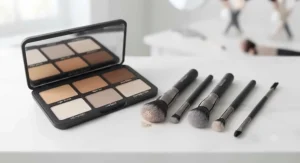
How to Choose a Contour Palette for Beginners
- Start with your undertone, not your skin tone. Cool, warm, and neutral undertones respond differently to contour shades, and matching this first prevents muddy or orange results.
- Pick powder before cream if you’re brand new. Powder is easier to correct mid-blend, while cream sets faster and punishes hesitation.
- Prioritize shade range over shimmer. A palette with more usable neutral tones beats one with flashy shimmer you’ll rarely reach for.
- Check for a matte finish option. True contour shadow should look like a shadow, not a highlighter in disguise.
- Factor in included tools. A palette that comes with a brush, like the Physicians Formula option above, removes one extra purchase and one extra guessing game.
- Read aggregated review sentiment, not star ratings alone. A 4.5-star average tells you less than recurring comments about shade accuracy on skin tones similar to yours.
- Buy the smaller size first. Sampling a compact before committing to a larger kit protects your wallet if a formula just doesn’t suit your skin.
Common Mistakes When Buying a Contour Palette for Beginners
The single biggest mistake is buying based on influencer swatches taken on a completely different skin tone than your own — a shade that looks perfectly neutral on camera can read orange or grey on your actual face. A close second is assuming a higher price automatically means better blendability; as the comparison table above shows, some mid-range powders blend more forgivingly than certain premium duos simply because of formula, not brand prestige.
Beginners also frequently skip checking whether a “contour” shade is actually matte, ending up with a shimmery bronzer that photographs as glow rather than shadow. Finally, many new buyers purchase a six-or-eight-shade kit before they’ve learned to use just two shades well, which means most of the pans sit untouched for months — buying smaller and simpler almost always serves a true beginner better.
Cream vs Powder Contour: Which Should Beginners Choose
The cream vs powder contour debate isn’t really about which formula is “better” — it’s about which one matches your skill level and skin type right now. Cream contour tends to melt into skin for a more natural, airbrushed finish and works especially well on drier skin, but it sets fast, which punishes slow blending. Powder contour is more forgiving to correct, layers more predictably, and suits oilier skin that needs extra mattifying control, but it can look chalky if applied too heavily.
| Factor | Cream Contour | Powder Contour |
|---|---|---|
| Best skin type | Dry to normal | Oily to combination |
| Blending difficulty | Higher — sets fast | Lower — easy to correct |
| Finish | Dewy, natural | Matte, defined |
| Beginner-friendly example | NYX Professional Makeup Highlight & Contour Pro Palette | e.l.f. Cosmetics Contour Palette |
What the table above really shows is that formula choice should follow your skin type first and your comfort level with blending second. If you have oily skin and want maximum control while learning, a powder like the e.l.f. Cosmetics Contour Palette will forgive more mistakes; if your skin runs dry and you want that lit-from-within look immediately, the NYX Professional Makeup Highlight & Contour Pro Palette rewards a slightly faster hand.
Face Mapping 101: Where to Actually Put Contour
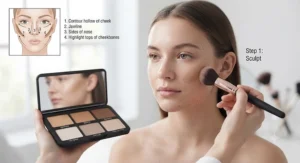
Face mapping is simply the practice of identifying the areas of your face that naturally recede (temples, under the cheekbone, jawline, sides of the nose) versus the areas that naturally protrude (forehead, brow bone, top of cheekbones, chin, nose bridge) so your contour and highlight actually mimic real shadow and light rather than looking painted on. Contour goes in the hollows; highlight goes on the high points — that’s the entire physics of it.
| Face Area | Apply | Effect |
|---|---|---|
| Hollows of cheeks | Contour shade | Shadow, slims cheeks |
| Jawline edge | Contour shade | Sharper jaw definition |
| Top of cheekbones | Highlight shade | Lifted, glowing look |
| Bridge of nose | Highlight shade | Straighter appearance |
| Forehead center/chin | Highlight shade | Softer, rounder balance |
This is exactly the logic that made highlighting such a widely discussed technique in the first place, a shift beauty editors were writing about years before it became a drugstore staple. The practical takeaway from the table above is that contour and highlight are always a pair, never solo acts — skipping the highlight step is one of the fastest ways to make a contour look flat or dirty instead of dimensional.
The Best Contour Brushes (And Why They Matter More Than the Palette)
Here’s what most beginners overlook entirely: the palette matters less than the brush applying it. An angled contour brush, ideally with slightly dense, tapered bristles, allows you to follow the natural curve of the cheekbone hollow instead of dragging a flat line across your face. A separate, fluffier blending brush is just as important, since its whole job is softening the edge between contour and bare skin until there’s no visible line left.
Beyond the shape of the brush, hygiene is a factor beginners rarely think about until their skin starts reacting. Dermatologists recommend washing makeup brushes every seven to ten days to prevent bacteria buildup, which matters even more with cream contour products that trap more residue in bristles than powder does. If you only buy one tool beyond your palette, make it a proper blending brush — it will do more for your final result than any single upgrade to the product itself.
Features That Actually Matter (And Those That Don’t)
A matte finish in your actual contour shade matters far more than shimmer flecks marketed as “glow-boosting,” since shimmer photographs as shine, not shadow. Buildable pigment matters — a shade you can layer gradually beats one that goes from invisible to overdone in a single swipe. What doesn’t matter nearly as much as marketing suggests: elaborate packaging, limited-edition compact designs, and shade names that sound flattering but tell you nothing about actual undertone. Refillable pans, like those in the NYX cream palette above, are a genuinely useful long-term feature that rarely gets marketed loudly enough, since they reduce both plastic waste and the cost of repurchasing a full palette when you only use two shades.
Safety, Talc & Regulations: What Beginners Should Know
Many powder contour formulas, including some referenced above, use talc as a base ingredient for its smoothing and blending properties. Talc has occasionally raised safety questions due to its geological proximity to asbestos deposits, and the FDA continues to monitor and test talc-containing cosmetic products for asbestos contamination as part of its ongoing cosmetic safety oversight. For most mainstream, retail-sold contour palettes from established brands, this isn’t a reason for alarm — it’s simply worth knowing the ingredient exists and that regulatory bodies actively test for contamination rather than ignoring the concern.
Beyond talc specifically, general cosmetic safety practices still apply: patch test any new palette on your inner arm before applying to your full face, especially if you have reactive or sensitive skin, and stop use immediately if irritation develops. Buying from established retailers rather than unverified third-party sellers also reduces the risk of counterfeit products that skip standard safety testing altogether.
Frequently Asked Questions
❓ What is the easiest contour palette for beginners to start with?
❓ How do I use a step-by-step contour kit?
❓ Should beginners use cream or powder contour?
❓ What brushes do I need for contouring?
❓ How much should a beginner spend on a contour palette?
Recommended for You
Conclusion
Contouring for beginners really does come down to matching formula, price, and skill level honestly rather than chasing whatever palette a favorite creator swears by. A budget powder like the e.l.f. Cosmetics Contour Palette or Wet n Wild MegaGlo Contouring Palette is the lowest-risk way to learn the fundamentals, while something like the NYX Professional Makeup Highlight & Contour Pro Palette solves specifically for cream texture and deeper undertones. Once you’ve built confidence, mid-range picks like the Smashbox Step-By-Step Contour Kit and Anastasia Beverly Hills Contour Kit reward you with better blendability and shade range, and a splurge like Charlotte Tilbury Filmstar Bronze & Glow makes sense once contouring has become a genuine habit rather than an experiment.
The real skill isn’t the palette at all — it’s understanding face mapping, practicing with just two shades before adding more, and investing in a couple of decent brushes. Get those fundamentals right, and almost any palette on this list will get you to a sculpted, natural-looking result.
Recommended for You
- 7 Best Bronzing Powder for Deep Skin Tones Picks (2026)
- 7 Best Cream Bronzer for Fair Skin Picks That Never Go Orange (2026)
- Liquid Blush for a Natural Flush: 7 Picks That Won’t Look Fake (2026)
Disclaimer: This article contains affiliate links. As an Amazon Associate, I earn from qualifying purchases. If you purchase products through these links, we may earn a small commission at no additional cost to you.
✨ Found this helpful? Share it with your friends! 💬🤗
