
In This Article
Somewhere between “bare-faced” and “full glam” sits the sweet spot most of us are actually chasing every morning: skin that looks like it just came back from a long weekend, not skin that looks like it’s wearing makeup at all. That’s the whole promise of a natural-looking bronzer for everyday wear — a product designed to fake a little sun without faking an entire face. Quick definition first, since it’s the question everyone actually types into Google: a natural-looking bronzer for everyday wear is a lightweight, sheer-to-medium coverage bronzing product, usually in cream, stick, or finely milled powder form, formulated to mimic real skin warmth rather than sit on top of it as an obvious layer of color.
The tricky part is that “natural” gets slapped on packaging constantly, and it doesn’t mean much on its own. A bronzer can call itself natural and still oxidize orange by lunchtime, or sit in your pores like a second skin problem you didn’t ask for. We dug through real product specs, ingredient lists, and aggregated customer feedback across drugstore and prestige lines to find seven bronzers that actually deliver on the promise — not just the marketing copy. Below, you’ll find a quick comparison, seven deep-dive reviews, and enough decision-making tools that you should never again stand in a Sephora aisle paralyzed by choice.
Quick Comparison Table
| Product | Format | Finish | Price Range | Best For |
|---|---|---|---|---|
| L’Oréal Paris Infallible Fresh Wear Bronzer | Pressed powder | Soft-matte | Under $15 | Oily skin, all-day wear |
| Physicians Formula Murumuru Butter Bronzer | Cream-to-powder | Satin, soft-focus | Around $13-$15 | Dry skin on a budget |
| L’Oréal Paris Lumi Bronze Le Stick Soleil | Cream stick | Luminescent | Under $15 | Quick, on-the-go application |
| Merit Bronze Balm Sheer Sculpting Bronzer | Cream balm | Satin, sheer | $25-$35 range | Beginners, zero-orange risk |
| NARS Laguna Bronzing Cream | Cream-to-powder | Soft-matte | Mid-$30s to $40 range | Long wear, combination skin |
| Saie SuperSuede Radiant Baked Bronzer | Baked powder | Blurred, radiant | $30-$36 range | Talc-free preference, texture blurring |
| Hourglass Ambient Lighting Bronzer | Finely milled powder | Diffused, luminous | $50-$55 range | Splurge-worthy soft-focus radiance |
Looking at the spread above, there’s a clear pattern: cream and cream-to-powder formats dominate the “natural” end of the spectrum because they melt into skin rather than sitting on it, while powders win on longevity and are better suited to oilier skin types that fight shine by midday. Budget doesn’t correlate with how natural a bronzer looks — the Physicians Formula Murumuru Butter Bronzer at roughly $13 blends nearly as invisibly as the $52 Hourglass Ambient Lighting Bronzer, though the two get there through very different formulas. If you only remember one thing from this table, let it be that finish (matte vs. satin vs. luminous) matters more to how “natural” something looks than price does.
💬 Found a pick you’re already sold on? Save this guide so you can come back before you check out.
Top 7 Natural-Looking Bronzers for Everyday Wear: Expert Analysis
We evaluated these seven across formula, shade range, aggregated real-world reviews, and how believable the “sun-kissed” effect actually looks once blended — not just swatched on a hand.
1. L’Oréal Paris Infallible Fresh Wear Bronzer — 24-hour soft-matte finish built for humidity
This pressed powder leans hard into longevity, and it shows the moment you swipe it on. Formulated with a talc, zinc stearate, and dimethicone base, the powder is milled finely enough that it doesn’t sit in texture the way chalkier drugstore bronzers from a decade ago used to. In practice, that means the 0.31 oz compact holds up through sweat, humidity, and a full workday without needing a midday touch-up — something the softer, creamier formulas on this list genuinely can’t claim.
Who should reach for this one? Anyone with oily or combination skin who has been burned before by a bronzer that turns patchy by 2 p.m. Based on the ingredient list and its “waterproof, heatproof” marketing claims, this is a workhorse rather than a luxury experience, and that’s precisely the appeal. Reviewers consistently note that the soft-matte finish reads as genuinely subtle rather than flat or ashy, and that the shade range runs true to undertone without an orange cast — a common complaint about older-generation drugstore bronzers.
Pros:
- ✅ Genuinely long-lasting through heat and sweat
- ✅ Soft-matte finish looks subtle, not chalky
- ✅ Budget-friendly for a daily-use product
Cons:
- ❌ Matte finish can look flat on very dry skin
- ❌ Limited shade range compared to prestige lines
At under $15, this is one of the easiest recommendations on the list for anyone whose top priority is wear time over glow.
2. Physicians Formula Murumuru Butter Bronzer — buttery soft-focus finish infused with skincare butters
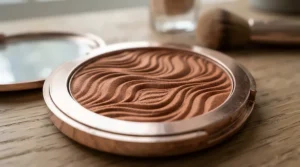
What immediately sets this one apart is the formula itself: a blend of murumuru, cupuaçu, and tucumã butters that gives the pressed powder a genuinely creamy, almost balm-like texture despite being sold as a powder. That’s not just a marketing flourish — pressed butters change how pigment sits on skin, softening the edges of application so blending mistakes are far more forgiving than with a standard talc powder.
The brand markets this as dermatologist-tested and hypoallergenic, and the soft-focus pigment technology is doing real work here: it’s designed to diffuse light across visible texture rather than sit flat on top of it, which is exactly the mechanism behind that “soft-focus bronzer finish” people are searching for. What most buyers overlook about this model is that it doubles surprisingly well as a soft, warm eyeshadow in the deeper shades — a detail that stretches the value of a single $13-$15 compact further than the box suggests. Aggregated reviewer sentiment is remarkably consistent: people call out the silky texture, the tropical scent, and a shade range that skews warm without veering orange, though a few reviewers with deeper skin tones note the darkest shade still runs on the lighter side for daily wear.
Pros:
- ✅ Buttery texture blends almost effortlessly
- ✅ Soft-focus pigments blur visible texture
- ✅ Doubles as a warm eyeshadow shade
Cons:
- ❌ Shade range skews light-to-medium overall
- ❌ Scent may not suit fragrance-sensitive users
For a drugstore price point, the Physicians Formula Murumuru Butter Bronzer punches well above its cost. 🌴
3. L’Oréal Paris Lumi Bronze Le Stick Soleil — fastest swipe-and-go stick for busy mornings
If your bronzer routine has to survive a subway commute or a 6 a.m. school drop-off, this is the format built for exactly that chaos. It’s a cream-to-powder bronzer stick, which means you get the blendability of a cream with a drier, more foolproof set than a straight cream would give you — no brush required, no separate compact to dig through your bag for.
Here’s what the spec sheet won’t tell you, but reviewer patterns make clear: stick formats like this one are genuinely more beginner-friendly than pans or pumps because the rounded applicator physically limits how much product you can deposit in one swipe, which reduces the odds of over-applying and ending up orange. Reviewers describe the finish as luminescent rather than shimmery — a subtle sheen instead of visible glitter — and note it blends easily with fingertips along temples, cheekbones, and the bridge of the nose. Based on the spec comparison against pressed-powder competitors, this format sacrifices some all-day staying power in exchange for speed and portability, a fair trade for anyone who reapplies bronzer once during the day anyway.
Pros:
- ✅ No brush needed, genuinely travel-friendly
- ✅ Rounded tip limits over-application
- ✅ Subtle luminescent (not glittery) finish
Cons:
- ❌ Needs a slightly heavier hand for deeper skin tones
- ❌ Cream-to-powder set can feel tacky in humidity
At under $15, this stick earns its spot as the low-commitment starter bronzer for anyone new to the category.
4. Merit Bronze Balm Sheer Sculpting Bronzer — sheerest buildable warmth with almost zero orange risk
Merit built this bronzer around a single, deliberate constraint: neutral undertones, full stop. The formula skips warm-leaning iron oxide ratios that push other cream bronzers toward orange, and the result is a wash of color that genuinely reads as “your skin, just warmer” rather than “bronzer.” The oval-shaped applicator is a clever bit of engineering — the wide side is built for sweeping warmth across the high points of the face, while the narrow edge lets you sculpt with more precision under the cheekbone.
This is an Allure Best of Beauty award winner, and based on the spec comparison, the satin (not matte, not glowy) finish is a deliberate middle ground meant to look natural across the widest possible range of skin types — dry, oily, and combination alike. What reviewers consistently flag is how sheer the first layer goes on, which makes this arguably the most forgiving option on this entire list for someone who has never used bronzer before and is nervous about overdoing it. The trade-off, unsurprisingly, is that one swipe alone won’t read as much on deeper skin tones — you’ll need to build in layers, which does take a few more seconds than a single-swipe stick.
Pros:
- ✅ Neutral undertones virtually eliminate orange risk
- ✅ Dual-ended shape allows warmth or precise sculpting
- ✅ Beginner-friendly, forgiving buildable formula
Cons:
- ❌ May be too sheer for deeper skin tones in one layer
- ❌ Premium price for the amount of product
If “subtle” is your non-negotiable, Merit Bronze Balm Sheer Sculpting Bronzer is hard to beat.
5. NARS Laguna Bronzing Cream — cult cream-to-powder formula with genuinely all-day hold
NARS took its best-selling Laguna powder shade and rebuilt it as a cream, and the engineering shows: this is a denser, less emollient cream than most competitors, which sounds like a downside until you realize that’s exactly what lets it set to a soft-matte finish that holds its shape for hours rather than sliding around on oilier skin. The five-shade range (expanded from an original two) finally gives this formula the reach it was missing at launch, spanning light-neutral to deep bronze.
Key ingredients include Monoï de Tahiti oil, a fragrant Polynesian blend prized in skincare for its moisture-locking properties, alongside a silicone-forward base that helps the cream glide before it sets. Based on aggregated reviewer sentiment, the “second-skin warmth” claim mostly holds up: multiple long-term users describe the shade range as one of the more successful attempts at avoiding an orange cast across a range of undertones, particularly in the cooler-leaning 01 and 02 shades. One caveat worth flagging honestly: the formula does contain coconut oil, an ingredient dermatologists have long noted can be comedogenic on acne-prone skin, so anyone with breakout-prone skin may want to patch test first.
Pros:
- ✅ Soft-matte finish holds shape for hours
- ✅ Five shades minimize orange-cast risk
- ✅ Monoï-infused formula feels conditioning on skin
Cons:
- ❌ Contains coconut oil, a potential pore-clogger for some
- ❌ Higher price point than most cream competitors
For anyone chasing longevity without sacrificing a cream-bronzer glow, NARS Laguna Bronzing Cream is the benchmark others are still chasing.
6. Saie SuperSuede Radiant Baked Bronzer — talc-free baked powder that blurs texture on contact
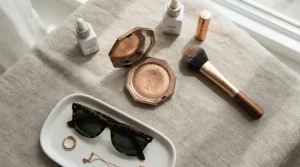
Baked bronzers are a genuinely different manufacturing process from pressed powders — the pigment is cured in an oven rather than compressed, which produces a finer, more blendable particle structure. Saie leaned into that technique here, building a talc-free formula around squalane, jojoba esters, and kaolin clay instead of the traditional talc base most drugstore and even prestige bronzers still rely on.
What that swap means in practice: squalane and jojoba are both emollients that add slip and a skin-like feel to a powder, which is why this bronzer reads as “blurred” rather than flat, even though it’s technically a pressed formula. Reviewers across multiple retailers consistently describe it as lightweight, buildable, and non-comedogenic-feeling even on sensitive skin, with an average wear time reviewers peg at close to eight hours before needing a refresh. A few reviewers with deeper skin tones have specifically asked the brand to expand the range further, since the current shade lineup skews toward fair-to-medium coverage, so that’s a fair caveat to flag before buying based on the shade name alone.
Pros:
- ✅ Talc-free formula with skin-conditioning oils
- ✅ Baked process creates an ultra-blendable texture
- ✅ Reviewers report close to 8 hours of wear
Cons:
- ❌ Shade range currently skews fair-to-medium
- ❌ Pricier than standard powder bronzer competitors
For the specific combination of “clean” formulation and soft-focus texture, Saie SuperSuede Radiant Baked Bronzer is one of the more thoughtfully engineered options here. 🌤️
7. Hourglass Ambient Lighting Bronzer — splurge-worthy soft-focus radiance built on light-diffusing tech
This is the premium anchor of the lineup, and the price reflects genuinely different technology rather than just packaging. Hourglass fuses standard bronze pigment with its proprietary Ambient Lighting Powder — optically transparent particles engineered to refract and diffuse light rather than sit as flat color. The brand’s “miscelare” hand-blending technique (Italian for “to mix”) means no two pans look identical, and the sheer, airy formula is deliberately designed to avoid the flat, one-dimensional look that cheaper bronzers can fall into.
Here’s what the spec sheet won’t tell you, but longtime users note repeatedly: this bronzer works almost like a filter for the skin, softening the appearance of texture and fine lines rather than sitting inside them, which is the exact mechanism people mean when they search for a soft-focus bronzer finish. Formulated without parabens, talc, or synthetic fragrance, it’s positioned as gentle even for reactive skin. Reviewers across nearly a decade of coverage consistently describe the pigmentation as long-lasting without fading unevenly, and note that despite a visible shimmer in the pan, it translates to warmth and glow on skin rather than obvious sparkle. The catch is the price-per-ounce, which sits meaningfully above every other product on this list.
Pros:
- ✅ Photoluminescent tech diffuses light for soft-focus glow
- ✅ Long-lasting pigmentation that fades evenly
- ✅ Free from parabens, talc, and synthetic fragrance
Cons:
- ❌ Premium price point, one of the priciest here
- ❌ Limited shade range compared to mass-market lines
If budget isn’t the deciding factor, Hourglass Ambient Lighting Bronzer remains the reference point every other “natural glow” bronzer on this list is quietly trying to compete with.
What Makes a Subtle Everyday Bronzer Work
A subtle everyday bronzer isn’t just “less bronzer” — it’s a different engineering goal entirely. The products that succeed at subtlety, like Merit Bronze Balm Sheer Sculpting Bronzer, tend to share three traits: neutral-to-warm undertones (never orange-leaning), a buildable rather than a single-payoff formula, and a finish that mimics skin rather than product. Reviewers consistently note that the products marketed as “sheer” or “buildable” are the ones that survive the “did I overdo it?” test in daylight, which is the actual bar for everyday wear.
Subtlety also depends heavily on tool choice, not just formula. A dense, flat brush deposits more pigment per swipe than a soft, tapered one, so even the sheerest bronzer on this list can look heavy-handed with the wrong applicator. Based on the spec comparison across all seven products, the ones formulated in cream or balm textures — Merit Bronze Balm Sheer Sculpting Bronzer, NARS Laguna Bronzing Cream, and Physicians Formula Murumuru Butter Bronzer — are inherently more forgiving for subtlety because fingertip application naturally deposits less product than a loaded brush would.
Understanding Soft-Focus Bronzer Finish
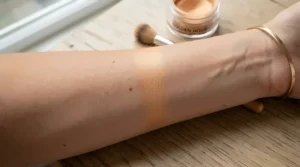
“Soft-focus” is a real formulation category, not just a buzzword, and it’s worth understanding what’s actually happening on your skin. Soft-focus pigments and technologies — like the finely milled particles in Physicians Formula Murumuru Butter Bronzer or the Photoluminescent Technology inside Hourglass Ambient Lighting Bronzer — are engineered to scatter and refract light rather than reflect it flatly. That scattering effect is what visually blurs pores, fine lines, and texture, which is the technical explanation behind why some bronzers look like a filter and others just look like brown powder sitting on skin.
The trade-off most buyers overlook: soft-focus formulas generally require finer, more expensive milling processes, which is part of why products built specifically around the technology — Hourglass’s Ambient line, Saie’s baked SuperSuede formula — sit at a higher price point than a standard pressed powder. If a soft-focus finish is your priority, spending slightly more on formulation tends to buy you a genuinely different visual result rather than just prettier packaging, based on how these ingredient lists and light-diffusing claims compare across price tiers.
Sheer Bronzer vs Full-Coverage Bronzer: Which Wins for Daily Wear
| Factor | Sheer Bronzer | Full-Coverage Bronzer |
|---|---|---|
| Best For | Everyday wear, beginners | Special occasions, deeper contouring |
| Buildability | High — layer for more depth | Low — one swipe is often final |
| Orange-Cast Risk | Lower, due to lighter pigment load | Higher if undertone is warm |
| Example | Merit Bronze Balm Sheer Sculpting Bronzer | Traditional heavy contour powders |
A sheer bronzer wins for daily wear in almost every practical scenario, and the reasoning comes down to control. Because sheer formulas deposit less pigment per application, they’re inherently more forgiving of a slightly clumsy hand or a rushed 7 a.m. routine, and they layer predictably rather than jumping from “nothing” to “too much” in a single swipe. Full-coverage bronzers still have a place — for photography, stage makeup, or a night out where more dramatic definition is the goal — but for the actual keyword everyone’s searching, “everyday wear,” sheer formulas consistently outperform on wearability and forgiveness.
How to Choose a Natural-Looking Bronzer for Everyday Wear
- Identify your undertone first. Cool undertones generally do better with neutral-to-rose bronzers, while warm undertones can handle richer, golden shades without looking muddy.
- Match format to skin type. Cream and balm formulas like NARS Laguna Bronzing Cream suit dry or normal skin, while pressed powders like L’Oréal Paris Infallible Fresh Wear Bronzer hold up better on oily skin.
- Prioritize buildability over pigmentation. A bronzer you can layer from sheer to medium, such as Merit Bronze Balm Sheer Sculpting Bronzer, gives you far more control than a heavily pigmented one-swipe formula.
- Check the finish, not just the shade. Matte finishes photograph more naturally in daylight; satin and soft-focus finishes like Physicians Formula Murumuru Butter Bronzer flatter texture and fine lines.
- Consider your climate. Humid or hot climates favor longer-wearing formulas like L’Oréal Paris Infallible Fresh Wear Bronzer; drier climates can lean into hydrating cream bronzers.
- Read the ingredient list for known irritants. If you’re acne-prone, watch for comedogenic oils (coconut oil is a common one) before committing to a cream formula.
- Test in daylight, not store lighting. Store lighting flatters almost everything; a quick daylight check before you buy is the single best way to avoid an orange-cast regret purchase.
Common Mistakes When Buying and Applying Bronzer
Even good bronzers get misused, and most of the “this looks fake” complaints trace back to a handful of repeat mistakes rather than a bad product. Buying a shade that’s more than two shades darker than your natural skin tone is the single most common error — bronzer is meant to mimic a subtle tan, not a full color change, and reviewers across nearly every product in this guide flag “went too dark” as a frequent early regret. A close second is applying bronzer everywhere instead of only where the sun would naturally hit: forehead, cheekbones, nose bridge, and jawline.
Another overlooked mistake is skipping the brush-tap-off step with powder formulas, which deposits far more product than intended on the first swipe. Reviewers of denser formulas like NARS Laguna Bronzing Cream specifically note that starting lighter than you think necessary is the difference between “sun-kissed” and “streaky.” Finally, many buyers assume a bronzer with SPF replaces sunscreen entirely — it doesn’t, and that distinction matters more than most packaging admits (more on that in the safety section below).
Cream Bronzer vs Powder Bronzer for Everyday Wear
Cream bronzers, including Physicians Formula Murumuru Butter Bronzer and NARS Laguna Bronzing Cream, tend to melt into skin rather than sit on top of it, which is exactly why they read as more natural on dry or mature skin — they don’t emphasize fine lines or texture the way a dry powder can. The trade-off is that cream formulas are more pigmented than they appear in the tube, so a light hand and gradual buildup matter more here than with powder.
Powder bronzers, like L’Oréal Paris Infallible Fresh Wear Bronzer and Hourglass Ambient Lighting Bronzer, win on staying power and are generally easier for beginners to control because a brush naturally distributes less product than fingertips do. They’re also the better choice over sunscreen or a moisturizer with SPF, since powder sits on top of a fully set base rather than disrupting it. On oily skin specifically, powder formulas resist that midday “melting” look that creams are more prone to. Neither format is objectively better — the right pick depends on whether your skin runs dry (lean cream) or oily (lean powder), and how much daily maintenance you’re willing to do.
Features That Actually Matter (And Those That Don’t)
What actually matters: undertone neutrality, buildability, and a finish that suits your skin type. What most marketing copy overhypes: shimmer particle size claims, “24-karat gold” or similarly flashy ingredient call-outs, and elaborate applicator shapes that don’t meaningfully change the wear experience. The oval applicator on Merit Bronze Balm Sheer Sculpting Bronzer is a rare exception — it genuinely changes how the product applies — but most “innovative” applicator marketing is closer to packaging design than functional upgrade.
Talc-free formulations, like the one in Saie SuperSuede Radiant Baked Bronzer, matter more to some buyers than others; it’s a genuine point of differentiation for anyone specifically avoiding talc, but it isn’t inherently a marker of a more natural-looking finish on its own. Skincare ingredient add-ins (squalane, hyaluronic acid, murumuru butter) are a real, meaningful bonus for dry skin, but they shouldn’t be mistaken for skincare-grade treatment — a bronzer is still a cosmetic, not a moisturizer, no matter how many hydrating buzzwords appear on the label.
Practical Usage Guide: Application, Maintenance & Longevity
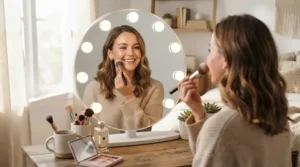
Getting a natural-looking bronzer to actually look natural comes down to tools and technique as much as product choice. Start with a clean, moisturized base — bronzer clings to dry patches and emphasizes them, which is the opposite of the soft-focus effect most people want. For powders, use a fluffy, slightly angled brush and tap off excess before the first swipe; for creams, warm a small amount between fingertips before pressing (not rubbing) it into skin, which helps it melt in rather than streak.
Placement is where most everyday bronzer routines go wrong. Sweep product only where sunlight would naturally hit: the tops of cheekbones, the forehead, the bridge of the nose, and along the jawline in a loose “3” shape. Skip the center of the face entirely, since bronzer there tends to muddy the complexion rather than warm it. For maintenance, powder compacts should be wiped down periodically to prevent oil buildup on the surface, while cream and stick formulas benefit from keeping the cap tightly sealed to avoid drying out. Most common first-30-day mistake: applying with a full face of product before you’ve learned how your specific bronzer builds — start with one thin layer for the first week before adding a second.
Real-World Scenarios: Matching Bronzer to Your Life
Consider a college student juggling 8 a.m. classes and zero time for a full routine: a stick format like L’Oréal Paris Lumi Bronze Le Stick Soleil solves this cleanly, since it requires no brush, no mirror time beyond a quick blend with fingers, and fits in a backpack without breaking.
Now picture someone with oily, acne-prone skin who works a physically active job and needs makeup that survives an 8-hour shift without sliding. L’Oréal Paris Infallible Fresh Wear Bronzer is built for exactly that use case, thanks to its waterproof, sweatproof formulation and genuinely long wear time.
Finally, think about someone in their 40s or 50s dealing with visible texture and fine lines who wants warmth without settling into creases. A soft-focus formula like Physicians Formula Murumuru Butter Bronzer or the significantly pricier Hourglass Ambient Lighting Bronzer both solve this through light-diffusing pigment technology rather than heavy coverage, softening texture instead of highlighting it.
Problem → Solution: Fixing Common Bronzer Frustrations
Problem: My bronzer turns orange by afternoon. This usually traces back to a warm-leaning formula reacting with your skin’s natural oils. Switch to a neutral-undertone formula like Merit Bronze Balm Sheer Sculpting Bronzer, which was specifically engineered to avoid that shift.
Problem: My bronzer looks patchy on dry skin. Powder formulas cling to flaky patches. Swap to a cream or balm, like NARS Laguna Bronzing Cream, and always apply over a fully moisturized base.
Problem: My bronzer doesn’t last past lunch. This is almost always a powder-vs-formula mismatch on oily skin. A long-wear formula like L’Oréal Paris Infallible Fresh Wear Bronzer is engineered specifically to resist that midday fade.
Problem: I always apply too much. Switch tools before switching products — a smaller, tapered brush or fingertip application (rather than a large fluffy brush) naturally limits how much pigment you deposit per swipe.
Problem: My bronzer emphasizes my pores and fine lines. Look specifically for soft-focus or light-diffusing formulas, such as Hourglass Ambient Lighting Bronzer or Saie SuperSuede Radiant Baked Bronzer, both engineered around this exact concern.
Safety, Talc & Regulations: What to Know Before You Buy
Talc remains one of the more scrutinized ingredients in pressed bronzers and powders, and the regulatory picture has genuinely shifted recently. The FDA’s cosmetic ingredient page on talc confirms that while talc itself is not banned, the agency continues testing talc-containing cosmetics for asbestos contamination, since the two minerals can occur in overlapping geological deposits. If talc is a concern for you personally, talc-free formulations like Saie SuperSuede Radiant Baked Bronzer sidestep the issue entirely by building around clay and mineral alternatives instead.
It’s also worth addressing a persistent myth directly: a bronzer or foundation with SPF listed on the label is not a substitute for dedicated sunscreen. According to reporting from the Prevent Cancer Foundation, most people apply far less product than the amount used in official SPF testing, meaning the real-world protection from bronzer or foundation with SPF falls well short of the number on the label. If sun protection matters to your daily routine — and it should — apply a dedicated broad-spectrum sunscreen underneath your bronzer rather than relying on the bronzer itself.
Frequently Asked Questions
❓ What is the most natural-looking bronzer for everyday wear?
❓ Is cream or powder bronzer more natural-looking?
❓ Can I wear bronzer every day without damaging my skin?
❓ Does bronzer with SPF replace sunscreen?
❓ How do I stop my bronzer from looking orange?
Conclusion
A genuinely natural-looking bronzer for everyday wear comes down to three things working together: the right undertone for your skin, a format suited to your skin type, and a light, buildable hand during application. Whether you land on the budget-friendly L’Oréal Paris Infallible Fresh Wear Bronzer for its long-wear reliability, the beginner-proof Merit Bronze Balm Sheer Sculpting Bronzer for its near-zero orange risk, or the splurge-worthy Hourglass Ambient Lighting Bronzer for its light-diffusing soft-focus finish, the underlying formula science matters more than any single brand name.
None of these seven products are interchangeable, and that’s the point — the “best” bronzer genuinely depends on your skin type, climate, and how much daily maintenance you’re willing to put in. Use the comparison tables and decision framework above to narrow things down, read your own skin’s undertone honestly, and start with a lighter application than you think you need. You can always build up warmth; you can’t un-apply it.
Recommended for You
- Long-Lasting Bronzer for Oily Skin: 7 Proven Picks for 2026
- 7 Best Contour Stick for Mature Skin Picks to Try in 2026
- Contour Palette Under $20: 7 Amazing Picks for 2026
Disclaimer: This article contains affiliate links. As an Amazon Associate, I earn from qualifying purchases. If you purchase products through these links, we may earn a small commission at no additional cost to you.
✨ Found this helpful? Share it with your friends! 💬🤗
