
In This Article
If you’ve got fair skin, you already know the drill: you swipe on a bronzer that looked perfectly innocent in the pan, and twenty minutes later you’re wearing something that reads more “traffic cone” than “just back from the coast.” That’s the whole problem with cream bronzer for fair skin — most formulas are built and swatched on medium-to-tan tones first, so the palest shades in the range are often an afterthought, muddy, or weirdly orange the second they hit oil-prone skin. A cream bronzer for fair skin, done right, is simply a cream-based bronzing product formulated in light enough pigment concentration and the correct undertone (usually cool-neutral or soft peach, never deep red-orange) to read as a believable, subtle warmth rather than a costume. This guide breaks down seven real, current products — from $8 drugstore finds to a $75 splurge — plus how to actually pick a light shade cream bronzer that matches your undertone instead of fighting it.
Fair skin isn’t one shade, either — it spans everything from cool porcelain to warm ivory, and that range is exactly why so many bronzers miss the mark. According to the Fitzpatrick skin type scale, the classification dermatologists still use to describe how skin reacts to UV exposure, Type I and Type II skin (the palest end of the spectrum) burns easily and rarely tans on its own, which is precisely why makeup-based sun-kissed makeup has become the safer, more sustainable stand-in for actual sun exposure. We’ll walk through seven cream formulas, how to apply them without streaking, and how to shade-match with confidence instead of guesswork.
Quick Comparison: Cream Bronzer for Fair Skin at a Glance
| Product | Price Range | Finish | Best For |
|---|---|---|---|
| e.l.f. Putty Bronzer | Under $10 | Semi-matte | Budget beginners |
| Milani Cheek Kiss Cream Bronzer | $10–$15 range | Soft matte | Everyday drugstore glow |
| Physicians Formula Murumuru Butter Bronzer | $15–$20 range | Satin, cream-to-powder finish | Dry or mature skin |
| Pixi On-the-Glow Bronze Moisture Stick | Around $18 | Dewy balm | On-the-go, multi-use |
| Merit Bronze Balm | $28–$32 range | Satin, sheer | Precision sculpting |
| Saie Sun Melt Natural Cream Bronzer | $28–$32 range | Velvety natural | Buildable, all-over warmth |
| Westman Atelier Sun Tone Bronzing Crème | $70–$80 range | Hydrated matte, cream-to-powder finish | Editorial-level dimension |
Looking at the table, there’s a clear split between single-shade cream sticks meant for quick, low-effort application (e.l.f. Putty Bronzer, Milani Cheek Kiss Cream Bronzer) and dual-tone systems like the Westman Atelier Sun Tone Bronzing Crème that ask you to layer two shades for dimension. Budget doesn’t map cleanly to shade range, either — the $8 e.l.f. Putty Bronzer actually offers more light-shade options than some prestige lines. If you’re newer to bronzer, start with a single, buildable shade like Milani Cheek Kiss Cream Bronzer before graduating to a two-tone system.
💬 Found a shade that finally works? Save this list before you forget which one!
Top 7 Cream Bronzer for Fair Skin Picks: Expert Analysis
1. e.l.f. Putty Bronzer — most affordable putty-to-powder formula
At around $8, e.l.f. Putty Bronzer is the easiest entry point into cream bronzer for fair skin, and it opens with a genuinely clever texture trick: it goes on as a soft putty, then sets into a semi-matte powder finish on the skin. That cream-to-powder finish matters for pale, oil-prone skin because it means you get the blendability of a cream without the all-day slip some balms have. The formula is infused with argan oil and vitamin E, and it comes in eight shades, with “Sun Kissed” sitting at the lighter end of the range — a detail that matters, since e.l.f.’s original Putty line skews warmer overall.
Based on the spec comparison with pricier options on this list, the trade-off is a slightly more limited pale-shade selection; you’re choosing between two or three genuinely light options rather than six. Reviewers consistently report that it blends easily and offers a skin-like appearance rather than a flat, product-y layer, with several fair-skinned users specifically noting they had to hunt for the right shade among the darker options.
What most buyers overlook is that this is one of the few sub-$10 bronzers that’s actually buildable in thin layers rather than going on heavy from the first swipe.
Pros:
- ✅ Cream-to-powder finish resists slipping in warm weather
- ✅ Argan oil and vitamin E add light hydration
- ✅ Buildable coverage from sheer to full
Cons:
- ❌ Fewer truly pale shades than competitors
- ❌ Semi-matte finish can look flat without a cream highlighter
At around $8, e.l.f. Putty Bronzer is hard to argue with as a low-commitment way to test whether cream bronzer suits your routine before spending more.
2. Milani Cheek Kiss Cream Bronzer — never-orange soft matte for daily wear
Milani Cheek Kiss Cream Bronzer sits in the $10–$15 range and is one of the newer cream launches built specifically around the “never orange” promise that fair-skinned shoppers actually care about. The formula is infused with Bulgarian rose, watermelon seed, and pomegranate seed oils, plus micro-sized spherical powders designed to blur texture rather than just deposit color. In practice, that ingredient blend means the bronzer melts into skin instead of sitting on top of it — a meaningful distinction for anyone who’s dealt with a cream bronzer that looks patchy over dry patches.
Here’s what to weigh: with only four shades total, the lightest option (the shade sold as Hey Honey) is genuinely pale-friendly, but there’s a noticeable jump to the next shade up, so swatch carefully if you’re between sizes. Reviewers consistently note the buildable, soft-matte finish and the fact that it resists turning muddy through the day, which is the exact failure mode most fair-skin shoppers are trying to avoid.
Based on the ingredient list, this is a strong pick if you want a light shade cream bronzer with skincare benefits baked in rather than a purely color-only formula.
Pros:
- ✅ Formulated specifically to avoid an orange cast
- ✅ Nourishing oils help it sit well on drier skin
- ✅ Micro-powders blur texture while adding warmth
Cons:
- ❌ Only four shades, with a big jump between light options
- ❌ Sheer formula needs building for visible definition
For the price, Milani Cheek Kiss Cream Bronzer earns its spot as one of the best value picks for anyone shopping specifically for a cream bronzer for fair skin.
3. Physicians Formula Murumuru Butter Bronzer — best hybrid cream-to-powder finish for dry skin
Physicians Formula Murumuru Butter Bronzer, priced in the mid-$15 range for 0.38 oz, has quietly become a cult favorite among pale-skinned shoppers precisely because it was one of the first widely available bronzers to include a dedicated Light Bronzer shade rather than starting at “medium.” The formula blends murumuru, cupuaçu, and tucuma butters — all rich in fatty acids — into a texture that reads as a true cream-to-powder finish: soft and blendable on application, then settling into a satin rather than shimmery result.
What most buyers overlook about this one is that despite the powder-compact packaging, it behaves far more like a cream than a traditional pressed bronzer, which is why it’s included here rather than filed under powders. Reviewers consistently describe it as buttery and easy to build without turning cakey, and several fair-skinned reviewers specifically call out the Light Bronzer shade as one of the few in this price bracket that doesn’t pull orange or muddy on very pale, cool-toned skin.
On paper, this means you get powder-bronzer convenience (no fingers required, easy brush application) with the blend quality of a cream — a genuinely useful middle ground for anyone who finds true cream formulas too fussy to apply with a brush.
Pros:
- ✅ Dedicated Light Bronzer shade built for pale skin
- ✅ Butter-rich formula feels moisturizing, not drying
- ✅ Brush-friendly application, no fingers required
Cons:
- ❌ Strong coconut-based scent some find overwhelming
- ❌ Shade range tops out darker than deep-skin needs
If you want the ease of a powder bronzer but the blend and glow of a cream, Physicians Formula Murumuru Butter Bronzer is the most practical middle-ground pick on this list.
4. Pixi On-the-Glow Bronze Moisture Stick — most versatile hydrating stick for cheeks and lips
At around $18, the Pixi On-the-Glow Bronze Moisture Stick takes a different approach: it’s formulated as a hydrating balm stick first and a bronzer second, built around ginseng, aloe vera, and fruit extracts. The lightest shade in the four-option range, SoftGlow, is specifically described as offering “golden hour” warmth rather than a deep bronze payoff, which makes it one of the more forgiving light shade cream bronzer options for anyone nervous about overdoing it.
Because it’s designed for both cheeks and lips, the pigment load is intentionally sheer — you’re not going to get heavy sculpting definition out of this stick, but you will get an easy, low-effort glow that layers well under or over foundation. Reviewers consistently note that it’s beginner-friendly precisely because the sheer payoff makes it nearly impossible to apply too much in one swipe, and the twist-up stick format means no brushes or sponges are strictly necessary.
Based on the ingredient profile, this is best suited to normal-to-dry skin types; oilier skin types may want to set it with a light dusting of translucent powder to extend wear.
Pros:
- ✅ Dual-use formula works on cheeks and lips
- ✅ SoftGlow shade is genuinely subtle and forgiving
- ✅ Twist-up stick needs no brush or sponge
Cons:
- ❌ Sheer payoff limits use for defined contouring
- ❌ Can feel tacky in humid weather without setting powder
For anyone who wants sun-kissed makeup with zero learning curve, the Pixi On-the-Glow Bronze Moisture Stick is one of the easiest formulas on this list to get right on the first try.
5. Merit Bronze Balm — best precision stick built specifically for fair skin
The Merit Bronze Balm, priced around $30 for 0.44 oz, stands out because Merit built an entire shade — Quince — explicitly labeled for fair skin, rather than expecting pale shoppers to size down from a medium option. The formula is a sheer, buildable cream with microfine pigments, designed around an oval-shaped stick that lets you use the narrow edge for precision sculpting and the wide face for broader, all-over warmth.
What the spec sheet won’t tell you, but reviewers note, is that the Quince shade reads slightly warmer than some of the brand’s other shades, which is actually a plus for fair skin specifically trying to avoid the ashy, cool-gray cast that some “safe” pale bronzers overcorrect into. Reviewers consistently describe the finish as a true second-skin satin — not dewy, not matte, but something in between that photographs naturally.
The trade-off worth noting: because the formula is intentionally sheer, anyone wanting a strong, visible sculpt will need to layer it more than once, and a single stick can take a while to show meaningful color depletion, which is actually a value point once you factor in cost-per-use.
Pros:
- ✅ Quince shade built specifically for fair skin
- ✅ Oval stick allows precise sculpting or broad warmth
- ✅ Long-wearing, second-skin satin finish
Cons:
- ❌ Premium price point for a single-shade stick
- ❌ Sheer formula requires patience to build depth
If shade-specific engineering matters to you, Merit Bronze Balm in Quince is arguably the most deliberately fair-skin-focused product on this entire list.
6. Saie Sun Melt Natural Cream Bronzer — most natural buildable warmth for everyday wear
Saie Sun Melt Natural Cream Bronzer retails in the $28–$32 range and has built a loyal following on the strength of one specific claim holding up in practice: it genuinely doesn’t oxidize orange, even in its Light Bronze/Fair Bronze shades. The formula leans on colloidal oatmeal, grapeseed oil, and elderberry extract, giving it a velvety, almost balm-like texture that reviewers consistently describe as sheer on first application but surprisingly buildable without turning muddy — a rare combination in cream bronzers at this price point.
Based on the spec comparison with the other sheer sticks on this list, Sun Melt separates itself by coming in a jar rather than a stick, which means application relies on a brush (Saie sells one designed specifically for this product) rather than fingers, giving you more control over precise placement.
What most buyers overlook is that the “natural” in the name is doing real work here: even heavy layering tends to still look like skin rather than makeup, which is exactly what fair-skin shoppers want from a warm-toned bronzer for pale skin that’s meant to read as sun-kissed rather than “bronzer applied.”
Pros:
- ✅ Resists the orange oxidation fair skin often sees
- ✅ Buildable without turning muddy or heavy
- ✅ Skin-loving ingredients like grapeseed oil and oatmeal
Cons:
- ❌ Requires a brush for even application
- ❌ Jar packaging is less travel-friendly than a stick
For buyers specifically hunting a warm-toned bronzer for pale skin that stays believable at every layer, Saie Sun Melt Natural Cream Bronzer is one of the strongest options here.
7. Westman Atelier Sun Tone Bronzing Crème — most dimensional cream-to-powder duo for a lit-from-within look
At roughly $70–$80, the Westman Atelier Sun Tone Bronzing Crème is the splurge pick on this list, and it justifies the price with a genuinely different approach: a two-pan duo (Soleil Parfait 1, the lightest pairing, is built for the fairest skin tones) designed to mimic how sunlight actually hits skin, applying the lighter shade to high points and the deeper shade to the perimeter for real dimension rather than a flat, single-tone wash. The formula uses coconut-derived emollients, avocado extract, and shiitake mushroom extract, resulting in what the brand calls a hydrated matte, cream-to-powder finish — smooth enough to blend easily but with more staying power than a pure balm.
On paper, the two-shade system means more technique is required than a single-stick bronzer, but reviewers consistently describe the payoff as looking closer to real, dimensional sun exposure than any single-shade product can replicate, with several noting it’s the first bronzer that’s read as natural rather than “made-up” on very fair, cool-toned skin.
What most buyers overlook is that you don’t have to use both shades every time — many fair-skinned users report reaching almost exclusively for the lighter pan and saving the deeper one for deeper-tan seasons.
Pros:
- ✅ Dedicated fairest-skin duo (Soleil Parfait 1)
- ✅ Two-tone system adds real dimension, not flat color
- ✅ Skincare-forward formula with avocado and mushroom extract
Cons:
- ❌ Premium price relative to single-shade options
- ❌ Two-shade technique has a slight learning curve
If budget allows and you want the most convincingly dimensional sun-kissed makeup on this list, the Westman Atelier Sun Tone Bronzing Crème delivers results that are genuinely hard to replicate with a single-tone stick.
How to Apply Cream Bronzer for a Natural Sun-Kissed Finish
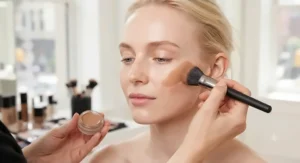
Getting a light shade cream bronzer to look convincing comes down to placement and tools more than product choice. Start with clean, moisturized skin (or over your foundation if you’re layering) and use a small amount — cream formulas are almost always more pigmented than they look in the jar or stick. Apply in a loose “3” shape on each side of your face: across the top of the forehead near the hairline, down the temples, and along the cheekbones and jawline, avoiding the center of the face where natural sun exposure rarely lands anyway. A damp makeup sponge, a dense buffing brush, or even clean fingertips all work — fingertips actually warm the product slightly, which can help thin, sheer formulas like Merit Bronze Balm blend more evenly. Common first-30-days mistakes include applying too much product at once (always build in thin layers), stopping the blend at a hard line along the jaw, and forgetting to extend a touch down the neck and chest so the color doesn’t stop abruptly at the collar. For maintenance, most cream bronzers last 6–12 months once opened; if the formula starts separating or smells different, it’s time to replace it, since cream products with natural oils are more prone to breaking down than powders.
Real-World Scenarios: Which Cream Bronzer Fits Your Life
If you’re a college student who wants a five-minute morning routine, the Pixi On-the-Glow Bronze Moisture Stick in SoftGlow is built for exactly that — swipe, blend with fingers, done, no brush required. If you’re commuting into an office and need something that survives a long day without fading into your collar, Physicians Formula Murumuru Butter Bronzer or Saie Sun Melt Natural Cream Bronzer both hold up well through eight-plus hours based on aggregated reviewer wear-time reports. If you’re planning a wedding or event where photos matter and you want dimension rather than a flat wash of color, the Westman Atelier Sun Tone Bronzing Crème duo is worth the splurge, since its two-tone system was specifically designed to photograph with more depth. And if you’re simply testing whether cream bronzer works for your skin at all before committing real money, e.l.f. Putty Bronzer at around $8 removes the financial risk from that experiment entirely.
✨ Ready to shop your match? Compare shades side-by-side before you check out.
How to Choose a Cream Bronzer for Fair Skin
Picking the right cream bronzer for fair skin comes down to a handful of concrete factors, not just brand reputation.
- Check the undertone first, not just the lightness. A shade can be pale but still lean orange or red — look for descriptions like “cool,” “neutral,” or “peach” rather than “golden” or “deep bronze.”
- Read the shade name and number, not just the swatch photo. Photos vary by screen and lighting; names like Light Bronzer, Quince, or Fair Bronze are more reliable signals than a product image.
- Prioritize buildable formulas over highly pigmented ones. A sheer base you can layer (like Merit Bronze Balm or Saie Sun Melt) is more forgiving than a heavily pigmented one you can only apply once correctly.
- Consider your skin type alongside your skin tone. Dry or mature skin generally does better with richer, oil-based formulas like Physicians Formula Murumuru Butter Bronzer; oilier skin may prefer a cream-to-powder finish like e.l.f. Putty Bronzer.
- Factor in application method. Stick formats are faster and more travel-friendly; jar formats generally require a brush for even distribution.
- Look for ingredient callouts if skincare-forward makeup matters to you. Several of these formulas include oatmeal, oils, or antioxidant extracts that add hydration alongside color.
- Don’t assume price equals better shade-matching. Some of the most fair-skin-specific shades on this list, like Quince and Light Bronzer, come from mid-priced products, not the most expensive one.
Common Mistakes When Buying Bronzer for Pale Skin
The most common mistake fair-skinned shoppers make is buying based on the darkest or most popular shade in a range simply because it has the most reviews — popularity doesn’t equal a good match for very light or cool-toned skin. A second frequent misstep is skipping the undertone check entirely and assuming any “light” label is automatically safe; some “light” shades still carry warm-orange or red pigment that reads badly on cool-toned pale skin specifically. Buyers also tend to over-apply on the first try, since cream formulas often look sheer in the container but deposit more color than expected on contact with skin oils. Another overlooked issue is ignoring finish type — a shimmery bronzer can look lovely in photos but emphasize texture or fine lines on drier, mature skin, where a satin or matte cream-to-powder finish tends to perform better. Finally, many shoppers don’t account for how a formula will oxidize over several hours; a shade that looks correct at 9 a.m. can shift warmer by the afternoon, which is why aggregated review sentiment about all-day wear matters as much as the initial swatch.
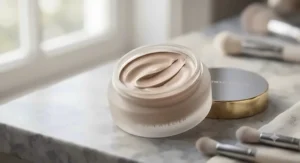
Cream Bronzer for Fair Skin vs Powder Bronzer for Fair Skin
The core difference between cream and powder bronzers for fair skin comes down to how forgiving each format is on dry patches, fine lines, and blending mistakes. Cream formulas, like Saie Sun Melt Natural Cream Bronzer or Merit Bronze Balm, melt into skin and tend to look more like a natural flush of warmth rather than a product sitting on the surface, which is particularly flattering on drier or more mature skin where powder can settle into texture. Powder bronzers, meanwhile, are generally easier for beginners to control with a brush and tend to be more forgiving of application errors, since excess product is easier to buff out than with a cream. For fair skin specifically, the risk profile shifts: powder bronzers in the wrong shade can look chalky or ashy, while cream bronzers in the wrong shade tend to oxidize and shift orange as the day goes on. Products like Physicians Formula Murumuru Butter Bronzer and e.l.f. Putty Bronzer split the difference by using a cream-to-powder finish, giving you cream-level blendability with a powder-like set. If your skin runs oily, a true cream bronzer may need a light powder set to hold through the day; if your skin runs dry, a cream or cream-to-powder formula will almost always outperform a straight powder.
Warm-Toned vs Cool-Toned: Shade Matching for Pale Skin
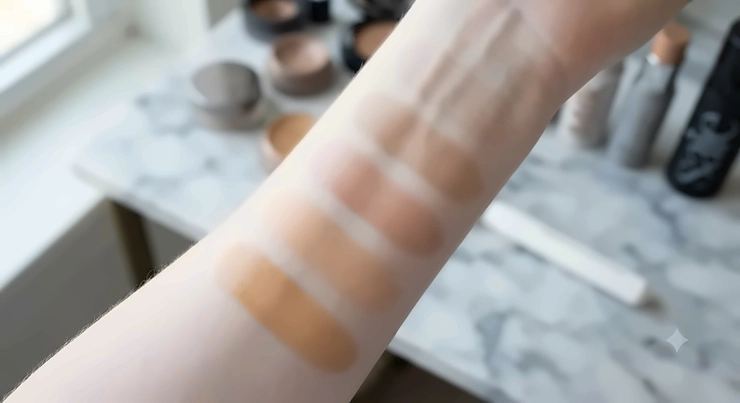
Shade matching is arguably the single biggest factor in whether a bronzer reads as natural or artificial on fair skin, and it starts with understanding your own undertone rather than your overall lightness. Cool-toned pale skin (visible blue or pink veins on the wrist, hair that tends toward ash or platinum tones) generally does best with neutral or slightly peachy bronzers rather than anything labeled deeply golden or bronze-orange; a warm-toned bronzer for pale skin applied on cool undertones is the single most common cause of that orange-cast complaint. Warm-toned pale skin (greenish veins, golden or red-toned hair) has more flexibility and can usually wear a slightly warmer shade, like Physicians Formula Murumuru Butter Bronzer‘s Light Bronzer, without it reading as mismatched. Neutral-undertone pale skin has the most flexibility of all three groups and can typically wear either end of the spectrum, though it’s still worth patch-testing on the jawline in daylight before committing to a full application. When in doubt, sample a shade on the jawline and check it in natural window light rather than under indoor lighting or a phone flashlight, since both can distort how warm or cool a pigment actually reads.
Long-Term Cost & Maintenance: Which Formula Actually Lasts Longer
Cost-per-use tells a more useful story than sticker price alone when comparing these seven options. The e.l.f. Putty Bronzer at around $8 for 0.35 oz and the Milani Cheek Kiss Cream Bronzer in the $10–$15 range both offer strong value for beginners testing the format, since a little product goes a long way when applied correctly in thin layers. Mid-tier options like Physicians Formula Murumuru Butter Bronzer and Pixi On-the-Glow Bronze Moisture Stick sit in a reasonable middle ground, typically lasting several months of regular use. At the premium end, Merit Bronze Balm and Saie Sun Melt Natural Cream Bronzer cost more upfront, but their sheer, buildable formulas mean less product is used per application, which can offset some of that price gap over time. The Westman Atelier Sun Tone Bronzing Crème is the clear outlier on price, and its value case rests less on cost-per-use and more on the dimensional finish you simply can’t replicate with a single-shade product — worth it if that specific look matters to you, harder to justify if you just want daily, low-effort warmth. Across the board, storing cream bronzers away from direct heat and humidity extends their usable life, since natural oils in these formulas are more prone to separating in hot bathrooms than in a cooler drawer or cabinet.
Safety & Ingredient Considerations for Bronzer and Sun-Kissed Makeup
Because “bronzer” and “sunless tanner” both promise a sun-kissed look, it’s worth being clear about what these cream bronzers actually do: unlike self-tanners, none of the seven products on this list contain dihydroxyacetone (DHA) or any ingredient designed to chemically darken the skin. They’re color cosmetics, meaning the effect washes off with your normal cleansing routine rather than lasting several days. The FDA’s guidance on sunless tanners and bronzers notes that products marketed simply as “bronzers,” including tinted moisturizers and brush-on powders, are regulated as cosmetics rather than drugs, and that none of them provide UV protection unless specifically labeled with an SPF number — a distinction worth remembering, since none of the products reviewed here are a substitute for daily sunscreen. That matters more for fair skin specifically, since the American Academy of Dermatology’s guidance on sun protection points out that visible light and UV exposure both contribute to skin aging and skin cancer risk regardless of how quickly or slowly a particular skin type burns. If you’re using cream bronzer to fake the look of sun exposure specifically so you can avoid actual UV exposure, layering a broad-spectrum sunscreen underneath is still the medically recommended approach, not an optional extra.
✨ Don’t Miss These Exclusive Deals!
🔍 Take your cream bronzer for fair skin routine to the next level with these carefully selected products. Click on any highlighted item to check current pricing and availability. These formulas will help you create an authentic sun-kissed makeup look your mirror will actually thank you for!
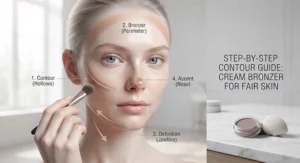
FAQ: Cream Bronzer for Fair Skin
❓ What is the best cream bronzer for fair skin that doesn't turn orange?
❓ Can cream bronzer work on oily skin?
❓ How do I find my correct bronzer shade for pale skin?
❓ Is cream bronzer better than powder for fair, mature skin?
❓ How much cream bronzer should I apply for a natural look?
Conclusion
There’s no single “correct” cream bronzer for fair skin — the right pick depends on your undertone, your skin type, and how much technique you’re willing to put into application. If you want a no-risk way to try the format, e.l.f. Putty Bronzer and Milani Cheek Kiss Cream Bronzer both offer real value under $15. If your skin runs dry or mature, Physicians Formula Murumuru Butter Bronzer and Pixi On-the-Glow Bronze Moisture Stick both lean into hydrating, forgiving formulas. And if you’re ready to invest in shade-specific engineering or genuine dimension, Merit Bronze Balm, Saie Sun Melt Natural Cream Bronzer, and the Westman Atelier Sun Tone Bronzing Crème each solve for a slightly different version of “natural” at three different price points. Whichever you choose, the fundamentals stay the same: check your undertone before you check the price tag, build color in thin layers, and blend past your jawline so the color doesn’t stop abruptly at your neck. Do that, and any of these seven can genuinely deliver the sun-kissed makeup look fair skin shoppers have been chasing without the orange cast.
Recommended for You
- Liquid Blush for a Natural Flush: 7 Picks That Won’t Look Fake (2026)
- Stick Blush for Beginners: 7 Foolproof Picks for 2026
- 7 Best long wear blush for oily skin Picks That Actually Survive 2026
Disclaimer: This article contains affiliate links. As an Amazon Associate, I earn from qualifying purchases. If you purchase products through these links, we may earn a small commission at no additional cost to you.
✨ Found this helpful? Share it with your friends! 💬🤗
