
In This Article
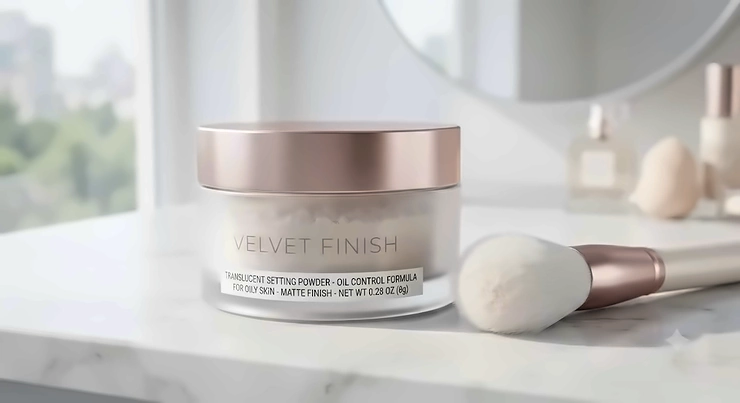
Your foundation looked perfect at 8 a.m. By noon, your T-zone is staging a rebellion. If that sentence made you wince in recognition, you already know why setting powder for oily skin exists, and why picking the wrong one is such an expensive, frustrating mistake. Setting powder is a finely milled cosmetic pressed or loosed applied over foundation and concealer; its job is to absorb surface sebum and create light friction so your base stops sliding, separating, or “melting” before your day is done. For oily skin specifically, the right formula does two things at once — it soaks up oil on contact and keeps doing it, in waves, for hours.
Here’s the thing nobody at the makeup counter tells you: not every powder marketed as “mattifying” is actually built for genuinely oily skin. Some are just aesthetic — a soft blur with zero oil-absorbing capacity. Others go the opposite direction and turn your face into a dry, cracked canvas by 3 p.m. Getting this right means understanding the difference between a translucent powder that blurs and one that functions, and knowing when a $6 drugstore setting powder outperforms a $40 prestige jar (spoiler: it happens more often than beauty marketing wants you to believe).
This guide walks through seven real, currently available products across every price tier, breaks down exactly what their ingredient lists mean for oily, shine-prone skin, and gives you application techniques that actually extend wear time. Oil production is tied directly to sebaceous gland activity, which is why no powder can stop shine forever — but the right one can slow it down dramatically.
Quick Comparison Table
Before diving into the full breakdown, here’s a fast-reference snapshot of where each pick lands on price and purpose.
| Setting Powder | Price Range | Best For |
|---|---|---|
| Coty Airspun Loose Face Powder | Under $10 | Best budget overall |
| Innisfree No Sebum Mineral Powder | $10-$15 range | Best travel-size touch-up |
| Laura Mercier Translucent Loose Setting Powder | $35-$40 range | Best splurge for all-day wear |
| Huda Beauty Easy Bake Loose Baking & Setting Powder | $35-$45 range | Best for full-coverage baking |
This snapshot barely scratches the surface, but it tells you something important right away: price doesn’t move in a straight line with performance. The Coty Airspun Loose Face Powder sits at the bottom of the price spectrum and still shows up on professional makeup artist kits, while the Huda Beauty Easy Bake Loose Baking & Setting Powder commands a premium mostly for its baking-specific texture and shade range rather than raw oil-absorption power. If your priority is stretching a dollar as far as it goes, the drugstore tier genuinely competes with prestige here — a rarity in the beauty aisle.
💬 Which price tier fits your routine? Scroll down for the full breakdown of all seven picks, specs and all.
Top 7 Setting Powders for Oily Skin: Expert Analysis
We researched real, currently sold products spanning drugstore to prestige, prioritizing formulas with documented oil-absorbing ingredients (rice starch, silica, kaolin clay, or mineral bases) over powders that merely claim a “matte finish” without the chemistry to back it up. Below, each pick includes honest analysis of who it actually works for — not just a features list.
1. Coty Airspun Loose Face Powder — cult-favorite drugstore baking powder
The Coty Airspun Loose Face Powder has been a backstage staple since 1935, and its “microspun” milling process is exactly why it still holds up against newer formulas. That air-blended process creates ultra-fine particles that sit on skin instead of settling into texture, which matters enormously for oily, pore-visible skin. Its talc-and-zinc-stearate base absorbs surface oil while the finely milled texture avoids the chalky cast that cheaper powders often leave behind. Because it’s genuinely translucent with only a faint neutral tone, it works across a wide range of undertones without much color-matching guesswork — a rare trait at this price point. Based on the spec comparison with pricier alternatives, this formula’s talc-zinc stearate combination performs a similar oil-absorbing function to compounds found in powders three to five times its cost. Reviewers consistently note that a little goes an extremely long way, with the tin lasting several months of daily use even with generous application. A common complaint in user reviews is the loose, sometimes messy sifter packaging, along with mild flashback in flash photography for those with fair-to-medium skin who apply it heavily.
Pros:
- ✅ Extremely affordable per use, one tin lasts months
- ✅ Talc-free version now available for sensitive skin types
- ✅ Fine milling avoids cakey texture on oily zones
Cons:
- ❌ Loose sifter can be messy for travel
- ❌ Slight flashback risk in flash photography
The Coty Airspun Loose Face Powder typically retails under $10, making it one of the lowest-cost-per-wear options on this list; given how sparingly you need to apply it, the value verdict here is hard to beat for anyone testing whether loose powder even works for their routine.
2. Maybelline Fit Me Loose Finishing Powder — drugstore pick built specifically for oily skin
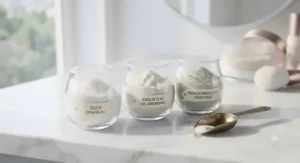
Maybelline markets the Maybelline Fit Me Loose Finishing Powder as suitable for oily, dry, combination, and sensitive skin, but its ingredient profile and marketing language lean specifically toward oil control, non-comedogenic wear, and a natural matte finish rather than a heavy cakey one. The clear jar with a built-in sifter keeps dosing controlled, which matters because over-application is one of the fastest ways to age powder poorly on an oily complexion. Based on how the brand positions the shade range, buyers should expect a subtle tint rather than a stark white cast, which is a common failure point in ultra-affordable powders. What most buyers overlook about this pick is that it doubles as a baking powder for concealer-heavy under-eye routines, not just a general setting step. Reviewers consistently report that it holds shine down through a standard workday without needing more than one midday touch-up, and a common theme in feedback is that it performs noticeably better on oily T-zones than on fully dry cheeks, where it can look slightly flat.
Pros:
- ✅ Formulated with oily skin explicitly in mind
- ✅ Sifter jar controls product output well
- ✅ Doubles as a light finishing powder alone
Cons:
- ❌ Shade range is limited compared to prestige lines
- ❌ Can look slightly dry on fully dehydrated skin
Priced in the $9-$12 range, the Maybelline Fit Me Loose Finishing Powder slots in as a strong everyday value pick for anyone who wants oil control without committing to a specialty K-beauty or prestige formula first.
3. NYX Professional Makeup Can’t Stop Won’t Stop Setting Powder — rice-starch oil absorption at a drugstore price
Built around oil-absorbing rice starch, the NYX Professional Makeup Can’t Stop Won’t Stop Setting Powder was engineered specifically to combat shine and texture without a drying finish, which is exactly the tightrope oily-skin formulas have to walk. Rice starch has long been used in Asian beauty formulations for its oil-wicking properties, and pairing it with silica gives this powder a smoother, less powdery afterfeel than older talc-heavy competitors. On paper, this means the formula is doing double duty: absorbing sebum on contact while also diffusing light to blur visible pores and texture. Reviewers consistently note the featherlight application and describe the finish as matte without looking flat or mask-like, a common failure mode for budget mattifying powders. The lineup also comes in six shades rather than a single translucent option, useful for anyone who wants a hint of coverage baked into their setting step. What the spec sheet won’t tell you, but user reports suggest, is that this formula holds up especially well under humid conditions compared to other drugstore rice-starch powders.
Pros:
- ✅ Rice starch base specifically targets oil, not just shine
- ✅ Six shades add light color-correcting coverage
- ✅ Comfortable, non-drying afterfeel reported widely
Cons:
- ❌ Loose powder version can shift shade slightly darker
- ❌ Not fragrance-free, a factor for sensitive skin
Expect to pay in the $8-$10 range for the NYX Professional Makeup Can’t Stop Won’t Stop Setting Powder, making it one of the most direct oil-control-to-dollar ratios on this entire list.
4. e.l.f. Halo Glow Loose Setting Powder — soft-focus blur with a shine-conscious formula
The e.l.f. Halo Glow Loose Setting Powder takes a different angle than the pure-matte powders above: it’s infused with light-diffusing sapphire particles designed to blur pores and fine lines while still keeping surface shine in check, rather than flattening skin into total matte. e.l.f.’s own application guidance actually recommends dusting it under foundation for oil control and over foundation for the soft-focus effect, which means it can function as a two-step tool rather than a single-use finishing step. Its clean-formula positioning — free from phthalates, parabens, and several other common irritants — makes it a reasonable pick for oily skin that’s also reactive or acne-prone. Here’s what most people overlook: because this formula prioritizes glow over full matte, it’s better suited to moderately oily skin than to the most oil-heavy skin types, who may need to layer a more aggressive mattifier underneath first. Reviewers consistently praise the lightweight staying power and the price-to-performance ratio, with a common theme being that it holds up well through a full workday without feeling cakey by evening.
Pros:
- ✅ Sapphire particles blur texture without flattening skin
- ✅ Clean formula free of several common irritants
- ✅ Doubles as under- and over-foundation powder
Cons:
- ❌ Less mattifying than pure oil-absorbing formulas
- ❌ Small pan size means faster repurchase cycle
At roughly $8-$10, the e.l.f. Halo Glow Loose Setting Powder is best for oily skin that wants a lit-from-within finish rather than a bone-matte one — a meaningful distinction worth weighing before you buy.
5. innisfree No Sebum Mineral Powder — K-beauty mineral formula built around Jeju volcanic minerals
The innisfree No Sebum Mineral Powder built its global following on a genuinely different formulation approach: Jeju Island volcanic minerals combined with natural mint extract, designed to absorb sebum while delivering a light cooling sensation on application. Its compact 5g size is intentional — this is a touch-up powder built for a bag or desk drawer, not a full vanity jar you’ll dust on generously every morning. Based on the ingredient profile, the mineral base functions similarly to silica-based Western formulas in terms of oil absorption, but the mint inclusion is a distinctly K-beauty approach aimed at giving oily skin a refreshed, cooled feeling rather than just a dry one. What most buyers overlook is that this powder was originally designed as a multi-use product — brands and reviewers alike note it doubles as a light dry shampoo or a matte-ifying top coat over lipstick, which extends its value beyond the face. Reviewers consistently report strong performance for two to three hours before oil breaks through again, meaning it’s better positioned as a rapid-response touch-up tool than an all-day-set-it-and-forget-it powder for very oily skin.
Pros:
- ✅ Compact size ideal for on-the-go touch-ups
- ✅ Mint-infused formula gives a cooling sensory effect
- ✅ Multi-use beyond just face-setting
Cons:
- ❌ Smaller pan means faster repurchase for daily use
- ❌ Can leave slight cast on darker skin tones
Priced around $10-$15 depending on retailer, the innisfree No Sebum Mineral Powder earns its spot as the go-to companion powder rather than the sole line of defense against oil for genuinely shine-prone skin.
6. Laura Mercier Translucent Loose Setting Powder — prestige cult-classic with 24-hour shine control claims
Few products in the setting-powder category carry as much cross-brand consensus as the Laura Mercier Translucent Loose Setting Powder, and its formula explains why: a blend of botanical blurring powder, skin-conditioning amino acids, and finely milled particles engineered to sit invisibly on skin rather than sit on top of it. The brand’s own consumer perception study, conducted with 63 subjects, reports 24-hour shine control claims tied to this specific formula, a notably longer window than most drugstore competitors promise. On paper, this means the powder is designed to be reapplied minimally, if at all, through a full day — a meaningful advantage for anyone who doesn’t want to carry a compact for touch-ups. Based on the spec comparison against budget alternatives, the finely milled texture here is engineered specifically to avoid emphasizing texture or dry patches, which matters for oily-but-dehydrated skin that can look worse under heavier mattifying powders. Aggregated customer feedback is mixed on one specific point: some reviewers with genuinely dry-combination skin find it can look slightly flat, while reviewers with oily and combination-oily skin consistently report it delivers a smooth, non-cakey matte that only needs a light touch-up by late afternoon.
Pros:
- ✅ 24-hour shine control backed by brand consumer study
- ✅ No visible flashback in flash photography
- ✅ Finely milled texture avoids emphasizing fine lines
Cons:
- ❌ Premium price relative to drugstore alternatives
- ❌ Mixed feedback for non-oily or very dry skin
Sitting in the $35-$40 range, the Laura Mercier Translucent Loose Setting Powder is the pick to reach for if your budget allows a splurge and your priority is minimizing touch-ups across a genuinely long day.
7. Huda Beauty Easy Bake Loose Baking & Setting Powder — prestige baking powder for full-coverage, long-wear looks
The Huda Beauty Easy Bake Loose Baking & Setting Powder was built for a specific technique — baking, where powder is applied heavily under the eyes and across oil-prone zones, left to set for several minutes, then dusted off to leave only what the skin has absorbed. That process makes it a fundamentally different tool than the lighter dusting powders earlier on this list; it’s designed to lock concealer and foundation in place for extended wear rather than offer a quick veil of shine control. Its shade range, spanning multiple undertones rather than a single universal translucent option, also sets it apart from most competitors here, since baking with a poorly matched shade can leave visible residue on oilier, more reflective skin. Based on the formulation’s antioxidant vitamin E inclusion, the brand frames this less as a purely mattifying powder and more as a finish-and-protect step, which honestly tracks with how baking powders are typically used by professional makeup artists. Reviewers consistently describe the texture as ultra-fine and describe the airbrushed effect as genuinely close to what’s advertised, though a common complaint is that the fragrance (a “petal scent” per the brand) isn’t ideal for fragrance-sensitive users.
Pros:
- ✅ Purpose-built for the baking technique specifically
- ✅ Wide shade range reduces visible residue risk
- ✅ Vitamin E inclusion adds a protective element
Cons:
- ❌ Higher price point than most competitors here
- ❌ Scented formula unsuitable for fragrance-sensitive skin
Retailing in the $35-$45 range, the Huda Beauty Easy Bake Loose Baking & Setting Powder delivers real value if your routine already includes baking — but it’s overkill if you just need a light daily dusting.
Full Spec Comparison: All 7 Setting Powders Side by Side
| Product | Format | Price Range | Best For | Standout Ingredient |
|---|---|---|---|---|
| Coty Airspun Loose Face Powder | Loose | Under $10 | Budget baking | Zinc stearate |
| Maybelline Fit Me Loose Finishing Powder | Loose | $9-$12 | Everyday oily skin | Non-comedogenic base |
| NYX Can’t Stop Won’t Stop Setting Powder | Loose/Pressed | $8-$10 | Rice-starch oil control | Rice starch |
| e.l.f. Halo Glow Loose Setting Powder | Loose | $8-$10 | Soft-focus finish | Sapphire particles |
| innisfree No Sebum Mineral Powder | Loose/Compact | $10-$15 | Touch-ups on the go | Volcanic mineral + mint |
| Laura Mercier Translucent Loose Setting Powder | Loose | $35-$40 | All-day shine control | Botanical blurring powder |
| Huda Beauty Easy Bake Loose Baking & Setting Powder | Loose | $35-$45 | Full-coverage baking | Vitamin E |
Looking at the table above, the split isn’t really budget-versus-prestige — it’s technique-versus-touch-up. The Coty Airspun Loose Face Powder, NYX Can’t Stop Won’t Stop Setting Powder, and Huda Beauty Easy Bake Loose Baking & Setting Powder are all built around heavier, technique-driven application (baking, rice-starch mattifying), while innisfree No Sebum Mineral Powder and e.l.f. Halo Glow Loose Setting Powder are lighter, faster tools meant for touch-ups or soft-focus days. If you only buy one powder this year, match it to how you actually apply makeup, not just your skin type.
Long-Wear Setting Technique: The Application Method That Actually Prevents Breakdown
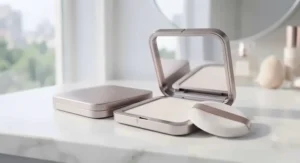
Buying the right powder solves maybe half the shine problem — the other half is technique, and this is the part most tutorials skip. Start with a genuinely dry face; any leftover moisturizer or primer tack will cause powder to sit unevenly and pill. Use a dense, flat-topped brush to press powder into oil-prone zones (forehead, nose, chin) rather than sweeping it, since pressing embeds product into the skin instead of just dusting the surface. For genuinely oily skin, “double-setting” — applying a first light layer, waiting sixty seconds, then applying a second thin layer only over the T-zone — outperforms one heavy application, because it lets the first layer absorb oil before more product goes on top. A large, fluffy dome brush is the better everyday tool for the rest of the face, since it diffuses product for a lighter finish rather than building up unwanted texture. Setting powder is applied during the makeup process to lock foundation and concealer in place, which is a different job than finishing powder, applied at the very end purely to refine texture or add glow — mixing the two up is a common reason people feel like their powder “isn’t working.” For touch-ups midday, blot with a tissue first to lift excess surface oil before reapplying powder; dusting fresh powder directly onto an oily surface just creates buildup rather than fresh mattification.
Real-World Scenarios: Which Setting Powder Fits Your Day?
If you’re a college student with back-to-back classes and zero time for touch-ups, a rice-starch drugstore formula like the NYX Can’t Stop Won’t Stop Setting Powder or the budget-friendly Coty Airspun Loose Face Powder covers a full day of lectures without draining a tight budget, and either tin will realistically last an entire semester. If you’re commuting into an office with fluorescent lighting and the occasional video call, the Laura Mercier Translucent Loose Setting Powder‘s no-flashback, long-wear formula is worth the splurge, since it’s engineered specifically to photograph well and hold through an eight-hour day without a midday reapplication. If you’re someone who does full glam for events — weddings, photoshoots, nights out — the Huda Beauty Easy Bake Loose Baking & Setting Powder matches that use case directly, since baking is built for exactly this kind of long-wear, high-coverage occasion. And if your day is mostly errands and gym runs where you want oil control without a heavy makeup look at all, the compact innisfree No Sebum Mineral Powder slips into a bag and handles fast touch-ups without requiring a full reapplication routine.
Common Problems With Oily Skin Makeup — And How to Fix Them
Problem: Foundation separates around the nose by early afternoon. This usually means the setting step was skipped or applied too thin in that specific zone — double-set the nose and chin specifically, since these areas produce oil fastest. Problem: Powder looks cakey by midday instead of matte. This is almost always over-application; a thin, pressed-in layer with a flat brush outperforms a heavy dusted one every time. Problem: Makeup looks fine in person but shows flashback in photos. Switch to a formula explicitly labeled flashback-free, and avoid heavy application directly where flash typically hits — center of forehead, nose bridge, and chin. Problem: Setting powder makes dry patches more visible. This is a sign that the skin is dehydrated underneath the oil, a very common combination-skin scenario; a lighter-coverage, soft-focus formula, applied only to genuinely oily zones rather than the whole face, usually resolves it. Problem: Powder wears off completely within two hours. This points to either an underlying skincare mismatch (too little oil control from primer) or a formula that’s simply too light for your oil level — pairing a rice-starch or mineral-heavy powder with a mattifying primer underneath closes this gap.
How to Choose a Setting Powder for Oily Skin
Picking the right formula comes down to a handful of concrete decision points rather than trial-and-error shopping.
- Check for oil-absorbing ingredients first. Rice starch, silica, kaolin clay, and mineral bases are the ingredients doing the actual oil-control work — a “matte finish” claim without one of these listed is often just marketing.
- Match the format to your routine. Loose powders generally offer more buildable, natural coverage, while pressed formats are easier to carry for touch-ups without a mess.
- Consider your skin’s flashback sensitivity. If you’re regularly photographed with flash, prioritize formulas explicitly labeled flashback-free over ones that only address daylight shine.
- Decide between translucent and tinted. Translucent versions work universally but can occasionally read chalky on deeper skin tones; tinted options usually blend more seamlessly but require shade-matching.
- Factor in how long you need coverage to last. A powder built for baking and all-day wear behaves differently than one built for a light midday touch-up — buying the wrong category for your lifestyle is the most common mismatch.
- Weigh fragrance and sensitivity. Oily skin is frequently also reactive or acne-prone, so fragrance-free, non-comedogenic formulas are worth prioritizing if you’ve had breakouts from powders before.
- Set a realistic price-per-use expectation. Loose powders last far longer than most people expect since a light dusting goes a long way, which changes the real math on whether a prestige price tag is worth it.
Translucent Powder vs Pressed Powder: Which Actually Controls Oil Better?
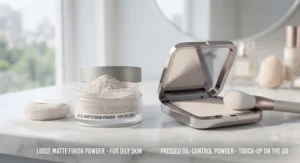
The translucent-versus-pressed debate isn’t really about oil control directly — both formats can use identical oil-absorbing ingredients — it’s about application control and portability. Translucent loose powder tends to allow more buildable, layered application, which matters for oily skin because you can concentrate product exactly where oil breaks through fastest without adding unnecessary coverage elsewhere. Pressed powder compacts, by contrast, trade some of that precision for portability and mess-free touch-ups on the go, which is genuinely valuable if your day includes multiple reapplications away from a mirror and brush setup. On oily skin specifically, loose translucent formulas often edge out pressed versions for all-day wear because they’re typically less compacted with binders, meaning more of the actual oil-absorbing ingredient reaches the skin per application. That said, a pressed powder you’ll actually carry and reapply consistently will outperform a loose powder left in a drawer at home. The honest answer is that translucent loose formats like the Laura Mercier Translucent Loose Setting Powder or Coty Airspun Loose Face Powder are the better home-base choice, while a pressed compact earns its place specifically as a bag-friendly backup.
Drugstore Setting Powder vs Prestige Setting Powder: Is the Splurge Worth It?
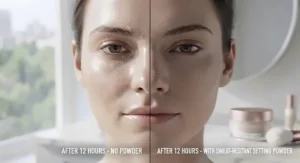
This is the question every oily-skin shopper eventually asks, and the honest answer is more nuanced than beauty marketing suggests. Drugstore setting powder options like the Coty Airspun Loose Face Powder, Maybelline Fit Me Loose Finishing Powder, and NYX Can’t Stop Won’t Stop Setting Powder all use proven, functional oil-absorbing ingredients — talc, zinc stearate, rice starch, silica — at a fraction of the cost of prestige alternatives, and independent reviewer feedback across all three is consistently strong for genuinely oily skin. Where prestige formulas like the Laura Mercier Translucent Loose Setting Powder justify their price is in refinement: finer milling, added skin-conditioning ingredients, extensively tested longevity claims, and typically broader shade ranges that reduce flashback and cast issues. For a beginner or budget-conscious buyer, starting with a drugstore rice-starch or talc-zinc formula is a completely reasonable first move, and many users never feel the need to upgrade. For someone who wears makeup for extended, high-visibility hours — events, on-camera work, long shifts under fluorescent lighting — the incremental wear-time and no-flashback guarantees of a prestige formula tend to earn their keep. The value verdict: buy prestige for longevity and polish, buy drugstore for testing your formula preferences and everyday reliability.
Building a Full Shine Control Makeup Routine
Setting powder is one piece of a shine control makeup routine, not the entire solution, and treating it as a stand-alone fix is a common mistake. A mattifying primer applied before foundation gives the powder a head start by reducing oil at the skin-product interface rather than only absorbing it after the fact. Oil-control foundation or a lightweight, buildable base reduces how hard the powder has to work later in the day. Blotting papers, kept in a bag for midday use, lift surface oil without disturbing existing makeup — a gentler and often more effective touch-up than reapplying powder directly onto an oily surface. Finishing spray, applied as the very last step, can add a thin polymer layer that helps lock everything in place, though it’s a separate product from setting powder and shouldn’t be treated as interchangeable. Layered correctly — primer, foundation, powder, spray — each step reduces the workload on the next, which is why a moderate powder paired with a full routine often outperforms an expensive powder used alone.
Oil-Absorbing Formula Ingredients: What’s Actually in These Powders?
Reading an ingredient list is the fastest way to separate genuine oil-absorbing formula powders from ones riding on matte-finish marketing alone. Talc and zinc stearate, found in classics like the Coty Airspun Loose Face Powder, have decades of use in cosmetics and work by physically absorbing surface oil and creating light friction. Rice starch, the star ingredient in the NYX Can’t Stop Won’t Stop Setting Powder, has long been used in traditional beauty formulations specifically for its oil-wicking properties without the drying effect some silicas can cause. Silica, present in several formulas on this list including e.l.f. Halo Glow Loose Setting Powder, is a mineral compound widely used across cosmetics for its absorbent, light-diffusing properties. Because talc-based formulas have drawn regulatory scrutiny in recent years, checking a brand’s talc sourcing and safety practices is a reasonable step for anyone with sensitive or reactive oily skin. Volcanic mineral bases, as used in the innisfree No Sebum Mineral Powder, function similarly to silica in absorbing oil while adding trace mineral content specific to their sourcing region. None of these ingredients stop sebum production at the source — that’s a skincare-routine issue, not a makeup one — but each genuinely reduces how visible surface oil becomes once applied.
Common Mistakes When Buying Setting Powder for Oily Skin
The single most common mistake is buying based on “matte finish” marketing language alone without checking for an actual oil-absorbing ingredient in the list — plenty of “matte” powders are simply light-diffusing without doing meaningful oil control work. A close second is assuming a higher price automatically means better oil control; as the drugstore-versus-prestige breakdown above shows, that’s frequently not true. Buying a heavy, full-coverage baking powder for everyday light wear is another frequent misstep — it’s over-engineering for a task that a lighter formula would handle more comfortably and with less visible buildup. On the flip side, buying a light touch-up powder like a compact mineral pact as your only setting product, when your skin genuinely needs a heavier, longer-wear formula, leads to disappointing midday breakdown and a false impression that “nothing works” for oily skin. Finally, skipping a patch test on a new formula, especially fragrance-included prestige options, is a common and avoidable cause of breakouts in already acne-prone, oily skin.
Long-Term Cost & Maintenance: What Setting Powder Really Costs You Per Year
Because loose setting powder is used in small amounts per application, the real cost-per-use math often favors formulas that look expensive on the shelf. A $6 tin of the Coty Airspun Loose Face Powder used daily can realistically last four to six months, working out to roughly two to three cents per use. A $38 jar of the Laura Mercier Translucent Loose Setting Powder, used at a similarly light daily rate, can stretch across a comparable timeframe given its fine milling and buildable application, working out to a noticeably higher but still modest per-use cost. Where the math shifts is with heavier-use formulas like baking powders — the Huda Beauty Easy Bake Loose Baking & Setting Powder, used generously for baking technique several times a week, will burn through product faster than a light daily dusting powder, which is worth factoring into the total cost of ownership if baking is a regular part of your routine. Maintenance-wise, loose powders generally have a longer functional shelf life than cream-based products since they contain little to no water, though most brands recommend replacing any face powder every twelve to eighteen months to avoid bacterial buildup in a puff or brush that’s regularly touching skin.
Setting Powder for Oily Skin: Safety, Ingredients & Regulatory Notes
Cosmetic talc used in setting powders is subject to federal safety guidance, and reputable brands source and test their talc supply specifically to address contamination concerns that have drawn scrutiny in recent years — a genuinely reasonable thing to ask about before buying a talc-heavy formula if it concerns you. If you’re acne-prone as well as oily, look specifically for “non-comedogenic” labeling, since it indicates a brand has tested the formula against pore-clogging potential, though the term itself isn’t independently regulated so it should be treated as a helpful signal rather than a guarantee. For sensitive or reactive skin, fragrance-free formulas reduce one common irritation trigger; several picks on this list, including e.l.f. Halo Glow Loose Setting Powder, are explicitly formulated without several common irritant categories. When shopping affiliate or influencer-recommended beauty products generally, it’s worth knowing that disclosure and endorsement standards exist specifically to help consumers understand when a recommendation involves a financial relationship — a useful bit of context as you navigate reviews across the internet, including this one.
✨ Ready to Build Your Shine-Proof Routine?
🔍 Take your setting powder for oily skin routine to the next level with the picks above. Click through to check current pricing and availability on any product that fits your skin type and budget — a small step that can mean hours of extra shine control every single day.
Frequently Asked Questions
❓ What is the best setting powder for oily skin on a budget?
❓ Does translucent powder work for very oily skin?
❓ How long does drugstore setting powder last on oily skin?
❓ Is loose or pressed setting powder better for oily skin?
❓ Can setting powder replace a mattifying primer for oily skin?
Conclusion
Oily skin doesn’t need to mean choosing between a shiny face by noon or a chalky, over-powdered one by 9 a.m. — it means matching the right formula and technique to how your skin actually behaves. Budget formulas like the Coty Airspun Loose Face Powder and NYX Can’t Stop Won’t Stop Setting Powder prove that genuine oil control doesn’t require a prestige price tag, while splurge-worthy options like the Laura Mercier Translucent Loose Setting Powder and Huda Beauty Easy Bake Loose Baking & Setting Powder earn their cost through refinement, longevity, and technique-specific performance. The real differentiator isn’t the price on the shelf; it’s whether the ingredient list actually addresses oil, whether the format matches your routine, and whether you’re applying it with technique that works with your skin instead of against it. Start with the pick that matches your budget and your day-to-day demands, apply it with intention rather than habit, and give your combination of primer, foundation, and powder a fair shot before assuming nothing works for your skin type.
Recommended for You
- The Best Brightening Concealer for Dark Circles: 7 Picks (2026)
- Color Correcting Concealer for Dark Circles: 7 Genius Picks (2026)
- Full Coverage Concealer for Acne Scars: 7 Picks That Win in 2026
Disclaimer: This article contains affiliate links. As an Amazon Associate, I earn from qualifying purchases. If you purchase products through these links, we may earn a small commission at no additional cost to you.
✨ Found this helpful? Share it with your friends! 💬🤗
