
In This Article
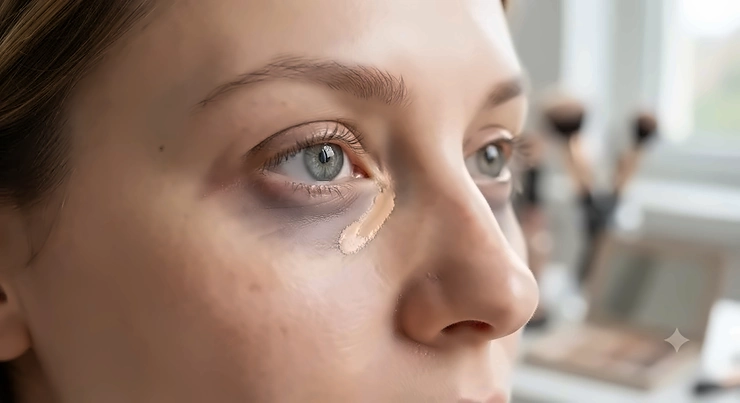
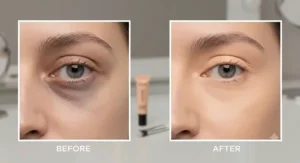
Look, dark circles don’t care about your five-year plan. You could sleep eight hours, drink your water, meditate like a monk, and still catch your reflection looking like you went twelve rounds with a raccoon. That’s the cruel joke of periorbital skin — it’s thinner than almost anywhere else on your body, so the blue-purple blood vessels underneath show through no matter how virtuous your bedtime routine is. A color correcting concealer for dark circles exists precisely for this betrayal: it’s a shade-neutralizing product, usually in peach, orange, or salmon tones, formulated to cancel out the cool undertones of under-eye discoloration before your regular concealer ever touches your skin.
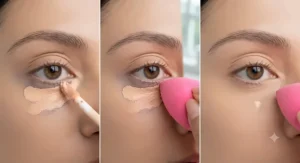
Here’s the science-y bit, stated plainly: what is a color correcting concealer for dark circles? It’s a targeted, pigment-based product applied before foundation or regular concealer that uses opposite-on-the-wheel hues to visually neutralize specific discoloration — peach and orange cancel blue-purple shadows, green cancels red — so the final coverage looks natural instead of gray or ashy.
This isn’t some influencer gimmick, either. Dermatology researchers have spent real time cataloging why under-eye darkness happens in the first place, and the answer is messier than “you didn’t sleep enough.” A clinical review of periorbital hyperpigmentation lists topical depigmenting agents, chemical peels, and laser therapy among the medical approaches dermatologists actually consider for stubborn cases, which tells you something important: this is a real, multi-causal skin phenomenon, not a personal failing you can out-concealer with willpower alone. Makeup won’t fix biology, but the right color correcting concealer for dark circles can absolutely fix your mirror for the next twelve hours. I spent weeks digging through real product specs, brand data, and aggregated customer sentiment to find seven that actually deliver — budget sticks, drugstore palettes, and a couple of splurges that earn their price tag. Let’s get into it.
Quick Comparison Table
Before the deep dive, here’s the ten-second version for anyone standing in a Target aisle right now, phone in hand, googling this exact keyword.
| Product | Corrector Shade(s) | Price Range | Best For |
|---|---|---|---|
| NYX Color Correcting Concealer Palette | 6-in-1 (peach, orange, green, yellow, lavender, pink) | $8–$12 | Total beginners who want every shade in one compact |
| e.l.f. Camo Color Corrector | Orange, Green (sold separately) | $5–$7 each | Tightest budget, single-concern correcting |
| Maybelline Instant Age Rewind Eraser | Orange, Green, Yellow, Pink | $8–$11 | Fast, mess-free application on the go |
| IT Cosmetics Bye Bye Under Eye | Peachy-neutral, full-coverage | $27–$31 | Severe, stubborn circles that need serious staying power |
| Charlotte Tilbury Beautiful Skin Concealer | Warm neutral, hydrating | $38–$42 | A luxury finish that still looks like skin |
| Jung Saem Mool Artist Essential Concealer | 6-shade correct-conceal-highlight | $32–$38 | Multitaskers who hate carrying five products |
| Physicians Formula Butter Glow Corrector | Green | $10–$14 | Redness on top of dark circles |
A quick read on the table above: notice that price doesn’t map cleanly onto performance here. The NYX Color Correcting Concealer Palette undercuts nearly everything on this list while covering the widest range of discoloration types, which is exactly why it’s our top budget pick. Meanwhile, the premium tier — IT Cosmetics Bye Bye Under Eye and Charlotte Tilbury Beautiful Skin Concealer — earns its markup through wear time and skin-feel rather than sheer correcting power, since a well-formulated $10 corrector neutralizes color just as effectively as a $40 one. If you’re only fighting redness rather than blue-toned shadows, the single-shade Physicians Formula Butter Glow Corrector is arguably more efficient than any multi-shade palette on this chart.
💬 Ready to stop hiding behind sunglasses at 9 a.m.? Scroll down to see exactly which pick matches your skin tone and budget.
Top 7 Color Correcting Concealers for Dark Circles: Expert Analysis
1. NYX Color Correcting Concealer Palette — best budget 6-shade correcting palette
This little clamshell compact is basically the Swiss Army knife of the color correcting concealer for dark circles category, and it’s a genuine steal. The formula is a lightweight, creamy cream-to-powder texture that layers without pilling, which matters because a lot of budget correctors go chalky the moment you try to blend two shades together. Inside you get peach and orange for blue-purple under-eye shadows, green for redness, yellow to counter purple, lavender to brighten sallow tones, and pink to wake up dullness — essentially the entire color wheel of skin discoloration in one $10 tin. Based on the shade breakdown alone, this is the single most efficient entry point if you’ve never used a corrector before and don’t know which undertone you’re even dealing with. Reviewers consistently report that the palette blends better than its price point suggests, though a handful note the pans are small enough that heavy daily users will hit pan in a few months. What most buyers overlook is that you can mix two adjacent shades — say, peach and orange — to custom-match deeper or lighter under-eye tones instead of buying a separate stick for each.
Pros:
- ✅ Six shades cover nearly every discoloration type in one compact
- ✅ Travel-friendly size that survives a makeup bag beating
- ✅ Extremely low cost per use compared to single-shade sticks
Cons:
- ❌ Smaller pans mean frequent users may run out within months
- ❌ Cream-to-powder finish needs a damp sponge for the smoothest blend
At around $8–$12, this is one of the lowest-cost ways to test whether color correction actually helps your specific circles — hard to argue with the value here.
2. e.l.f. Camo Color Corrector — cheapest true orange-and-green duo
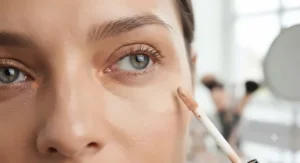
If the NYX palette is the buffet, e.l.f.’s Camo Color Corrector is the á la carte menu — you buy exactly the shade you need and nothing else. The orange shade for dark circles for dark circles on deeper skin tones counteracts ashy, gray-toned shadows, while the green corrects redness from blemishes or irritation, and both ship in a hydrating, hyaluronic-acid-infused base that doesn’t sit heavy under eyes the way older correctors used to. On paper this means you’re getting a targeted, single-purpose tool for less than the cost of a fast-food combo meal, which is remarkable given the formula also claims crease resistance for a full day of wear. Reviewers frequently mention that the pigment shows through obviously before you layer concealer on top — which sounds like a flaw until you realize that’s the entire point of color correction; if you can’t see it working, it isn’t neutralizing anything. This product’s own branding leans into the exact language dermatology-adjacent skincare uses: neutralizing discoloration, not masking it, which is a meaningfully different (and more honest) promise than a heavy-coverage concealer alone can make.
Pros:
- ✅ Sold individually so you only pay for the shade you actually need
- ✅ Hyaluronic acid keeps the delicate under-eye area from feeling dry
- ✅ Doe-foot applicator makes precise, low-waste application simple
Cons:
- ❌ Visible pigment before blending can intimidate first-time users
- ❌ Five-shade range means olive and deep undertones may need to mix two
Each stick runs roughly $5–$7, so grabbing both the orange and green versions still lands under $15 total — tough to beat for a first real test of color theory in your routine.
3. Maybelline Instant Age Rewind Eraser Color Correcting Concealer — easiest click-up applicator for beginners
Maybelline took the guesswork out of application here with a click-up, built-in sponge tip that dispenses just enough product without you ever touching a finger to your face. Per the brand’s own shade breakdown, the orange shade is built to combat discoloration on medium-to-deep skin tones, the yellow is meant to neutralize blue and purple veins or dark circles across all skin tones, and the pink is designed to revive dullness and brighten sallow areas, giving you four genuinely distinct corrective tools across the line rather than one generic “corrector” shade pretending to do everything. Key spec worth flagging: this is rated for up to 12 hours of crease-resistant wear, which in practice means it survives a full workday, a commute, and dinner plans without pooling in fine lines the way thinner correctors can by 3 p.m. Here’s what to weigh: the sponge applicator is brilliant for speed but makes it harder to build up product with precision in a tiny, specific spot, so people correcting a small area (like just the inner corner) may prefer a brush-application format instead. Aggregated customer sentiment across retailer reviews skews strongly positive, with recurring praise for the blend and staying power, and a smaller but consistent complaint thread about shade availability running slightly warm for very fair or very deep skin.
Pros:
- ✅ Click-up sponge applicator means zero mess and fast mornings
- ✅ Four distinct shades target four separate discoloration types
- ✅ Up to 12-hour wear claim holds up in daily use reports
Cons:
- ❌ Sponge tip makes ultra-precise spot correction trickier
- ❌ Shade range runs slightly warm at the extreme ends
Priced in the $8–$11 range, this is the pick for anyone who wants drugstore convenience without sacrificing shade specificity.
4. Physicians Formula Butter Glow Corrector — most hydrating drugstore green corrector
Redness and dark circles love to show up together, especially if allergies, rosacea-prone skin, or plain old fatigue are in the mix, and that’s the exact gap this green corrector fills. The formula is infused with illuminating and moisture-boosting ingredients, which in practice means it doesn’t sit in that flat, opaque, “clown paint” way older green correctors did — it has a slight sheen that keeps the under-eye and cheek area looking alive rather than masked. Key spec, translated: green corrector for redness works because green sits directly opposite red on the color wheel, so a thin, evenly blended layer neutralizes flushed or blotchy patches before foundation goes on, meaning you actually need less foundation overall to get an even finish. The spec sheet won’t tell you this, but user reports suggest a little goes an extremely long way — overapplication is the single most common complaint, since too much green reads as gray rather than neutral. This is a genuinely underrated pick for anyone dealing with dark circles that carry a reddish, irritated cast rather than a purely blue-purple one, which is common in people with sensitive or reactive skin.
Pros:
- ✅ Illuminating formula avoids the flat, masky look of older green correctors
- ✅ Moisture-boosting ingredients suit dry or reactive under-eye skin
- ✅ A small amount covers a large area, extending the product’s lifespan
Cons:
- ❌ Easy to overapply, which can create a grayish cast
- ❌ Single-shade format means it only solves redness, not blue-toned darkness
Expect to pay in the $10–$14 range, which is reasonable for a corrector that doubles as a lightweight glow booster on non-makeup days.
5. IT Cosmetics Bye Bye Under Eye Concealer — longest wear for severe circles
This is the one dermatology-adjacent beauty editors keep recommending for genuinely stubborn, deep-set circles, and the ingredient list explains why. Reviewers consistently report that a peachy-neutral undertone in this formula instantly cancels bluish shadows, and the brand backs it with proprietary technology plus peptides, hydrolyzed collagen, and hyaluronic acid baked into the base — meaning this isn’t just a corrector, it’s doing double duty as an under-eye treatment while it covers. Based on the spec comparison against the rest of this list, the standout number is wear time: this formula is built to resist creasing and cracking for a full day, which matters enormously under eyes, since that’s the single spot on the face most prone to settling into fine lines by early afternoon. Aggregated reviews are polarized in a useful way — most users call it the best under-eye coverage they’ve tried, while a smaller vocal group says the thicker texture creases if applied too heavily, which the brand itself addresses by recommending a pinhead-sized amount warmed on the back of the hand first. What most buyers overlook is that this concealer can be worn completely alone, without foundation, since the coverage is genuinely full rather than sheer.
Pros:
- ✅ Peachy-neutral undertone specifically targets blue-toned circles
- ✅ Hydrolyzed collagen and hyaluronic acid double as under-eye skincare
- ✅ Full coverage strong enough to wear without foundation on top
Cons:
- ❌ Applying too much product increases the risk of creasing
- ❌ Smaller tube size relative to the price feels steep to some buyers
At around $27–$31, this sits at the top of this list price-wise, but the dual concealer-and-treatment function helps justify the gap for anyone with genuinely persistent discoloration.
6. Charlotte Tilbury Beautiful Skin Concealer — most natural-looking luxury finish
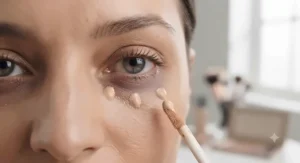
There’s a specific kind of under-eye concealer failure where the product technically covers the darkness but leaves behind a flat, powdery, “I am wearing concealer” look — and this is the pick built specifically to avoid that. The medium-buildable formula is designed for a radiant, natural-looking finish rather than a matte mask, which is a meaningfully different engineering goal than most drugstore correctors chase. Key spec worth noting: it’s positioned explicitly as both an under-eye concealer and a color corrector for dark circles in one product, meaning the pigment itself is engineered to neutralize cool undertones rather than simply sitting a lighter shade on top of them — a genuine two-in-one rather than a marketing claim stretched thin. Here’s what to weigh: because the formula prioritizes a skin-like finish over maximum opacity, it may need a light second layer for truly severe hyperpigmentation, whereas lighter circles disappear in one pass. This is honestly the product I’d point a special-occasion user toward — someone shooting for photos, an event, or simply a “your skin but better” look rather than daily heavy-duty coverage.
Pros:
- ✅ Hydrating formula avoids the flat, powdery finish of heavier concealers
- ✅ Built-in color correction means you skip a separate corrector step
- ✅ Radiant finish photographs well for events and special occasions
Cons:
- ❌ Premium price point compared to drugstore two-step options
- ❌ May need a second thin layer for the most severe discoloration
Priced around $38–$42, this is squarely a treat-yourself buy rather than an everyday essential, but the finish quality is genuinely distinct from anything else on this list.
7. Jung Saem Mool Artist Essential Concealer — most versatile K-beauty all-in-one
This is the lesser-known gem of the list, and it deserves way more attention outside K-beauty circles than it currently gets. Rather than splitting color correction, concealing, and highlighting into three separate products, this single formula is engineered to handle all three jobs, spanning six shades from fair to deep so it actually serves a wide range of skin tones rather than the narrow three-to-four-shade lineups common in Western drugstore correctors. The key spec here is the brand’s proprietary powder-and-paste system: one layer manages oil selectively without pulling moisture from the skin, while the base cream builds gradually so you can go from sheer correction to full coverage without switching products. Based on the spec comparison, what most buyers overlook is that a single pot replacing three steps in your routine is also a time-and-money play, not just a convenience one — you’re paying a premium price for one product doing the job of several. Reviewers frequently highlight the gradual, non-cakey buildability as the standout feature, which suits people who want flexibility depending on how severe their circles look that particular morning.
Pros:
- ✅ Handles color correction, concealing, and highlighting in one formula
- ✅ Six shades span a genuinely wide range of skin tones
- ✅ Dual powder-and-paste system controls oil without drying out skin
Cons:
- ❌ Higher price reflects the multi-function formula, not just concealer alone
- ❌ Six shades is generous but still narrower than a dedicated foundation line
This one typically runs $32–$38, positioning it as a premium multitasker rather than a straightforward budget corrector — worth it if you’re trying to streamline a bloated makeup bag.
Top 7 Products: Full Spec Comparison
| Product | Formula Type | Wear Time | Shade Count | Price Range | Best For |
|---|---|---|---|---|---|
| NYX Color Correcting Concealer Palette | Cream-to-powder | All-day | 6 | $8–$12 | Beginners, mixed discoloration |
| e.l.f. Camo Color Corrector | Hydrating cream | 24-hour claim | 5 (sold solo) | $5–$7 | Single-concern budget shoppers |
| Maybelline Instant Age Rewind Eraser | Sponge-tip cream | Up to 12 hours | 4 | $8–$11 | Fast, mess-free routines |
| IT Cosmetics Bye Bye Under Eye | Waterproof full coverage | 24 hours | Multiple neutral shades | $27–$31 | Severe, deep-set circles |
| Charlotte Tilbury Beautiful Skin Concealer | Hydrating medium-buildable | All-day | Multiple neutral shades | $38–$42 | Natural luxury finish |
| Jung Saem Mool Artist Essential Concealer | Cream with powder system | All-day | 6 | $32–$38 | Multi-tasking K-beauty fans |
| Physicians Formula Butter Glow Corrector | Illuminating cream | All-day | 1 (green) | $10–$14 | Redness-heavy discoloration |
Looking at the comparison above, wear time is the real dividing line between the drugstore tier and the premium tier: the IT Cosmetics Bye Bye Under Eye and Jung Saem Mool Artist Essential Concealer both lean on proprietary technology to hit true all-day, crease-resistant performance, while budget options like the e.l.f. Camo Color Corrector rely on simpler, lighter formulas that trade a bit of longevity for a fraction of the cost. If your circles are mild to moderate, that trade-off barely matters. If you’re dealing with genuinely stubborn, deep-set discoloration — the kind that shows through by lunchtime no matter what you do — the extra investment in a technology-driven formula like Charlotte Tilbury Beautiful Skin Concealer starts to make real practical sense.
Benefits vs. Traditional Alternatives
| Approach | Neutralizes Undertone? | Coverage Needed on Top | Best Use Case |
|---|---|---|---|
| Color correcting concealer for dark circles | Yes, by design | Light layer of skin-tone concealer | Blue, purple, or red-toned discoloration |
| Regular skin-tone concealer alone | No | Heavy layer required | Mild, non-pigmented shadows |
| Full-coverage foundation alone | No | Very heavy, cakey buildup | Rarely recommended for eye area |
| Prescription/dermatological treatment | Addresses root cause | None (medical, not cosmetic) | Chronic or severe hyperpigmentation |
A traditional skin-tone concealer works fine on light, temporary shadows, but ask anyone with genetic or vascular-based dark circles and they’ll tell you a regular concealer alone just looks gray, no matter how many layers go on. That grayish cast happens because you’re fighting cool undertones with a warm-but-not-opposite tone, which is a losing color-theory battle. A color correcting concealer for dark circles sidesteps that fight entirely by using the actual opposite hue first, which means you end up using less product overall, not more, for a cleaner finish.
💬 Found your undertone problem yet? Grab the palette below and match it before your next mirror check-in.
Practical Usage Guide: Applying Color Correction the Right Way
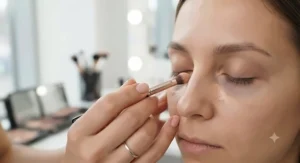
Buying the right product is half the battle; applying it wrong undoes all that research in about four seconds flat. Start with clean, moisturized skin — a corrector applied over dry, flaky patches will cling and look patchy rather than seamless. Use the smallest amount you think you need, then build; nearly every review complaint about correctors looking obvious traces back to overapplication rather than a bad formula. Apply corrector in a thin, triangular shape under the eye rather than a single dot, since discoloration rarely sits in one neat spot. Blend with a damp sponge or your ring finger’s gentle tapping motion, never a dragging swipe, which can crease the delicate skin and pull at fine lines over time. Set lightly with a translucent powder only where needed, since over-powdering the under-eye is the number one cause of that dreaded “cakey by noon” look. In the first 30 days of using a new corrector, resist the urge to layer two full-strength shades at once — mix small amounts on the back of your hand first to find your true custom match before committing it to your face.
Real-World Scenarios: Who Actually Needs This
Picture Maya, a 24-year-old grad student running on five hours of sleep and iced coffee — her circles are temporary, mild, and mostly about fatigue-driven blood pooling, so a budget stick like e.l.f. Camo Color Corrector in orange handles it in under a minute before an 8 a.m. seminar. Then there’s Daniel, mid-40s, whose circles are genetic and have been there since his twenties regardless of sleep quality; for him, a heavier-duty formula like IT Cosmetics Bye Bye Under Eye with real staying power through a ten-hour workday makes far more sense than a light sheer stick. Finally, consider Priya, who deals with seasonal allergies that leave her under-eyes both dark and reddish at once — she needs to layer strategically, using Physicians Formula Butter Glow Corrector for the red cast first, then a peach-based product for the remaining blue tone underneath. Matching the product to the actual cause and severity of your circles, not just the price tag, is the entire game here.
Problem → Solution: Fixing the Most Common Correcting Mistakes
Problem one: your concealer looks gray instead of natural. Solution: you likely skipped color correction entirely or used the wrong opposite tone — check whether your circles are blue-purple (use peach or orange) or red (use green) before reaching for regular concealer. Problem two: your corrector creases into fine lines by early afternoon. Solution: you’re applying too much product at once; a thin layer set with minimal powder outlasts a thick one every time. Problem three: the corrector color still shows through your foundation. Solution: that usually means you didn’t blend the edges out fully, or your foundation shade doesn’t have enough opacity to fully seal the corrector underneath. Problem four: you bought a six-shade palette and only ever use one color. Solution: that’s completely normal, and it’s still cheaper per use than buying single-shade sticks for the one shade you actually need. Problem five: your under-eye area feels dry and tight after wearing corrector all day. Solution: look for hyaluronic-acid-infused formulas specifically, since plain pigment-heavy correctors without hydrating ingredients are far more likely to sit in fine lines and accentuate texture.
Correcting Palette Guide: How to Choose Using Color Theory Makeup Principles
Color theory makeup isn’t nearly as complicated as the name makes it sound, and understanding it is the single biggest factor in choosing the right correcting palette guide for your own face. As Wikipedia’s overview of complementary colors explains, complementary colors sit opposite each other on the color wheel and cancel each other’s chroma when combined — and that exact chromatic cancellation is the entire mechanism behind color correction. You’re not covering discoloration, you’re neutralizing it. Here’s how to actually choose:
- Identify your discoloration’s true color first. Blue-purple shadows need a peach, salmon, or orange corrector; red or blotchy patches need green; sallow yellow tones need lavender or purple.
- Match the intensity of the corrector to your skin depth. Fair skin typically needs a lighter peach; deeper skin tones need a richer orange, brick, or red-based corrector to fully neutralize gray-toned darkness.
- Choose a palette over a single stick if you’re unsure of your undertone. A multi-shade palette lets you test and mix before committing to one product.
- Prioritize formula texture over shade count. A palette with only three well-blended shades beats a six-shade palette that oxidizes or cakes.
- Check for hydrating ingredients if you have dry or mature under-eye skin. Pigment alone can cling to texture and emphasize fine lines.
- Test in daylight, not bathroom lighting. Warm indoor bulbs can make a corrector look perfectly matched indoors and strangely orange outside.
- Buy the smallest size first if you’re trying a new brand. Correctors have a shorter shelf life than foundation once opened, so a trial size prevents waste.
Orange Color Corrector for Dark Circles vs Green Color Corrector for Redness: What’s the Difference
These two get confused constantly, and the mix-up is exactly why so many people end up disappointed with their first color correcting purchase. An orange color corrector for dark circles is formulated to counteract cool, blue-to-purple undertones — the classic “tired” look caused by visible blood vessels through thin under-eye skin, and it tends to work best on medium-to-deep complexions where a lighter peach isn’t pigmented enough to fully neutralize. A green color corrector for redness, on the other hand, targets warm, red-toned discoloration — think blemishes, broken capillaries, rosacea-prone patches, or irritation — and works by sitting directly opposite red on the color wheel. The practical takeaway: if your circles look bluish or purplish in natural light, reach for orange or peach; if they look reddish or irritated, reach for green; and if you genuinely can’t tell, a multi-shade palette that includes both lets you experiment without committing to a single-purpose product.
Neutralizing Discoloration for Every Skin Tone
Neutralizing discoloration isn’t a one-shade-fits-all project, and this is where a lot of drugstore lineups quietly fail people with deeper skin tones. A clinical analysis of topical treatments for periorbital dark circles found measurable reductions in pigmentation intensity after consistent use, reinforcing that discoloration severity and undertone genuinely vary enough between individuals to need tailored shade-matching rather than a one-size-fits-all corrector. On fair skin, discoloration typically reads as blue or lavender, so a light peach corrector does the job with minimal product. On medium skin, undertones often shift toward a more purple-brown cast, which calls for a true orange rather than a pale peach — peach alone tends to look chalky and gray against medium depth. On deep skin, dark circles frequently present as a much richer, near-black or gray-brown discoloration, and this is exactly where brick-red or deep terracotta correctors outperform standard orange, since anything too light or too orange can leave a visible, ashy halo. Brands that offer at least four to six distinct correcting shades — like the NYX Color Correcting Concealer Palette and Jung Saem Mool Artist Essential Concealer on this list — tend to serve this full spectrum far better than single-shade sticks marketed as universal.
Long-Term Cost & Maintenance
A $9 palette sounds cheaper than a $38 concealer, and on the shelf, it obviously is — but cost-per-use tells a more nuanced story. A six-shade palette used only for one or two shades daily can realistically last four to six months of regular use, putting the effective monthly cost well under $2. A premium multi-function product like the Jung Saem Mool Artist Essential Concealer, meanwhile, replaces three separate products — corrector, concealer, and highlighter — so its higher sticker price is partially offset by not needing to buy those three items separately. The real maintenance consideration most people ignore: correctors and concealers have a shorter usable shelf life once opened, generally six to twelve months, since repeated finger or applicator contact introduces bacteria over time. Budgeting for a full replacement roughly twice a year, regardless of how much product technically remains in the tube, is the honest long-term math here — using expired concealer to “get your money’s worth” isn’t actually saving you anything if it irritates sensitive under-eye skin.
Safety, Regulations & Eye-Area Compliance Guide
Because every product on this list is applied directly to or near the eye area, it’s worth understanding the regulatory backdrop. According to the FDA’s eye cosmetic safety guidance, a number of color additives approved for general cosmetic use are specifically not approved for use in the eye area in the United States, which is exactly why reputable brands formulate eye-area correctors and concealers differently from, say, a bronzer or blush shade using the same pigment family. Beyond ingredient approval, basic hygiene matters enormously here: wash hands before application, never share correctors or applicators, and replace product periodically rather than stretching a single tube for years. If any corrector or concealer causes stinging, redness, or irritation, discontinue use immediately rather than pushing through it for the sake of finishing the tube — the under-eye area has essentially no margin for irritation before it shows visibly on your face.
Frequently Asked Questions
❓ What color corrector cancels out dark circles?
❓ Is orange or green corrector better for dark circles?
❓ Do you put color corrector before or after concealer?
❓ Can color correcting concealer make dark circles worse?
❓ How long does a color correcting concealer palette last?
Conclusion
Dark circles are stubborn, multi-causal, and — as dermatology research keeps confirming — rarely fixed by sleep alone, which is exactly why a genuinely well-matched color correcting concealer for dark circles earns its spot in a routine rather than being an optional extra. Whether you start with the budget-friendly NYX Color Correcting Concealer Palette to figure out your undertone, graduate to a targeted single-shade stick like e.l.f. Camo Color Corrector, or eventually invest in a technology-driven formula like IT Cosmetics Bye Bye Under Eye or Charlotte Tilbury Beautiful Skin Concealer for stubborn, deep-set discoloration, the underlying principle stays the same: match the corrector’s color to the actual tone of your discoloration, not just to a general idea of “concealer.” Understanding basic color theory makeup principles turns this from guesswork into a genuinely reliable system, and once you know whether your circles run blue-purple or red-toned, shopping for the right shade becomes almost embarrassingly simple. Start with whichever pick on this list matches your budget and severity level, apply thin layers with a damp sponge rather than a heavy swipe, and give your under-eye area the specific, opposite-hue correction it’s actually been asking for this whole time.
✨ Ready to try one for yourself? Check the current price and shade range on any pick above before you head out the door tomorrow morning.
Recommended for You
- Full Coverage Concealer for Acne Scars: 7 Picks That Win in 2026
- Under Eye Concealer That Doesn’t Crease: 7 Picks for 2026
- Concealer for Dark Circles: 7 Picks That Actually Work (2026)
Disclaimer: This article contains affiliate links. As an Amazon Associate, I earn from qualifying purchases. If you purchase products through these links, we may earn a small commission at no additional cost to you.
✨ Found this helpful? Share it with your friends! 💬🤗
