
In This Article
Here’s a scene you already know by heart: you spend ten minutes perfecting a soft, lit-from-within glow at 8 a.m., and by 11 a.m. your T-zone has turned into something you could see your reflection in. That’s the specific betrayal that sends most oily-skin owners searching for a powder highlighter for oily skin instead of the cream and liquid formulas that dominate every “get the glow” tutorial. The short version: a powder highlighter for oily skin works with your skin’s natural shine rather than fighting it, using finely milled pigments that sit on top of oil-absorbing bases instead of sliding around in it.
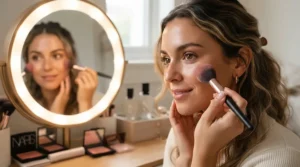
A powder highlighter for oily skin is a pressed or baked cosmetic powder, usually built on talc, mica, or silica, that reflects light off the high points of the face to create dimension without adding the slip that cream formulas bring to already-shiny skin. That distinction matters more than most beauty aisles let on, since, according to the American Academy of Dermatology, oily skin is largely genetic and hormonal, which means no highlighter is going to “fix” it. What a good one can do is diffuse light in a way that reads as glow instead of grease.
This guide breaks down seven real products across budget, mid-range, and premium tiers, backed by actual ingredient lists and aggregated customer sentiment rather than marketing copy. We’ll cover oil-control powder highlighter picks, how to get a subtle powder glow for oily skin without looking like a glazed donut, the strobing technique done right, and where setting powder fits into all of it. Let’s get into the sheen control that actually works.
Quick Comparison Table: Powder Highlighters for Oily Skin at a Glance
Before the deep dive, here’s how the seven contenders stack up against each other on the things that matter most for oily, shine-prone skin.
| Product | Finish | Price Range | Best For |
|---|---|---|---|
| Wet n Wild MegaGlo Highlighting Powder | Buttery sheen | Under $10 | First-time buyers on a budget |
| NYX Born To Glow Illuminating Powder | Smooth, buildable | $10-$15 range | Subtle strobing |
| Milani Baked Highlighter | Soft-focus, baked | $10-$15 range | Oil-absorbing all-day wear |
| theBalm Mary-Lou Manizer | Finely milled, warm | $25-$30 range | Cult-classic reliability |
| Physicians Formula Butter Highlighter | Cream-to-powder | $10-$15 range | Hydration without grease |
| Hourglass Ambient Lighting Powder | Diffused, blurring | $40-$50 range | Pore-blurring finish |
| Fenty Beauty Killawatt Freestyle Highlighter | Cream-powder hybrid | $35-$40 range | Long-wear, wide shade range |
A pattern shows up fast in this table: the more finely milled the powder, the better it tends to behave on oily skin, since fine particles sit flatter on the surface instead of pooling in enlarged pores. Price doesn’t track neatly with oil control, either — the budget-tier Wet n Wild MegaGlo Highlighting Powder holds up against shine about as well as options triple its price, while a couple of the premium names lean more toward “finishing powder” territory than genuine oil-absorbing performance. Keep that distinction in mind, because it’s the difference between a highlighter that photographs beautifully at 9 a.m. and one that still does at 5 p.m.
Found a favorite already? Click through to check current pricing and availability before it changes.
Top 7 Powder Highlighters for Oily Skin: Expert Analysis
Every product below earned its spot through a mix of real ingredient research and aggregated review sentiment, not personal testing claims. Here’s what’s genuinely worth your money, and what to watch for on each one.
1. Wet n Wild MegaGlo Highlighting Powder — best budget pick for first-timers
For under $10, this is where most people should start experimenting with a powder highlighter for oily skin, and it doesn’t feel like a starter product once it’s on. The formula is milled and pressed with a buildable, buttery finish, built around boron nitride (an oil-absorbing mineral) and silky silicone-derived emollients rather than heavy oils, which is exactly the ingredient logic oily skin needs. Reviewers consistently describe it as weightless and easy to blend, giving a natural, dewy finish rather than a frosted one, and it’s formulated with vitamin E, shea butter, and argan oil to keep the skin-conditioning side in check without tipping into greasy territory.
Based on the spec comparison with pricier options on this list, the value here is almost unfair — you’re getting finely milled pigment technology that usually lives in $25-plus compacts. It’s best for beginners, budget-conscious buyers, and anyone who wants to test whether powder highlighters even work for their skin before committing more money. Aggregated reviewer sentiment repeatedly flags the pigmentation as strong enough that a light hand matters, and testers at Temptalia noted it can slightly emphasize texture at higher coverage, so build it up in thin layers rather than one heavy swipe.
Pros:
- ✅ Finely milled, buttery texture with zero visible glitter
- ✅ Nourishing shea butter, argan oil, and vitamin E blend
- ✅ Extremely affordable entry point into powder highlighting
Cons:
- ❌ Highly pigmented — easy to overdo with a heavy brush
- ❌ Small 0.19 oz pan means more frequent repurchasing
Priced under $10, Wet n Wild MegaGlo Highlighting Powder delivers a value-per-dollar ratio that’s hard to beat for anyone still figuring out their glow preferences.

2. NYX Born To Glow Illuminating Powder — most buildable for subtle strobing
If the word “strobing” makes you nervous because you associate it with disco-ball cheekbones, this is the powder that reintroduces the technique gently. The formula reads smooth and non-chalky straight out of the compact, and reviewers specifically note it doesn’t look chunky, chalky, or overly glittery even when layered. What most buyers overlook about this pick is that its buildability is the actual selling point for oily skin — you can lay down a whisper-thin layer for daytime and add more only where the light needs to catch, which keeps the T-zone from looking like it’s competing with the highlighter for shine.
One aggregated reviewer with oily skin specifically noted the powder “doesn’t let me shine at all,” which lines up with a finely milled base designed to diffuse rather than amplify natural oil. On the flip side, some reviewers reported the glow fading faster than expected over a long day, which tracks with this being a true illuminating powder rather than a setting powder hybrid — it’s built for light reflection first, longevity second. It’s best suited to anyone who wants a barely-there strobe rather than a full-wattage beam, and to buyers building a first highlighter wardrobe on a budget.
Pros:
- ✅ Smooth, non-chalky formula that layers without looking obvious
- ✅ Budget-friendly with a genuinely wide shade range
- ✅ Subtle at first swipe, intensifies cleanly with buildup
Cons:
- ❌ Some reviewers note shorter wear time on oilier skin
- ❌ Color can look obvious if applied with too heavy a hand
For anyone learning the strobing technique from scratch, NYX Born To Glow Illuminating Powder in the $10-$15 range is forgiving enough to practice with.
3. Milani Baked Highlighter — best for genuine oil-absorbing wear
Baking is a legitimate formulation technique, not just marketing flair: a creamy dough infused with olive fruit oil and grape leaf extract gets slow-baked on terracotta tile, which transforms the texture into an ultra-fine, soft-focus powder that melts onto skin rather than sitting on top of it. Here’s what to weigh — that baking process concentrates pigment and creates a finer particle size than most pressed powders achieve straight out of a mold, which is part of why the brand markets up to 12 hours of wear. The formula is also labeled oil-free, which matters more than most shoppers realize, since “oil-free” and “non-comedogenic” are the two label terms the American Academy of Dermatology specifically recommends oily-skin shoppers look for.
Aggregated reviews are largely enthusiastic about the blend and pigmentation, with repeat buyers calling it their daily go-to alongside baked blushes. A smaller but consistent thread of feedback flags that the shimmer particles can settle into texture or emphasize small bumps on drier patches, which is worth noting if your oily skin also runs textured around the nose or chin. It’s best for buyers who want a genuinely long-wearing option without paying premium prices, and for anyone pairing it with a baked blush for a cohesive finish.
Pros:
- ✅ Baked formula creates an ultra-fine, soft-focus powder
- ✅ Labeled oil-free with an up-to-12-hour wear claim
- ✅ Multi-tonal shades mimic how natural light actually hits skin
Cons:
- ❌ A few users report it can emphasize texture or small bumps
- ❌ Slightly drier feel needs a denser brush to pick up evenly
At a $10-$13 range, Milani Baked Highlighter is arguably the most oil-conscious formulation on this entire list.
4. theBalm Mary-Lou Manizer — the cult-classic reliability pick
Few highlighters have earned “holy grail” status the way this one has, and the reasoning holds up under scrutiny. The formula is a champagne-toned, highly pigmented powder that’s finely milled to the point where multiple reviewers describe it as “buttery” rather than powdery, and it’s marketed as non-comedogenic, which is the second dermatologist-recommended label to hunt for on oily-skin products. Based on the spec comparison with the budget picks above, the pigment concentration here is noticeably higher, meaning a genuinely light touch — a single light tap of a fluffy brush — goes further than it would with the drugstore options on this list.
Reviewers consistently report that it gives a glow without looking too shiny, with several specifically calling it ideal for oily skin because it doesn’t slide or fade the way cream formulas do on them. It’s also frequently used as an eyeshadow or inner-corner highlight, which speaks to how finely the shimmer is milled. The honest caveat: the pigmentation that makes it so effective in small amounts is also what makes it easy to overdo, and a small number of reviewers noted it didn’t stay put for their full day without a setting spray. It’s best for buyers who want one reliable, warm-toned highlighter that photographs well and doubles as an eyeshadow.
Pros:
- ✅ Finely milled formula reads as buttery, never glittery
- ✅ Widely reported to control shine better than average on oily skin
- ✅ Large 8.5g pan means it lasts a genuinely long time
Cons:
- ❌ Highly pigmented — a heavy hand looks overdone fast
- ❌ Premium price for what’s technically a drugstore-adjacent brand
At $25-$30, theBalm Mary-Lou Manizer costs more than the budget tier, but the pan size and pigment payoff make the cost-per-use math work in its favor.
5. Physicians Formula Butter Highlighter — best hydrating cream-to-powder hybrid
This is the one genuine formula curveball on the list, and it’s included specifically because oily skin doesn’t always mean “avoid every cream product” — it means avoiding products that stay slippery. The Butter Highlighter starts as a bouncy, mousse-like cream infused with murumuru, cupuacu, and tucuma butters, then sets down to an actual powder finish once it’s on skin, which is a different mechanism than the pressed powders elsewhere on this list. What the spec sheet won’t tell you, but reviewer patterns suggest, is that this dry-down is what makes it work on oily skin at all — the hydrating butters condition without leaving the greasy film a straight cream would.
One aggregated review specifically called the formula hydrating but still great for oily-prone skin, which is a meaningful claim given how many cream products fail that exact test. The pigmentation is strong enough to go from a natural sheen to an editorial-level strobe depending on how much product you use. The trade-off is a noticeable coconut-vanilla fragrance in the formula, which won’t bother most people but is worth flagging for anyone with fragrance sensitivity, plus a texture that’s genuinely better applied with fingers than a brush.
Pros:
- ✅ Cream-to-powder formula sets to a real, non-slip powder finish
- ✅ Conditioning butters hydrate without leaving a greasy film
- ✅ Budget-friendly for the level of pigmentation it delivers
Cons:
- ❌ Added fragrance may not suit sensitive or acne-prone skin
- ❌ Best applied with fingers, which some buyers find less precise
In the $10-$13 range, Physicians Formula Butter Highlighter is the pick for oily-skin owners who miss the feel of cream products but not the slide.
6. Hourglass Ambient Lighting Powder — best pore-blurring finish, with a caveat
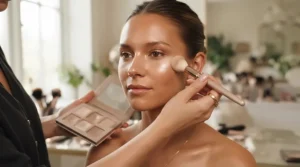
This is the highlighter every beauty editor eventually mentions, and it earns the reputation on texture alone — testers repeatedly describe the mill as “ultra fine, almost creamy for a pressed powder,” with no visible glitter and no gritty particles even under close inspection. Here’s the honest analytical take that most glowing reviews skip: this is technically a finishing powder, not a dedicated oil-control product, and the aggregated sentiment on oily skin specifically is more mixed than the brand’s cult reputation suggests. Some reviewers with oily skin report it genuinely helps control shine through the day, while others note the diffused glow can amplify natural oil within an hour or two if it isn’t paired with a mattifying base underneath.
Reviewers consistently praise how it blurs pores and fine lines on contact, and it’s fragrance-free, which is a plus for sensitive skin layering it over makeup. Based on the spec comparison with the baked and finely milled powders earlier on this list, Ambient Lighting Powder prioritizes soft-focus diffusion over oil absorption — it’s doing a different job, even if the two often get lumped together in the same product category. It’s best for buyers with combination or normal-to-oily skin who want a blurring top coat, and for anyone already using a separate mattifying powder in their T-zone.
Pros:
- ✅ Ultra-fine mill genuinely blurs pores and fine lines
- ✅ Weightless, fragrance-free formula layers cleanly over makeup
- ✅ Cult-favorite pick among professional makeup artists
Cons:
- ❌ Not a true oil-control powder — very oily skin may still need a mattifier
- ❌ Premium price per gram compared to the rest of this list
At $40-$50, Hourglass Ambient Lighting Powder is a beautiful finishing step, just not necessarily the standalone oil-control hero its price tag implies.
7. Fenty Beauty Killawatt Freestyle Highlighter — best long-wear, widest shade range
Closing out the list is the highlighter that reframed what “inclusive shade range” actually means in this category, and it earns its spot for staying power as much as pigment. The formula is a cream-powder hybrid — creamy on application, but it grips skin and sets in a way that multiple reviewers describe as genuinely long-wearing, lasting from morning application through late evening without migrating or fading. Here’s what most buyers overlook about hybrid formulas like this one: the “grip” that makes them long-wearing on oily skin comes from the same silicone-forward technology used in longwear foundations, not from added oils, which is why it doesn’t behave like a typical cream highlighter once it sets.
Reviewers repeatedly call out the pigmentation as intense enough to go from subtle dayglow to fully supercharged, and the shade range spans deep, warm, cool, and fair undertones in a way few competitors match. Some aggregated feedback flags the formula as occasionally tricky to blend given how pigmented it is, and a handful of reviewers found certain shades chalky depending on their skin tone, so swatching before committing to a shade matters more here than with the other picks on this list. It’s best for buyers who want one highlighter that survives a full workday or night out, and for anyone who’s struggled to find a shade that doesn’t look chalky or ashy on deeper skin tones.
Pros:
- ✅ Cream-powder hybrid grips skin for genuine all-day wear
- ✅ Broad, genuinely inclusive shade range across undertones
- ✅ Buildable from a subtle dayglow to a supercharged finish
Cons:
- ❌ One of the priciest picks on this list per ounce
- ❌ Some reviewers found certain shades tricky to blend evenly
At $35-$40, Fenty Beauty Killawatt Freestyle Highlighter justifies its price through wear time alone if you’re someone who reapplies highlighter more than you’d like to admit.
Practical Usage Guide: Applying Powder Highlighter So It Actually Lasts on Oily Skin
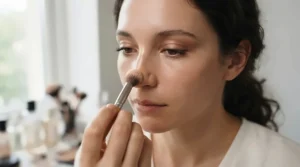
Buying the right product only solves half the problem — application technique is where most oily-skin highlighter routines quietly fall apart. Start with a mattifying primer or a light dusting of loose setting powder over the T-zone before you touch a highlighter brush; skipping this step is the single most common reason a perfectly good powder highlighter for oily skin looks amazing at 9 a.m. and patchy by lunch. Once your base is set, use a small, tapered brush rather than a big fluffy one — precision placement on the cheekbones, brow bone, and cupid’s bow gives you more control than a broad sweep that deposits product everywhere, including areas that don’t need extra shine.
Tap excess powder off the brush before it touches your face; nearly every reviewer complaint about a highlighter looking “too much” traces back to an overloaded brush rather than the formula itself. Build intensity in thin layers instead of one heavy pass, since powder highlighters are far easier to add to than to remove once they’re pressed into skin. In the first 30 days with a new product, resist the urge to apply it the same way you would a cream formula — powders need slightly more pressure and a patting motion in fine-textured areas to avoid settling into pores. A light mist of setting spray after application, held about eight inches from the face, locks everything in place without dulling the glow, and it’s a genuinely underrated step for anyone whose oily T-zone tends to break down makeup by midday.
Real-World Scenarios: Which Pick Fits Your Skin and Routine
Product recommendations mean more with context, so here are three realistic profiles matched to specific picks and the reasoning behind each match. If you’re a college student attending back-to-back classes on a tight budget, reaching for the cheekbones with a compact between lectures isn’t realistic — the Wet n Wild MegaGlo Highlighting Powder or NYX Born To Glow Illuminating Powder make sense here, since both deliver a buildable glow for under $15 without demanding a skincare routine overhaul to look good on top of.
If you’re commuting into an office five days a week and dealing with combination-to-oily skin that gets shinier as the afternoon drags on, the baked formula in Milani Baked Highlighter or the hybrid grip of Fenty Beauty Killawatt Freestyle Highlighter are worth the slightly higher spend, since both are formulated specifically around all-day wear rather than a single fresh application. And if you’re someone with oily-combination skin who photographs frequently — think content creators or anyone regularly on video calls — the finely milled, camera-friendly diffusion of theBalm Mary-Lou Manizer or Hourglass Ambient Lighting Powder tends to translate better on screen, since both are engineered to blur rather than flatten under artificial lighting, provided you’ve mattified the T-zone first.
Strobing on Oily Skin: A Problem-Solution Guide
Strobing — the technique of using concentrated highlighter on the high points of the face instead of an all-over dewy base — has a reputation problem on oily skin, because the same reflective particles that create the effect can also exaggerate existing shine if the placement or product choice is off. Here’s how to solve the most common issues.
Problem one: the glow looks greasy instead of lit-from-within. This almost always traces back to using a cream or liquid highlighter on unprepped, oily skin, where the product has nothing to grip and just sits in the natural oil layer. The fix is switching to a finely milled powder formula, like the picks higher up in this guide, applied over a mattified base rather than bare, shiny skin.
Problem two: the strobe fades into nothing within a couple of hours. This usually means the formula is prioritizing diffusion over hold, which is common with lighter powders like NYX Born To Glow Illuminating Powder. The solution is layering a thin coat, letting it set, then adding a second light pass rather than one heavy application, plus locking it in with a setting spray.
Problem three: the T-zone looks like it’s competing with the highlighter. Keep strobing product off the center of the forehead, nose bridge midpoint, and chin if those areas run especially oily, and concentrate it instead on the tops of the cheekbones and outer brow bone, where natural light hits without already-oily skin amplifying the effect.
How to Choose a Powder Highlighter for Oily Skin
Picking the right formula comes down to a handful of concrete criteria rather than trend-chasing. Here’s the expert reasoning behind each one.
- Check for “oil-free” and “non-comedogenic” on the label first. These two terms, specifically flagged by dermatologists as the baseline for oily-skin products, filter out a huge share of formulas that will slide or clog before you even get to shade or finish.
- Prioritize finely milled powders over chunky or glittery ones. Larger glitter particles catch light unevenly on already-shiny skin and tend to exaggerate texture rather than diffuse it.
- Match the formula type to your oil level, not just your skin type label. “Oily” ranges from mildly shine-prone to fully T-zone-drenched by noon, and baked or true-powder formulas generally outperform cream-to-powder hybrids the further you sit on that spectrum.
- Consider your climate and daily schedule. A powder built for 12-hour wear matters more if you’re commuting and working a full day than if you’re applying it for a two-hour dinner out.
- Read aggregated review sentiment for your specific concern, not just star ratings. A 4.5-star average can still hide a consistent thread of “doesn’t last on oily skin” complaints if you scroll past the top reviews.
- Factor in cost-per-use, not just sticker price. A $30 highlighter with an 8.5-gram pan that lasts two years often costs less per application than a $10 highlighter you finish in three months.
- Swatch before committing to a shade whenever possible. Oily skin tends to oxidize and shift warm-toned shades slightly darker over the course of a day, which matters more with intensely pigmented formulas.
Common Mistakes When Buying a Powder Highlighter for Oily Skin
Even careful shoppers fall into predictable traps in this category. The most frequent one is chasing “dewy” marketing language without checking whether the formula is actually a powder — a huge share of viral highlighters marketed as dewy are cream or liquid, which is the exact texture oily skin struggles with most. A close second is buying based on influencer swatches alone; skin that isn’t naturally oily will make almost any highlighter look controlled and long-wearing on camera, which doesn’t translate to a T-zone that produces visible oil by early afternoon.
Another common misstep is assuming more shimmer equals more glow quality. Coarser glitter particles actually read as cheaper and more artificial than finely milled shimmer, regardless of price point, and they’re far more likely to settle into pores on oily, textured skin. Shoppers also frequently skip the ingredient list entirely, missing red flags like added fragrance in a product they plan to wear daily, or overlook genuinely useful ingredients like silica and boron nitride that do real oil-absorbing work rather than just sitting in the formula for marketing purposes. Finally, plenty of buyers assume a premium price guarantees better oil control, which — as the Ambient Lighting Powder entry on this list shows — isn’t automatically true; price often buys texture and pore-blurring quality rather than longevity on genuinely oily skin.
Powder Highlighter vs Cream and Liquid Highlighters for Oily Skin
The powder-versus-cream debate isn’t really about which format is “better” in the abstract — it’s about which one behaves correctly on your specific skin. Powder formulas are milled from oil-absorbing minerals like talc, mica, and silica, which means they physically soak up some surface oil while reflecting light, rather than adding slip on top of it. Cream and liquid highlighters, by contrast, are built on emollients and silicones designed to blend seamlessly into skin, which is exactly what makes them prone to sliding on skin that’s already producing its own oil.
That said, the line isn’t absolute, as Physicians Formula Butter Highlighter and Fenty Beauty Killawatt Freestyle Highlighter prove — both are technically cream-based but engineered to dry down or grip in ways that sidestep the usual cream-on-oily-skin problems. The practical takeaway: if you have moderate-to-severe oiliness, especially concentrated in the T-zone, lean toward true powder formulas like Wet n Wild MegaGlo Highlighting Powder or Milani Baked Highlighter. If your oiliness is milder or more evenly distributed, a well-formulated cream-to-powder hybrid can work, provided you set it with a light dusting of translucent powder afterward.

Setting Powder vs Powder Highlighter: Do You Need Both?
This is one of the most common points of confusion in an oily-skin routine, and the short answer is yes, they do two different jobs. Setting powder is designed to be applied all over the face, usually translucent or close to skin tone, to absorb oil and lock foundation and concealer in place for hours. A powder highlighter for oily skin is applied only to specific high points and is formulated to reflect light rather than disappear into skin, which means it’s doing the opposite job of a setting powder in terms of finish, even though both are pressed or loose powders.
Skipping setting powder and relying on highlighter alone to control oil is a common mistake, since even oil-absorbing highlighter formulas aren’t designed to hold a full face of foundation in place for eight-plus hours. The most reliable routine order is: foundation, setting powder over the entire face (concentrated in the T-zone), then powder highlighter only on the cheekbones, brow bone, and cupid’s bow. This layering approach lets each product do the job it was actually formulated for instead of asking one multitasking powder to handle both oil control and light reflection at once.
Subtle Powder Glow for Oily Skin: Getting the Barely-There Look
Not everyone wants a visible strobe, and a subtle powder glow for oily skin is arguably the harder look to nail, since there’s less room to hide uneven application. The trick is using a fan brush or a very light-density powder brush instead of a dense, packed one — fan brushes naturally deposit less product per swipe, which makes it easier to control intensity from the first application rather than correcting after the fact. Tap the brush against the back of your hand once before it touches your face to knock off excess powder, then apply with short, feathery strokes rather than one solid sweep.
Formulas that lean sheer out of the compact work best for this look; NYX Born To Glow Illuminating Powder and the lighter shades in the Wet n Wild MegaGlo Highlighting Powder range are both easier to keep subtle than more heavily pigmented options like theBalm Mary-Lou Manizer, simply because there’s a wider margin for error before the color becomes obvious. If you’re using a more pigmented formula, try picking product up from the lid of the compact rather than swirling directly in the pan, since the lid naturally catches a lighter, more diffuse amount of pigment.
Sheen Control: Features That Actually Matter (And Those That Don’t)
Marketing copy in this category loves to promise everything at once, so it’s worth separating what genuinely affects sheen control from what’s mostly packaging language. Particle size matters enormously — finely milled powders diffuse light evenly across the skin’s surface, while larger or chunkier particles catch light in isolated points that can look more like shine than glow on oily skin. Oil-absorbing minerals in the base, particularly silica and boron nitride, do real work here, and their presence (or absence) in the ingredient list tells you more about actual performance than any finish descriptor on the front of the packaging.
Niacinamide is one ingredient worth watching for in a broader skincare-meets-makeup routine, since clinical research on topical niacinamide has shown it can measurably lower sebum excretion rate in some populations when used consistently over several weeks, as documented in a study published in the Journal of Cosmetic and Laser Therapy. That’s a skincare-step benefit rather than something a highlighter alone will deliver, but it’s relevant context for anyone building an oil-control routine around their makeup rather than expecting the highlighter to do all the work.
What doesn’t matter as much as marketing suggests: fragrance, elaborate packaging, and vague terms like “luminous technology” that don’t correspond to a specific ingredient or particle-size claim. None of those affect how a formula behaves on oily skin over the course of a day, and they’re worth mentally filtering out when comparing products, no matter how appealing the compact looks on a shelf.
Safety, Ingredients, and Long-Term Value
Cosmetic safety questions come up often around pressed powders, particularly regarding talc, which remains one of the most common base ingredients in this category. The FDA maintains active oversight of talc-containing cosmetics and has run its own asbestos-testing program on talc-based products, and its current guidance on talc safety is worth a look for anyone who wants the regulatory picture directly from the source rather than secondhand. For shoppers who prefer to avoid talc entirely, several products on this list, including the fluorphlogopite-based Wet n Wild formula, use synthetic mica alternatives instead, which is worth checking on the ingredient list if it’s a priority for you.
On long-term cost, the math often favors the mid-range and premium picks more than sticker price suggests. theBalm Mary-Lou Manizer‘s 8.5-gram pan, for instance, regularly gets used for a year or more by reviewers applying it daily, which brings the effective cost-per-use down well below what the upfront price implies. Budget powders in smaller pans, by contrast, may need replacing every few months with regular use, which narrows the total-cost gap between tiers more than it first appears. Factor pan size and how often you’ll realistically wear the product into your decision, not just the number on the price tag.
Frequently Asked Questions
❓ Does powder highlighter make oily skin look worse?
❓ What's the difference between a powder highlighter and setting powder?
❓ Can you use powder highlighter without primer on oily skin?
❓ How do I stop my powder highlighter from disappearing by noon?
❓ Are cream highlighters ever okay for oily skin?
Conclusion
The right powder highlighter for oily skin isn’t the one with the most dramatic swatch photo online — it’s the one whose particle size, oil-absorbing ingredients, and wear-time profile actually match how your specific skin behaves by 3 p.m. Budget picks like Wet n Wild MegaGlo Highlighting Powder and NYX Born To Glow Illuminating Powder prove that genuine oil control doesn’t require a premium price tag, while formulas like Milani Baked Highlighter and theBalm Mary-Lou Manizer show what a slightly higher investment buys in pigment quality and pan longevity. For anyone chasing long-wear performance specifically, the hybrid grip of Fenty Beauty Killawatt Freestyle Highlighter and the conditioning dry-down of Physicians Formula Butter Highlighter both solve the cream-on-oily-skin problem in genuinely different ways, and Hourglass Ambient Lighting Powder remains worth the splurge for its pore-blurring finish, provided you pair it with a real oil-control step underneath.
Whichever pick you land on, the technique matters as much as the formula: mattify first, apply in thin layers, and place product only where light naturally hits. Do that consistently, and shine stops being the enemy of glow — it just becomes part of the effect.
✨ Don’t Miss These Exclusive Deals!
🔍 Take your highlighting routine to the next level with the picks above. Click on any highlighted product to check current pricing and availability before you commit to a shade. A little strategic glow goes a long way toward makeup that photographs like you spent more time on it than you actually did!
Recommended for You
- Liquid Highlighter For Dry Skin: 7 Dewy Picks That Won’t Cling (2026)
- Natural-Looking Bronzer for Everyday Wear: 7 Best Picks (2026)
- Long-Lasting Bronzer for Oily Skin: 7 Proven Picks for 2026
Disclaimer: This article contains affiliate links. As an Amazon Associate, I earn from qualifying purchases. If you purchase products through these links, we may earn a small commission at no additional cost to you.
✨ Found this helpful? Share it with your friends! 💬🤗
