
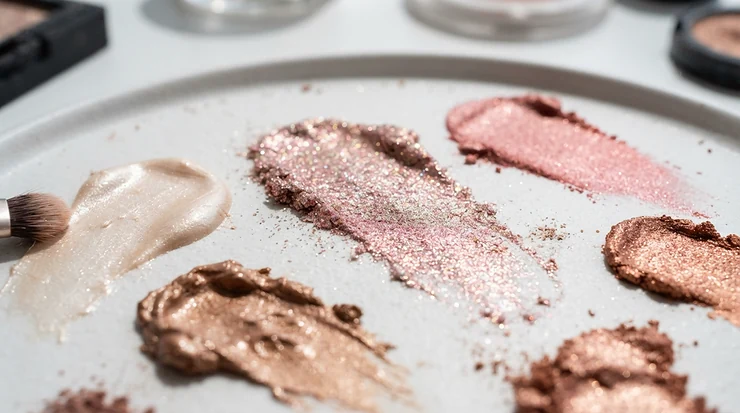
In This Article
Here’s the debate that quietly derails more makeup bags than any other: liquid highlighter vs powder highlighter for mature skin, and which one actually earns its spot on your vanity. A highlighter, put simply, is a light-reflecting cosmetic applied to the high points of the face — cheekbones, brow bone, the bridge of the nose — to create brightness and the illusion of dimension. That’s the textbook definition. What it doesn’t tell you is that the same exact product can look luminous on one complexion and look like it’s pooling in a canyon on another, and skin texture is usually the reason why.
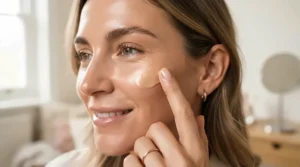
As skin matures, it changes in ways that have nothing to do with how carefully you apply your makeup. It loses some elasticity, produces less of its own oil, and develops fine lines that a poorly chosen shimmer will happily broadcast to the room. That’s not a flaw in your technique — it’s biology, as dermatologists at the American Academy of Dermatology explain. The good news? Formula matters enormously more than brand name here, and once you understand why liquid tends to melt in while powder tends to sit on top, the rest of the decision practically makes itself.
This guide breaks down exactly how liquid highlighter vs powder highlighter for mature skin performs in the real world — not in a swatch photo under studio lighting, but on skin that’s drier, thinner, and less forgiving of glitter than it used to be. We’ll compare formulas side by side, walk through seven genuinely good options across every price point, and hand you a decision framework so you’re not left guessing in the beauty aisle. Buckle up — your cheekbones are about to have their best year yet.
Quick Comparison: Liquid Highlighter vs Powder Highlighter for Mature Skin
Before we go deep on all seven products, here’s the fast version for anyone standing in a drugstore aisle with three minutes and a decision to make.
| Format | Typical Finish | Best For | Price Range |
|---|---|---|---|
| Liquid highlighter | Dewy, skin-like, blurs texture | Dry or textured mature skin, natural everyday glow | $14–$65 |
| Powder highlighter | Buildable, more control, can look dry | Combination/oily zones, precise placement, hot climates | $6–$60 |
| Hybrid/cream-to-powder | Blurs then sets, sits between the two | Transitional seasons, those who want both | $12–$50 |
Looking at the table, liquid formulas dominate the “best for mature skin” recommendation across nearly every beauty editor’s list, and it’s not marketing spin — sheer, fluid textures physically sit closer to the skin’s surface instead of resting inside a compact, ready to catch on dry patches. That said, powder isn’t disqualified; a soft-focus, squalane-laced powder like a couple of the picks below behaves almost nothing like the chunky, glittery powders of a decade ago. Price is genuinely all over the map in both categories, so budget isn’t the deciding factor — formula chemistry is.
💬 Just one tap — help someone else’s skin find its glow too!😊
Top 7 Liquid and Powder Highlighters for Mature Skin: Expert Analysis
We combed through real product listings, ingredient decks, and aggregated customer sentiment to land on seven highlighters — spanning budget, mid-range, and premium — that specifically hold up on skin that’s drier, thinner, or more textured than it used to be. Coverage includes both formulas so you can see the liquid highlighter vs powder highlighter for mature skin debate play out in actual product terms, not just theory.
1. e.l.f. Halo Glow Liquid Filter — best budget dewy multitasker
The standout here is versatility: this one product genuinely works as a primer, foundation booster, and highlighter depending on how you layer it. Formulated with squalane and hyaluronic acid, it’s built to hydrate rather than just sit on top of skin, and it comes in a genuinely wide 12-to-15-shade range that spans cool, warm, and olive undertones.
Based on the ingredient list, the squalane is doing real work here — it’s an emollient that mimics skin’s own oils, which is exactly what drier, mature complexions are often missing. Reviewers consistently note the finish reads as “soft-focus” rather than glittery, and the multi-use format means it earns its shelf space even on low-effort makeup days.
That said, what most buyers overlook is that the pigment is intentionally sheer, so if your skin has lost a lot of natural radiance, you may need to layer two thin coats rather than one to see a visible lift — a single swipe can read as more “hydrated” than “highlighted” in low light.
Pros:
- ✅ Squalane and hyaluronic acid genuinely hydrate while highlighting
- ✅ Twelve-plus shades cover a wide undertone range
- ✅ Doubles as primer, foundation mixer, and highlighter in one bottle
Cons:
- ❌ Sheer pigment may need layering for visible glow on very dull skin
- ❌ Some reviewers mattify it down with powder to control shine
Price hovers around $14–$15, and at that price, the value case is hard to argue against — e.l.f. Halo Glow Liquid Filter earns its reputation as the internet’s go-to complexion multitasker for a reason.

2. L’Oréal Paris True Match Lumi Glotion — viral drugstore glaze on a budget
The standout feature is its “glazed donut” finish, the internet-famous dewy look that’s dominated TikTok’s #GlazedSkin trend for two straight years running. The formula is infused with glycerin and shea butter, both humectant-and-emollient ingredients that pull in and lock down moisture — a genuinely useful combination for skin that’s lost some of its natural oil production.
Based on the spec comparison, this is functionally similar in concept to pricier “bronzing drops,” just without the designer price tag, and it’s flexible enough to wear as an all-over glow, a spot highlighter, or even mixed into foundation. What the marketing won’t tell you is that the formula skips SPF entirely, so it’s not a sunscreen substitute even though the bottle practically begs to be worn alone on bare skin.
Reviewers report the shimmer particles are fine enough to avoid looking gritty, though a couple mention the glow reads a touch more metallic than “second-skin” at full strength — something worth knowing before you apply it heavy-handed to a big surface area.
Pros:
- ✅ Glycerin and shea butter deliver genuine all-day hydration
- ✅ Five shades and multiple uses (tint, highlighter, bronzer)
- ✅ Genuinely large bottle (40 mL) for the price point
Cons:
- ❌ Contains no SPF, so daytime wear still needs sunscreen underneath
- ❌ Shimmer can look slightly more metallic than skin-like at full strength
At around $15–$20, L’Oréal Paris True Match Lumi Glotion is proof that a viral trend can occasionally also be a genuinely smart purchase.
3. Wet n Wild MegaGlo Highlighting Powder — cheapest pigment payoff around
The standout here is sheer value: this is one of the most heavily pigmented powder highlighters you’ll find under $10, and it has been a drugstore cult favorite for years. The mica-and-boron-nitride base is what gives it that “ultra-pearly” finish brands love to advertise, and reviewers consistently praise how little product it takes to see a visible result — a light tap of the brush goes a long way.
Here’s what most buyers overlook about budget powders like this one: the pigment intensity that makes it such good value is the same trait that requires a genuinely light hand on textured or crepey skin, since a heavy application can settle into fine lines rather than sitting on top of them.
Aggregated reviews are largely positive on pigmentation and blendability, though a handful of buyers note the exact shade can shift slightly cooler or warmer than expected once swatched on skin, which is a fair trade-off at this price.
Pros:
- ✅ Extremely high pigment payoff for a sub-$10 price point
- ✅ Vegan and cruelty-free formulation
- ✅ A little product covers a lot of face, extending its lifespan
Cons:
- ❌ Higher shimmer concentration can catch texture if applied heavily
- ❌ A few reviewers note shade can read slightly different than expected on skin
For under $10, Wet n Wild MegaGlo Highlighting Powder remains one of the smartest “try the category before you commit” purchases in drugstore makeup.
4. MAKE UP FOR EVER Ultra HD Soft Light Liquid Highlighter — most camera-invisible glow
The standout feature is genuinely clever chemistry: this liquid highlighter uses flat, mother-of-pearl pigments rather than the round, glittery particles found in cheaper formulas, which is why the brand markets it as “invisible to 4K cameras” — flat particles reflect light more evenly and scatter less into visible glitter specks. The formula also contains elastomers, ingredients that create a soft, cushioned, long-wearing feel rather than a sticky one.
Based on the spec comparison, this blurring effect is what actually matters for mature skin: rather than just adding shine, it visually softens the look of texture underneath it, which is precisely why one verified reviewer specifically noted it “gives a lovely glow without accentuating fine lines like a powder does.”
Reviewers consistently frame this as a step up from typical liquid highlighters in terms of longevity and comfort, though the four-shade range is noticeably tighter than some competitors, so those with deeper or more olive undertones may need to sample carefully before committing.
Pros:
- ✅ Flat mother-of-pearl pigments avoid a glittery, obvious finish
- ✅ Elastomer-based formula wears comfortably without feeling sticky
- ✅ Independently noted by reviewers for not settling into fine lines
Cons:
- ❌ Only four shades, a narrower range than most competitors
- ❌ Takes a bit of practice to build intensity without applying too much
Sitting in the $35–$40 range, MAKE UP FOR EVER Ultra HD Soft Light Liquid Highlighter earns its mid-range price tag through formula sophistication rather than brand-name markup alone.
5. Charlotte Tilbury Hollywood Glow Glide Highlighter — powder that behaves like liquid
The standout feature is right there in the name: this is a pressed powder engineered to feel and perform like a liquid, thanks to “light flex technology” and a squalane-enriched base that keeps the silky mica from ever looking dry or chalky. That squalane inclusion is the real story here — powders are typically the format mature skin has to be most cautious with, and building in an emollient ingredient is a direct answer to that concern.
The brand states that a majority of testers agreed the formula doesn’t crease, cake, or settle into fine lines, though it’s worth noting that figure comes from the brand’s own testing rather than independent, peer-reviewed research, so treat it as a helpful data point rather than gospel.
Aggregated customer reviews sit around 4.5 stars across several hundred ratings, with buyers repeatedly highlighting the “glide-on” application and the soft-focus satin finish as the differentiators worth the splurge.
Pros:
- ✅ Squalane and silky mica keep pressed powder from looking dry
- ✅ Soft-focus, satin finish avoids the classic “powder on wrinkles” look
- ✅ Glides on with minimal brush effort, even over textured skin
Cons:
- ❌ Premium price for a single compact
- ❌ Shade range is narrower than some rival luxury brands
At roughly $39–$49, Charlotte Tilbury Hollywood Glow Glide Highlighter makes the strongest case in this entire roundup for why powder deserves a second look on mature skin.
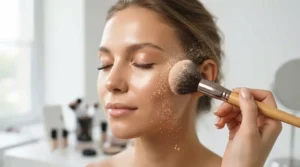
6. Dior Forever Glow Maximizer — most luxurious multitasking wand
The standout feature is its ingredient concentration: Dior formulates this liquid highlighter with roughly 92% natural-origin ingredients and iris extract, positioning it as skincare-adjacent rather than pure pigment. Based on the spec comparison, that natural-origin percentage is meaningful because it typically means fewer harsh silicones and more emollient, skin-conditioning content — a genuine plus for drier, more mature complexions. The brand’s own instrumental testing (conducted on a panel of 30 subjects) reports 24-hour hydration, and while that’s a company-sponsored result rather than independent verification, the aggregated customer sentiment backs up the real-world experience: one verified reviewer wrote plainly, “for mature skin this is amazing,” while another praised its ability to double as blush, bronzer, and eyeshadow. Reviewers consistently rate it around 4.6 stars across hundreds of ratings — a genuinely strong showing for a luxury complexion product.
Pros:
- ✅ High natural-origin ingredient content with iris extract
- ✅ Multi-use as highlighter, blush, bronzer, or eyelid veil
- ✅ Strong aggregated review sentiment specifically from mature-skin users
Cons:
- ❌ Sits at the top of this list’s price range
- ❌ Hydration and wear-time claims come from brand-sponsored testing, not independent studies
Landing in the $55–$65 range, Dior Forever Glow Maximizer is the pick for anyone who wants their splurge to also double as a skincare-adjacent treat.
7. Hourglass Ambient Strobe Lighting Powder — most refined “barely-there” shimmer
The standout feature is restraint: where a lot of powder highlighters chase maximum sparkle, this one uses a more concentrated ratio of micro-pearl particles in varying sizes over a sheerer, talc-free base specifically to avoid masking the skin underneath. That talc-free formulation matters more than it sounds — talc can sometimes emphasize dry patches and settle unevenly, so removing it is a direct nod to more sensitive, mature complexions.
Reviewers consistently describe the payoff as “natural” and “not too shiny,” with one specifically praising it as “amazing to add a bit of glow without emphasizing pores and texture” — high praise from someone who has presumably tried the glittery alternatives.
In the interest of full honesty, not every review is glowing: one buyer reported it “cakes my base and makes my under-eye wrinkles more noticeable,” a useful reminder that no single formula is universal, and that placement (avoiding the under-eye area specifically) matters as much as the product itself.
Pros:
- ✅ Talc-free base designed not to mask or emphasize texture
- ✅ Reviewers specifically note it doesn’t exaggerate pores
- ✅ Four shade options span cool, warm, and neutral undertones
Cons:
- ❌ One of the priciest powder options in this roundup
- ❌ At least one reviewer found it emphasized fine lines near the eye area
Priced from roughly $46 up to $95 depending on the size and shade set, Hourglass Ambient Strobe Lighting Powder proves that powder absolutely can compete with liquid — provided the formula is built with mature skin in mind from the start.
Top 7 Products at a Glance
| Product | Format | Price Range | Best For |
|---|---|---|---|
| e.l.f. Halo Glow Liquid Filter | Liquid | $14–$15 | Budget-friendly everyday hydration |
| L’Oréal Paris True Match Lumi Glotion | Liquid | $15–$20 | Viral “glazed” glow on a budget |
| Wet n Wild MegaGlo Highlighting Powder | Powder | Under $10 | Trying the powder category cheaply |
| MAKE UP FOR EVER Ultra HD Soft Light | Liquid | $35–$40 | Camera-ready, long-wearing glow |
| Charlotte Tilbury Hollywood Glow Glide | Powder | $39–$49 | Powder-lovers who fear cakey texture |
| Dior Forever Glow Maximizer | Liquid | $55–$65 | Skincare-adjacent luxury multitasking |
| Hourglass Ambient Strobe Lighting Powder | Powder | $46–$95 | Subtle, talc-free everyday glow |
Scanning this table, a clear pattern emerges: every liquid option in this list leans on hydrating ingredients (squalane, hyaluronic acid, glycerin, iris extract), while every powder pick specifically engineers around the “settling into fine lines” problem rather than ignoring it. In other words, the format war matters less than whether the brand actually built the formula with aging skin’s real needs in mind. If you’re deciding purely on budget, Wet n Wild MegaGlo Highlighting Powder and e.l.f. Halo Glow Liquid Filter deliver the most value per dollar, while Dior Forever Glow Maximizer justifies its price primarily through ingredient quality rather than packaging.
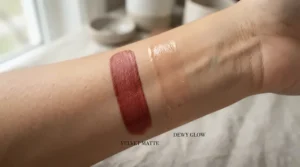
How to Apply Highlighter So It Never Settles Into Fine Lines
Buying the right formula solves half the problem — application technique solves the other half, and it’s the part most tutorials skip entirely.
- Moisturize first, and actually wait. Applying highlighter to skin that hasn’t fully absorbed its moisturizer is the single most common cause of patchy, settling makeup. Give hydrating products two to three minutes to sink in before you touch a highlighter to your face.
- Use a damp sponge for liquid formulas. A slightly damp makeup sponge (not soaking wet) presses liquid highlighter into skin rather than dragging it across the surface, which meaningfully reduces the chance of it catching in texture.
- Apply powder with a fluffy, not dense, brush. Dense brushes deposit too much product in one spot; a fluffy brush diffuses pigment more evenly, which is exactly what softer, more textured skin needs.
- Tap, don’t rub, around the eye area. The skin around the eyes is thinner than anywhere else on the face, so rubbing product in can drag it directly into crow’s feet. A light tapping motion with a ring finger or small brush avoids this entirely.
- Set liquid highlighter with translucent powder only where needed — not everywhere. Over-setting an entire dewy look defeats the purpose of choosing liquid in the first place; a light dusting on the T-zone alone usually does the job.
- Reapply mid-day with a light hand, not a full re-do. A few dots pressed in with a fingertip refresh the glow without adding the bulk of a second full application.
Following even three or four of these steps consistently makes a measurably bigger difference than switching brands ever will, and it costs nothing beyond a few extra minutes at your vanity.
✨ Don’t Miss These Exclusive Deals!
🔍 Take your glow game to the next level with these carefully selected picks — click any highlighted item above to check current pricing and availability!
Real-World Scenarios: Which Highlighter Fits Your Skin, Budget, and Routine
Sometimes it’s easier to see yourself in a specific scenario than to read a spec sheet. Here are three common profiles and the formula each one is likely to get along with best.
The busy grandmother who wants a five-minute routine. She’s not interested in layering six products before the school run or errands. A multi-use liquid like e.l.f. Halo Glow Liquid Filter or L’Oréal Paris True Match Lumi Glotion solves this cleanly — both can be swiped on bare skin, mixed into foundation, or dotted on cheekbones in seconds, with zero brush cleanup required afterward.
The former powder loyalist who’s noticed her old favorites look different lately. If your skin has gotten visibly drier over the past few years and your go-to compact suddenly looks chalky, you’re not imagining it — that’s a formula-to-skin mismatch, not a personal failing. Switching to a squalane-based powder like Charlotte Tilbury Hollywood Glow Glide Highlighter or Hourglass Ambient Strobe Lighting Powder typically solves the exact problem without abandoning the powder format entirely.
The special-occasion planner who wants maximum longevity. For events lasting six-plus hours under photography and flash, a long-wear liquid engineered for exactly that scenario — MAKE UP FOR EVER Ultra HD Soft Light Liquid Highlighter or Dior Forever Glow Maximizer — is the safer bet, since both are specifically formulated and marketed around all-day, camera-ready wear.
Whichever profile fits, the underlying lesson is the same: match the formula to your actual daily habits and skin’s current needs, not to whatever influencer made a product look good in a ring light.
How to Choose Between Liquid Highlighter and Powder Highlighter for Mature Skin
Cutting through the noise, here’s the actual decision-making process worth following, in order of importance.
- Assess your skin’s current dryness level first. If your skin feels tight, flaky, or visibly dull by midday, liquid formulas will almost always outperform powder, since they physically add moisture-adjacent ingredients rather than sitting dry on the surface.
- Consider your climate. Powder holds up better in hot, humid conditions where liquid can slip or migrate; liquid performs better in dry indoor heating or cold, low-humidity air.
- Think about how much time you actually have. Liquid is faster for a natural, all-over glow; powder allows more precise, sculpted placement if you’re willing to spend an extra minute with a brush.
- Check the ingredient deck for emollients. Squalane, hyaluronic acid, glycerin, and shea butter are all strong signs a formula was designed with drier, mature skin in mind, regardless of whether it’s liquid or powder.
- Test under your actual daily lighting, not store lighting. A highlighter that looks subtle under harsh retail fluorescents can look considerably more shimmery in soft daylight or vice versa.
- Read for texture-specific language in reviews, not just star ratings. A 4.5-star average tells you people liked it; comments specifically mentioning “fine lines,” “settling,” or “cakey” tell you whether it liked your skin type back.
- Buy the smallest size available first if you’re switching formats entirely. Highlighter preference is genuinely personal, and a full-size premium purchase is an expensive way to discover a formula isn’t for you.
Working through this list takes about the same amount of time as scrolling one more “get ready with me” video, and it’s considerably more useful.
Common Mistakes When Buying Highlighter for Aging Skin
Even careful shoppers fall into predictable traps here, and most of them are entirely avoidable once you know what to look for.
Mistake one: buying based on influencer swatches alone. Lighting, camera filters, and skin type differences make swatch videos wildly unreliable for predicting how a product will behave on your specific skin. What most buyers overlook is that the exact same highlighter can look matte-adjacent on oily 25-year-old skin and noticeably shimmery on drier, more mature skin, simply because oil changes how pigment sits.
Mistake two: chasing maximum shimmer intensity. More sparkle isn’t more flattering past a certain point — it’s simply more visible, including every place you didn’t intend to highlight. The formulas that perform best on mature skin in this guide (Charlotte Tilbury, Hourglass, MUFE) all specifically dial back raw shimmer intensity in favor of soft diffusion.
Mistake three: ignoring the “settling” complaint pattern in reviews. If multiple reviewers across a listing independently mention a product looking cakey or emphasizing lines, that’s a real pattern worth taking seriously, not an outlier to dismiss.
Mistake four: assuming expensive automatically means better for your skin. Some of the most texture-friendly formulas in this list, like Wet n Wild MegaGlo Highlighting Powder, cost a fraction of luxury alternatives; price correlates loosely with packaging and marketing, not guaranteed skin compatibility.
Mistake five: skipping the return policy check. Reputable retailers typically allow returns on lightly used cosmetics; always confirm this before opening a new highlighter, since a formula that photographs beautifully can still disappoint in person.
Liquid Highlighter vs Powder Highlighter: The Real Difference on Mature Skin
Let’s settle the core debate with actual mechanics rather than opinion. Liquid highlighters are typically suspended in a base of water, silicone, or oil, which means the pigment particles are surrounded by a fluid that helps them spread evenly and bond with skin’s own surface oils. That bonding is precisely why liquid tends to blur rather than highlight texture — the product becomes part of the skin’s surface rather than a separate layer resting on top of it.
Powder highlighters, by contrast, are compressed particles bound with waxes or silicones into a solid form. Applying them adds a literal layer on top of the skin rather than blending into it, which is exactly why older or drier skin — already lacking natural oils to help that layer sit smoothly — is more prone to seeing that layer catch on fine lines, dry patches, or enlarged pores.
That said, this isn’t an absolute rule. As the seven products above demonstrate, modern powder formulas increasingly borrow tricks from skincare — squalane, talc-free bases, finer-milled pigments — specifically to counteract this weakness. Based on the spec comparison across all seven picks, the newest generation of powder highlighters (Charlotte Tilbury, Hourglass) has genuinely closed much of the gap with liquid. The honest verdict: liquid still has a slight structural advantage for very dry or heavily textured mature skin, but a well-formulated powder is no longer the risky choice it was a decade ago.
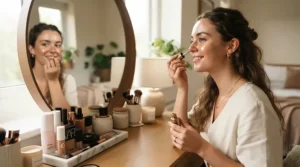
What to Expect: Real-World Performance on Fine Lines and Texture
Specs on a box only tell part of the story — here’s what actually happens once product meets skin over the course of a normal day.
In the first hour, both formats generally perform as advertised: liquid looks dewy and blended, powder looks precise and controlled. The difference tends to emerge around hour four to six, when skin’s own oil production, movement, and any touch-ups start interacting with the product. Liquid highlighters with strong emollient content (squalane, elastomers) tend to hold their blur through this window; thinner, more sheer liquids may need a light top-up. Powder highlighters, meanwhile, are where the “settling” issue most commonly appears — and it disproportionately shows up in exactly the areas mature skin is most self-conscious about, like laugh lines and under-eye texture.
Is There Such a Thing as a Truly Fine-Line-Friendly Highlighter?
Realistically, yes — but “fine-line-friendly” is a spectrum, not a binary label. A genuinely fine-line-friendly highlighter is one built with soft-focus, light-diffusing particles (rather than sharp glitter), enriched with an emollient base, and applied with a light hand in the right zones. Every formula in this guide qualifies to some degree, though the liquid options and the two premium powders lean furthest toward that description based on their ingredient decks and aggregated review language.
Highlighter Formula for Aging Skin: Ingredients That Actually Help
Since not every highlighter formula for aging skin is created equal, it’s worth knowing exactly which ingredients are doing real work versus which are simply marketing filler.
Squalane is arguably the single most consistently useful ingredient across this entire roundup. It’s a lightweight, plant- or olive-derived emollient that closely mimics skin’s own natural oils, and it shows up in both liquid (e.l.f.) and powder (Charlotte Tilbury) formulas specifically because it helps pigment sit smoothly rather than clinging to dry patches.
Hyaluronic acid pulls moisture into the skin’s surface layer, and while it can’t replace a full skincare routine, its presence in a highlighter formula for aging skin at least means the product isn’t actively working against your hydration goals.
Flat, mica-based pearl pigments (as opposed to round glitter particles) reflect light more evenly across a larger surface area, which is why they read as “glow” rather than “sparkle” — a distinction that matters enormously on textured skin, where round glitter particles can catch unevenly and draw attention to exactly the wrong spots.
Talc-free bases, increasingly common in premium powders, avoid a specific issue where talc’s absorbent properties can occasionally emphasize dryness rather than mask it, since talc is designed to soak up oil that drier mature skin may not have much of to begin with.
The takeaway: read past the marketing copy on the front of the box and look specifically for these ingredient categories on the back. They’re a far more reliable predictor of mature-skin compatibility than star ratings alone.
Blendability: Why It Matters More as Mature Skin Changes
Blendability sounds like a soft, subjective word, but it’s actually a measurable formula characteristic — how easily a product’s pigment disperses and melts into skin without leaving harsh edges, streaks, or visible product lines. On younger, more elastic skin with even oil distribution, a lot of formulas can get away with mediocre blendability because the skin itself does some of the smoothing work. Mature skin, having lost some of that natural elasticity and oil evenness, has less margin for error — a highlighter with poor blendability shows its seams far more visibly.
Formulas with genuinely good blendability tend to share a few traits: a slightly longer “open time” before setting (giving you a window to work the product in), a texture that warms slightly on contact with skin (common in cream-to-liquid and cream-to-powder formats), and finely milled rather than chunky pigment particles. Among the seven picks in this guide, the liquid options generally offer the longest blending window, while Charlotte Tilbury Hollywood Glow Glide Highlighter stands out among the powders specifically because its “light flex” texture is engineered to keep blending even after the product has technically been applied — a meaningful advantage if you tend to apply with your fingers rather than a brush.
Practically speaking, if blendability is your single top priority, lean liquid or invest in a powder specifically marketed around gliding, cushioning, or “second-skin” language, and always blend before the product has a chance to set.
Long-Term Cost & Maintenance: Is a Premium Highlighter Worth It?
Sticker price only tells part of the value story — cost-per-use and longevity matter just as much, especially for a product used daily.
A $14 liquid highlighter used every day, at roughly a pea-sized amount, will typically last four to six months, working out to under $0.10 per use. A $46-plus premium powder, used more sparingly with a brush (powders generally last longer per gram than liquids do), can realistically stretch past eight months, which narrows the true cost-per-use gap more than the sticker price initially suggests.
Where premium pricing genuinely earns its keep is in formula sophistication rather than pure longevity: the squalane-and-mica engineering in Charlotte Tilbury Hollywood Glow Glide Highlighter, for instance, solves a specific texture problem that a $6 powder simply isn’t formulated to address. If your skin genuinely struggles with powder settling into lines, that premium is functional, not just aesthetic. On the other hand, if your skin is only mildly affected by texture concerns, a budget pick like Wet n Wild MegaGlo Highlighting Powder or e.l.f. Halo Glow Liquid Filter delivers comparable everyday results for a fraction of the investment.
The honest framework: spend up when a specific, named skin concern (settling, dryness, longevity under flash photography) justifies it, and save your money everywhere else.
Safety and Ingredient Checklist for Sensitive, Mature Skin
Mature skin isn’t just drier — it’s also often more reactive, in part because hormonal shifts during and after menopause measurably thin the skin’s protective barrier, as the American Academy of Dermatology notes in its guidance on skin changes during menopause. That makes a quick ingredient safety check worth the extra thirty seconds before you buy.
- Patch test new formulas, especially anything with added fragrance, on the inner wrist or jaw before applying to the full face.
- Check for non-comedogenic labeling if you’re layering highlighter over other products; pore-clogging ingredients matter more the more product layers are involved.
- Be cautious with fragrance-heavy formulas if your skin has become more reactive over time — a common, underdiscussed change during and after menopause.
- Avoid rubbing product into broken or irritated skin, since thinner mature skin barriers can absorb irritants more readily.
- Store products away from direct heat and sunlight, which can degrade both the texture and preservative system of a formula faster than the printed expiration date accounts for.
None of this is meant to alarm anyone — it’s simply due diligence that takes less time than reading this checklist did.

Frequently Asked Questions
❓ Is liquid highlighter really better than powder for mature skin?
❓ What is the best highlighter formula for aging skin?
❓ Does powder highlighter make wrinkles more noticeable?
❓ How do I make my highlighter blend better on dry, mature skin?
❓ Can I use liquid and powder highlighter together?
Conclusion
The liquid highlighter vs powder highlighter for mature skin question doesn’t actually have a single universal winner — it has a right answer for your specific skin, climate, and daily routine. Liquid formulas generally hold a structural edge for very dry or heavily textured skin, thanks to their ability to bond with skin’s own surface rather than resting on top of it, and options like e.l.f. Halo Glow Liquid Filter and Dior Forever Glow Maximizer demonstrate that edge exists at every price point. Powder hasn’t been left behind, though — modern, squalane-enriched formulas like Charlotte Tilbury Hollywood Glow Glide Highlighter and talc-free picks like Hourglass Ambient Strobe Lighting Powder prove the category has genuinely evolved past its glittery, texture-catching reputation.
What actually matters most, based on everything covered above, is reading past the marketing and checking the ingredient deck for the emollients and finely milled pigments that consistently separate mature-skin-friendly formulas from the ones that simply weren’t designed with aging skin in mind. Whichever format you land on, apply it with a light hand, moisturize first, and give yourself permission to try a budget pick before committing to a premium one. Your cheekbones — and your bathroom mirror — will thank you either way.
Recommended for You
- 7 Best Subtle Highlighter For Office-Appropriate Makeup Picks (2026)
- Highlighter Palette For Deep Skin Tones: 7 Best Glow Picks (2026)
- Stick Highlighter For On-The-Go Application: 7 Genius Picks For 2026
Disclaimer: This article contains affiliate links. As an Amazon Associate, I earn from qualifying purchases. If you purchase products through these links, we may earn a small commission at no additional cost to you.
✨ Found this helpful? Share it with your friends! 💬🤗
