
In This Article
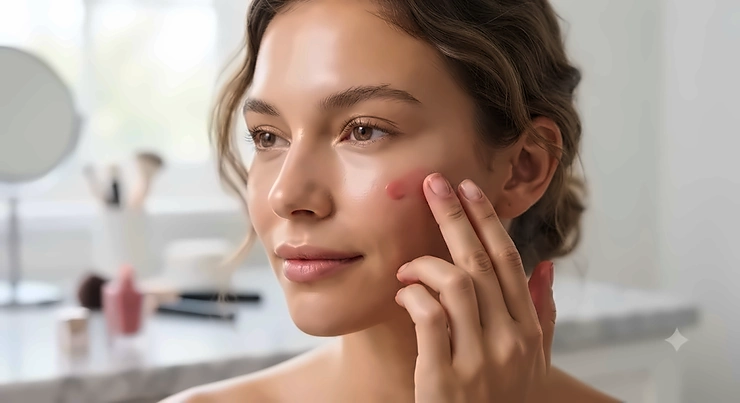
Here’s a confession every powder-blush loyalist eventually makes: at some point around 2 p.m., that “pretty flush” has turned into two chalky patches sitting on top of your foundation like stickers. Liquid blush for a natural flush exists because skin isn’t flat, and pigment that sits on the surface reads as makeup no matter how carefully you blend it. A liquid formula, by contrast, has nowhere to sit — it has to soak in, which is exactly why it mimics the look of blood rising to the surface of your cheeks rather than color someone dusted on top.
What is liquid blush for a natural flush? It’s a water-, gel-, or oil-based cheek color, usually dispensed from a squeeze tube, doe-foot wand, or dropper, formulated to melt into skin rather than sit on it, giving a sheer, buildable, “just-pinched” tint instead of an opaque layer of pigment.
That single idea — pigment that behaves like skin instead of sitting on top of it — is the thread running through every product in this guide. We pulled together seven real, currently sold formulas spanning drugstore to prestige, dug into their actual ingredient lists and application mechanics, and cross-referenced aggregated customer sentiment so you’re not choosing blind. Along the way we’ll get into sheer liquid blush drops, why a skin-like liquid blush finish is harder to engineer than it looks, and whether dropper applicators actually make a meaningful difference in how much product ends up on your face versus your bathroom counter. This isn’t a rewritten product listing — it’s the analysis you’d want a knowledgeable friend to walk you through before you spend your money.
Quick Comparison Table
| Product | Category | Applicator | Best For |
|---|---|---|---|
| Rare Beauty Soft Pinch Liquid Blush | Mid-range | Doe-foot | Most skin types, matte or dewy finish |
| e.l.f. Camo Liquid Blush | Budget | Doe-foot | First-timers and budget shoppers |
| Youthforia BYO Blush Color Changing Blush Oil | Mid-range | Doe-foot/dropper hybrid | Skin-tone matching anxiety |
| NARS Liquid Blush | Premium | Doe-foot squeeze tube | Maximum pigment payoff |
| Milani Cheek Kiss Liquid Blush + Lip Tint | Budget | Doe-foot dual-use | Multitasking cheek-and-lip color |
| Kosas Blush Wet Liquid Blush | Mid-range | Precision wand | Controlled, editorial placement |
| Fae Beauty Lush Blush Serum | Mid-range | True glass dropper | Skincare-forward, sheer layering |
Looking at the table, the split between doe-foot wands and true dropper bottles matters more than most shoppers expect, since it directly controls how much product lands on your skin before you’ve even started blending. Budget options from e.l.f. and Milani prove that a natural, skin-like finish isn’t gated behind a prestige price tag, though NARS and Kosas earn their higher price with more refined pigment dispersion. If your priority is skincare ingredients layered under makeup, Fae Beauty and Youthforia lean hardest into that hybrid category.
💬 Just one click — help others make better buying decisions too!😊
Top 7 Liquid Blushes for a Natural Flush: Expert Analysis
1. Rare Beauty Soft Pinch Liquid Blush — buildable matte-or-dewy in one bottle
The standout here is choice: Rare Beauty splits its shade range across matte and dewy finishes, so you’re not locked into one texture the way you are with most single-finish formulas. Each bottle holds 0.25 fl oz (7.5 mL) of a botanical-blend formula built around lotus, gardenia, and white water lily, dispensed through a curved doe-foot applicator designed to deposit one or two dots per cheek without over-loading the wand. In practice, that means less waste and less time correcting an accidental streak.
Based on the spec comparison, the doe-foot design trades some of the precision of a true dropper for speed — you can dot and blend in under a minute, which matters if your morning routine is already tight. It’s a strong fit for makeup beginners who want forgiveness built into the applicator, as well as more experienced users layering it over the brand’s own luminizer for a wetter finish. Reviewers consistently report that the formula blends easily with fingertips and holds its color through a full workday without the patchiness some liquid formulas develop by afternoon.
Pros:
- ✅ Matte and dewy finish options in one line
- ✅ Doe-foot applicator speeds up daily application
- ✅ Blends seamlessly with fingers, no brush required
Cons:
- ❌ Doe-foot dispenses more product than some prefer
- ❌ Deeper shades can oxidize darker than swatched
Expect to pay in the mid-$20s range for full size; given the shade breadth and dual-finish flexibility, it’s a fair value pick for anyone still deciding which finish suits their skin.

2. e.l.f. Camo Liquid Blush — drugstore price, prestige-level pigment
What most buyers overlook about this one is that it isn’t a watered-down version of pricier liquid blushes — it’s genuinely built on the same core idea: hyaluronic acid, rose flower water, and hibiscus flower extract folded into a lightweight, dewy base. The 0.13 fl oz (4 mL) tube comes with a rounded, grooved doe-foot applicator that e.l.f. redesigned specifically to control dispensing after early feedback that the original wand released too much product at once.
The spec sheet won’t tell you this, but user reports suggest the formula sets faster than several higher-priced competitors, which is a genuine trade-off: speedy blending is required, and a damp makeup sponge often outperforms a brush for smoothing it out before it grips. For beginners this is a low-risk entry point into liquid blush, and for anyone comparing formulas side by side, it holds up credibly against blushes triple its price. Reviewers consistently note the color payoff is intense enough that a single dot per cheek is often plenty.
Pros:
- ✅ Under-$10 price with genuinely dewy finish
- ✅ Twelve shades cover a wide range of undertones
- ✅ Skin-loving ingredients rare at this price point
Cons:
- ❌ Fast-setting formula requires quick blending
- ❌ Packaging can be stiff to twist open initially
At around $7-$9, this is the easiest liquid blush on this list to try without a second thought, and the value case barely needs arguing.
3. Youthforia BYO Blush Color Changing Blush Oil — reacts to your skin’s own pH
The standout feature is right in the name: this formula shifts from a clear oil to a custom pink hue based on your individual skin chemistry, which sidesteps the single biggest frustration with liquid blush — picking the wrong shade for your undertone. The oil-based formula is built with roughly twenty plant-based extracts, including jojoba oil and squalane, dispensed through a doe-foot applicator styled like a dropper wand.
Here’s what to weigh: because the starting formula is clear, you’re trusting a chemical reaction rather than a swatch, which is either delightfully low-stakes or mildly anxiety-inducing depending on your personality. On skin, aggregated review sentiment is largely positive, with wearers describing the finish as weightless and genuinely custom-looking rather than uniform pink across every face. It’s an especially good match for people who’ve struggled to color-match blush to fluctuating skin tone across seasons, since the reaction recalibrates every time you apply it. Some reviewers note the payoff is subtler on deeper skin tones, so those users may want to layer more heavily or pair it with a sheer bronzer.
Pros:
- ✅ Custom shade adapts to individual skin chemistry
- ✅ Twenty plant-based, hydrating extracts in formula
- ✅ Vegan, cruelty-free, and clean-beauty certified
Cons:
- ❌ Color payoff can read subtle on deeper skin tones
- ❌ Novelty factor may not suit precise color preferences
Priced in the high-$20s, it’s a mid-range investment that earns its keep through convenience rather than raw pigment strength.
4. NARS Liquid Blush — the industry benchmark for payoff
Few liquid blushes carry the cultural weight of NARS’s cheek color line, and the standout feature is pigment concentration: a little genuinely goes further here than with most competitors on this list. The squeeze-tube bottle uses a doe-foot applicator similar in mechanics to Rare Beauty’s, delivering a radiant, slightly luminous finish across its shade range, including the brand’s famously peachy-pink signature tone.
Based on the spec comparison, NARS leans into radiance rather than pure matte, so if you’re chasing a fully flat finish, this isn’t the pick — but if “lit from within” is the goal, the formula’s light-reflecting particles do real work without tipping into glitter territory. What most buyers overlook is how forgiving the blendability is; even a slightly heavy-handed application diffuses out with a finger tap rather than sitting in a hard-edged patch. Aggregated reviews frequently mention that the shade range, while smaller than some competitors, is curated well enough that most skin tones find a workable match without needing multiple bottles.
Pros:
- ✅ Industry-leading pigment concentration per drop
- ✅ Radiant, luminous finish flatters most skin tones
- ✅ Forgiving blendability even with heavy application
Cons:
- ❌ Higher price point than most drugstore-to-mid alternatives
- ❌ Shade range smaller than some competing lines
Expect to spend in the low-to-mid $30s, which puts it at the premium end of this roundup — justified mainly if radiance, not matte coverage, is your priority.
5. Milani Cheek Kiss Liquid Blush + Lip Tint — one bottle, two jobs
The standout feature is dual-use functionality: this formula is formulated to work on both lips and cheeks, which quietly solves the “what do I pack for a weekend trip” problem better than almost anything else on this list. It’s infused with pomegranate, rose extract, and watermelon, all working toward a hydrating, non-drying finish that holds up whether you’re dabbing it onto cheekbones or lips.
What the spec sheet won’t tell you, but user reports suggest, is that the pigment intensity swings a bit shade to shade — some tones apply nearly sheer while others build fast, so a testing swatch on the back of your hand before your face is worth the extra ten seconds. It’s an easy recommendation for budget-conscious buyers and anyone building a compact travel makeup bag, since one bottle genuinely replaces two products. Reviewers consistently describe the scent and texture as pleasant rather than sticky, which is a common complaint with cheaper stain-style tints.
Pros:
- ✅ Doubles as lip tint, cutting bag clutter
- ✅ Under-$11 price with genuine dual functionality
- ✅ Hydrating fruit-extract formula, non-drying wear
Cons:
- ❌ Pigment intensity varies noticeably by shade
- ❌ Shade range narrower than single-purpose blushes
At around $10, it’s arguably the best value pick here if you’re trying to consolidate your routine rather than expand it.

6. Kosas Blush Wet Liquid Blush — precision over speed
The standout feature is the applicator itself: instead of a doe-foot, Kosas uses a slim wand tip designed for controlled placement, which matters most for anyone chasing an editorial, contoured flush rather than a broad wash of color. The formula is buildable and blendable, designed to be layered from sheer to more saturated without the patchiness that heavier creams risk.
Based on the spec comparison, the wand trades speed for control — you’ll spend a few extra seconds placing dots exactly where you want them, but that precision pays off if you’re mapping color along cheekbones rather than just dabbing the apples of your cheeks. Reviewers consistently note the finish reads dewy without feeling tacky to the touch, and that it layers well under or over powder without pilling. It’s a strong option for people who already have a defined blush-placement routine and want a tool that respects that precision instead of fighting it.
Pros:
- ✅ Precision wand applicator for controlled placement
- ✅ Buildable formula layers without pilling
- ✅ Dewy finish that doesn’t feel tacky on skin
Cons:
- ❌ Wand applicator takes practice to master
- ❌ Slower application than doe-foot alternatives
Priced in the mid-$20s, this sits squarely in mid-range territory, worth it mainly for the applicator experience as much as the formula itself.
7. Fae Beauty Lush Blush Serum — the true dropper in this lineup
Unlike every other product on this list, the standout feature here is a genuine glass-pipette dropper rather than a doe-foot wand, giving you drop-by-drop control that’s closer to how you’d dispense a skincare serum than a traditional blush. That mechanical difference isn’t cosmetic — it changes how you use the product, since you’re placing individual drops on the back of your hand or directly on skin rather than swiping an applicator across your face.
What most buyers overlook about true dropper applicators is that they demand a different technique: you dilute and build with your fingertips rather than relying on the applicator to deposit color directly, which takes an extra step but rewards you with finer control over intensity. The formula itself leans into skincare-adjacent marketing, positioning itself alongside serums rather than traditional cosmetics, and honest analysis suggests that framing is earned by its lightweight, buildable texture rather than being purely a marketing angle. Because it’s a smaller, less mainstream brand, verified customer review volume is thinner than for Rare Beauty or NARS, so treat early impressions as directionally useful rather than exhaustive.
Pros:
- ✅ True dropper offers drop-by-drop precision control
- ✅ Lightweight, serum-like texture layers well
- ✅ Sheer buildability suits minimal, no-makeup looks
Cons:
- ❌ Smaller review pool than mainstream competitors
- ❌ Dropper technique has a learning curve
Expect a price in the mid-$20s; it’s the pick specifically for readers who want to test whether dropper applicators genuinely change the application experience, not just read about it.
Practical Usage Guide: Applying Liquid Blush Without Streaks
The single biggest mistake in liquid blush application is treating it like powder — going in with a brush and expecting the same forgiving blend time. Liquid formulas set faster, so speed and technique matter more than the product itself. Start with clean, moisturized skin; a bare-faced or lightly primed base lets the formula grip and diffuse rather than sliding around on top of silicone-heavy primer. Dot color onto the apples of your cheeks in small increments — two or three dots per side is almost always enough regardless of which product you’re using — then blend immediately with clean fingertips or a damp makeup sponge, working in small circular motions outward toward your hairline.
In the first thirty days of using a new liquid blush, the most common mistake is over-applying while you’re still calibrating how pigmented the formula is. Because most liquid blushes oxidize slightly as they dry, what looks perfectly subtle at the moment of application can read two or three shades deeper ten minutes later. Build in thin layers instead of applying your full desired color in one pass, and keep a setting powder nearby if you want to lock the finish in place for long days. For maintenance, store your bottle upright with the cap tightly closed between uses; liquid formulas are more prone to drying out at the applicator tip than powders, and a dried-out doe-foot wastes far more product than careful storage would.
Real-World Scenarios: Which Liquid Blush Fits Your Life
If you’re a college student running between classes with five minutes to get ready, e.l.f. Camo Liquid Blush or Milani Cheek Kiss make more sense than anything requiring precision technique — dot, blend with fingers, done, and the price tag won’t sting if you lose a bottle in your backpack. If you’re commuting into an office and want your makeup to survive a nine-hour day without a touch-up kit, NARS Liquid Blush or Rare Beauty Soft Pinch hold their finish longer and layer well under setting powder for extra staying power during back-to-back meetings.
For someone newly experimenting with makeup and unsure what shade actually flatters their skin, Youthforia BYO Blush removes the guesswork by adapting to your individual chemistry rather than asking you to commit to a fixed tone. And if you’re the type who already has a skincare-first routine and views makeup as an extension of it rather than a separate category, Fae Beauty Lush Blush Serum fits that mindset literally, dispensed like a serum and layered like one too. Budget, frequency of use, and how much time you’re willing to spend on technique should drive this decision more than brand name alone.
How to Choose Liquid Blush for a Natural Flush
- Check your skin type first. Dry or textured skin tends to look better with dewy, hydrating formulas, while oily skin often does best with a lightweight, quicker-setting one to avoid slip by midday.
- Match undertone before shade name. A “peachy pink” reads differently on warm versus cool undertones, so swatch on your jawline in daylight rather than trusting the bottle’s marketing name.
- Consider applicator type. Doe-foot wands are faster for beginners; true dropper applicators like Fae Beauty’s give more granular control but ask more of your technique.
- Decide on finish. Dewy formulas photograph beautifully but need more oil-control prep on oily skin; matte finishes wear longer but can look flat on very dry skin.
- Factor in budget realistically. Budget options like e.l.f. and Milani now perform close to prestige competitors, so don’t assume price guarantees a better skin-like finish.
- Read aggregated review themes, not star averages. A 4.5-star product with recurring “dries too fast” complaints tells you more than the number alone.
- Buy travel or mini sizes first when available. Liquid blush shades can look different once oxidized on your specific skin, so testing small before committing to full size avoids wasted spend.
Sheer Liquid Blush Drops vs Full-Coverage Cream Blush
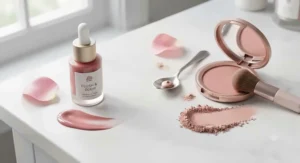
Sheer liquid blush drops and cream blush solve a similar problem — avoiding the flat, powdery look — but they arrive at it differently, and the distinction matters more than marketing copy usually admits. Drops are typically water- or oil-based, thinner in viscosity, and built to be diluted or layered gradually, which makes them ideal for a barely-there, watercolor-style wash of color. Cream blush, by contrast, is thicker and more opaque out of the tube, giving faster payoff but less room to sheer out without deliberately thinning it with a damp sponge or moisturizer first.
Here’s what to weigh: if your goal is a truly natural, “did I even apply blush” look, sheer drops give you finer control over how little color you’re adding, since a single drop can be split across both cheeks and built up slowly. If you’re layering blush over a fuller-coverage foundation and need the color to actually show through, cream blush’s higher pigment density often reads more reliably in photos. Reviewers who’ve tried both formats consistently note that drops require more patience during application but reward that patience with a finish that looks less like makeup and more like genuine skin tone — which is precisely the effect most people searching for a natural flush are chasing in the first place.
Dropper Applicators vs Doe-Foot Wands: Does the Applicator Actually Matter?
It’s worth being direct about something the marketing around “blush drops” tends to blur: most products branded as liquid blush “drops” on the market, including several in this roundup, actually use a doe-foot wand rather than a true glass-pipette dropper. Rare Beauty, e.l.f., and NARS all rely on doe-foot applicators, which dispense product via a small sponge-tipped stick rather than a squeeze bulb and pipette. Fae Beauty’s Lush Blush Serum is the clearest true-dropper example here, and Youthforia’s applicator sits somewhere in between, styled like a dropper but functioning more like a doe-foot in practice.
| Applicator Type | Products Using It | Control Level | Speed |
|---|---|---|---|
| Doe-foot wand | Rare Beauty, e.l.f., NARS, Milani | Moderate | Fast |
| True glass dropper | Fae Beauty | High | Slower |
| Dropper-style hybrid | Youthforia, Kosas (wand) | High | Moderate |
The analysis here is straightforward: doe-foot wands dispense a semi-fixed amount of product per swipe, which is more forgiving for beginners but offers less fine-tuned control over exact quantity. True droppers require you to actively measure out a drop and often apply it to your fingertips or the back of your hand first, adding a step but giving you precision that’s genuinely useful once you know your ideal amount. Neither format is objectively better — the doe-foot favors speed and consistency, while the true dropper favors control and gradual buildability, so the right choice depends on whether you value a faster routine or finer-grained color payoff more.
✨ Don’t Miss These Exclusive Deals!
🔍 Take your cheek makeup routine to the next level with these carefully selected liquid blush picks. Click on any highlighted item to check current pricing and availability. These formulas will help you create an authentic, skin-like flush you’ll actually want to wear every day!
Achieving a Skin-Like Liquid Blush Finish: Common Mistakes
A genuinely skin-like liquid blush finish is less about the product and more about what happens underneath it, and most of the mistakes that undermine that finish happen before the blush even touches your face. Applying liquid blush over a heavy, mattifying powder is the most common one — powder creates a physical barrier that prevents the liquid pigment from melting in, so it ends up sitting on top and looking patchy rather than diffused. The fix is sequencing: apply liquid blush before setting powder, or skip powder on the cheek area entirely if a dewy finish is the goal.
The second frequent mistake is applying too much product in one pass, since liquid formulas deepen as they dry and oxidize on skin. What reads as a soft flush during application often looks noticeably more saturated ten minutes later, so building in thin layers rather than committing to a heavy first swipe protects against overcorrection. The third mistake is blending too slowly — pigmented liquid formulas set fast, particularly budget options like e.l.f.’s, and hesitating mid-blend leaves visible edges that read as makeup rather than natural color. Finally, skipping a moisturized base is an underrated error: dry or flaky skin grabs pigment unevenly, creating patchiness that no amount of blending technique can fully correct after the fact.
What to Expect: Real-World Performance
On paper, most liquid blush formulas promise a lightweight, dewy, buildable finish that lasts all day — but real-world wear varies more than spec sheets suggest. Budget formulas like e.l.f.’s tend to set faster and can require a slightly more assertive blending technique, while prestige options like NARS and Rare Beauty generally offer a longer working window before they grip skin, making them more forgiving for slower or more deliberate application styles. Humidity and oil production both affect longevity meaningfully: on oilier skin types, dewy-finish liquid blushes may need a light dusting of translucent powder around the four-to-six-hour mark to avoid sliding, while matte-leaning formulas tend to hold their placement longer without touch-ups.
Temperature matters too, more than most buyers expect. In warmer months, thinner formulas like Fae Beauty’s dropper serum and Youthforia’s oil-based blush glide on more easily but can also migrate slightly if applied too heavily near hairlines or jaw contours. In cooler, drier conditions, the same formulas may need a touch more moisturizer underneath to prevent patchy grip. None of this means any of these seven products underperform — it means real-world results depend as much on your environment and skin type as on the formula itself, which is worth factoring in before assuming a product that worked for a reviewer in a different climate will behave identically on your face.
Long-Term Cost & Maintenance
A single bottle of liquid blush, whether it’s a $7 e.l.f. tube or a $32 NARS one, typically lasts significantly longer than most buyers expect, since liquid formulas are dispensed in tiny amounts per application. At roughly one to two dots per cheek per use, a 4-7 mL bottle used daily can realistically last four to six months before running dry, which changes the cost-per-use math considerably. Spread across that timeline, even the priciest option on this list works out to well under a dollar per application, while the budget picks approach pocket-change territory.
The real long-term cost driver isn’t the sticker price — it’s whether the applicator dries out before the product runs out. Doe-foot wands are more prone to clogging or drying at the tip if caps aren’t sealed tightly after each use, effectively shortening a bottle’s usable life regardless of how much liquid remains inside. True dropper bottles like Fae Beauty’s tend to avoid this issue since the pipette seals more completely, which is a genuine, if underappreciated, maintenance advantage. Factoring in replacement frequency alongside sticker price gives a more honest total-cost-of-ownership picture than price tag comparisons alone.
Safety, Ingredients & Sensitive Skin Considerations
Liquid blush formulas sold in the United States fall under the FDA’s cosmetics regulations, which require accurate ingredient labeling but, notably, do not require pre-market approval the way drugs do — meaning brands are responsible for substantiating their own safety claims. For sensitive or reactive skin, patch-testing any new liquid blush on the inner forearm for twenty-four hours before applying it to your face is a reasonable precaution, particularly with fragrance-containing formulas or newer, less-established brands where the track record of tolerability is thinner.
Several products in this roundup lean on hydrating actives like hyaluronic acid, which has a well-documented safety profile and is broadly considered non-irritating even for sensitive skin types, according to Cleveland Clinic’s overview of the ingredient. That said, “clean” or “skincare-infused” marketing language isn’t a regulatory category, so it’s worth reading full ingredient lists rather than relying on front-of-bottle claims if you’re managing eczema, rosacea, or another reactive skin condition. Anyone with a diagnosed skin condition should treat this section as general orientation rather than personalized guidance, and check with a dermatologist before introducing a new formula into an already-managed routine.
Liquid Blush for Different Skin Types & Ages
Younger or acne-prone skin generally does better with lighter, oil-free liquid formulas like e.l.f. Camo or Milani Cheek Kiss, since heavier, oil-based options can feel occlusive over active breakouts or textured skin. Mature skin, which tends to be drier and can show texture more visibly under color that sits on the surface, is often better served by liquid formulas over powder altogether — the dewy finish reflects light in a way that softens rather than emphasizes fine lines, and hydrating ingredients like those in Fae Beauty’s serum-style formula can double as a light layer of skin-loving actives.
Combination and oily skin types benefit most from matte-leaning liquid formulas like Rare Beauty’s matte shade options, which resist the midday slide that dewier finishes can suffer on oilier T-zones and cheeks. Regardless of skin type, the underlying principle from Pillar 1 analysis holds across every age and texture: liquid blush works with your skin’s actual surface rather than against it, which is why it consistently outperforms powder for anyone whose priority is looking like they have great skin rather than looking like they’re wearing blush.
Features That Actually Matter (And Those That Don’t)
Marketing copy for liquid blush loves to lean on buzzwords — “skin-like,” “second-skin,” “glass skin finish” — and some of that language reflects genuine formula differences while some of it is interchangeable branding regardless of what’s actually in the bottle. What actually matters: pigment concentration relative to price (how far a single bottle stretches), applicator design (doe-foot versus dropper, and how that matches your technique preference), and finish type (dewy versus matte, matched honestly to your skin’s oil production). These three factors predict real-world satisfaction far more reliably than shade count or packaging aesthetics.
What matters less than the marketing suggests: exact ingredient buzzwords like “serum” or “essence” framing, since as Wikipedia’s overview of rouge cosmetics notes, cheek color in various liquid, cream, and powder forms has existed for centuries under different branding without fundamentally different mechanisms of action. Shade count is another overrated metric — a smaller, well-curated range like NARS’s often serves buyers better than an overwhelming sixteen-shade lineup where half the options are redundant. Focus your comparison shopping on the factors that actually change your daily experience, not the ones that just sound impressive on a product page.

FAQ
❓ Is liquid blush better than powder for a natural look?
❓ How do you apply liquid blush without it looking patchy?
❓ Can you use liquid blush over foundation?
❓ Do dropper applicators waste more product than doe-foot wands?
❓ What's the difference between liquid blush and blush oil?
Conclusion
A genuinely natural flush isn’t about finding one “best” liquid blush — it’s about matching formula, applicator, and finish to your actual skin and daily routine, which is exactly why this roundup spans budget doe-foot wands, prestige squeeze tubes, and a true dropper serum rather than crowning a single winner. e.l.f. Camo Liquid Blush proves budget doesn’t mean compromise, NARS Liquid Blush earns its price through pigment and radiance, and Fae Beauty Lush Blush Serum shows what a true dropper applicator adds when precision matters more than speed. Rare Beauty Soft Pinch, Youthforia BYO Blush, Milani Cheek Kiss, and Kosas Blush Wet each solve a slightly different version of the same problem, whether that’s shade-matching anxiety, travel convenience, or editorial-level placement control.
Whichever bottle you land on, the core technique matters more than the label: dot sparingly, blend fast, build gradually, and let the formula do the work of looking like skin rather than makeup. That’s the whole promise of liquid blush for a natural flush, and with the right product-to-routine match, it’s a promise these seven formulas genuinely deliver on.
Recommended for You
- Stick Blush for Beginners: 7 Foolproof Picks for 2026
- 7 Best long wear blush for oily skin Picks That Actually Survive 2026
- Cream Blush vs Powder Blush for Dry Skin: 7 Picks for 2026
Disclaimer: This article contains affiliate links. As an Amazon Associate, I earn from qualifying purchases. If you purchase products through these links, we may earn a small commission at no additional cost to you.
✨ Found this helpful? Share it with your friends! 💬🤗
