
In This Article
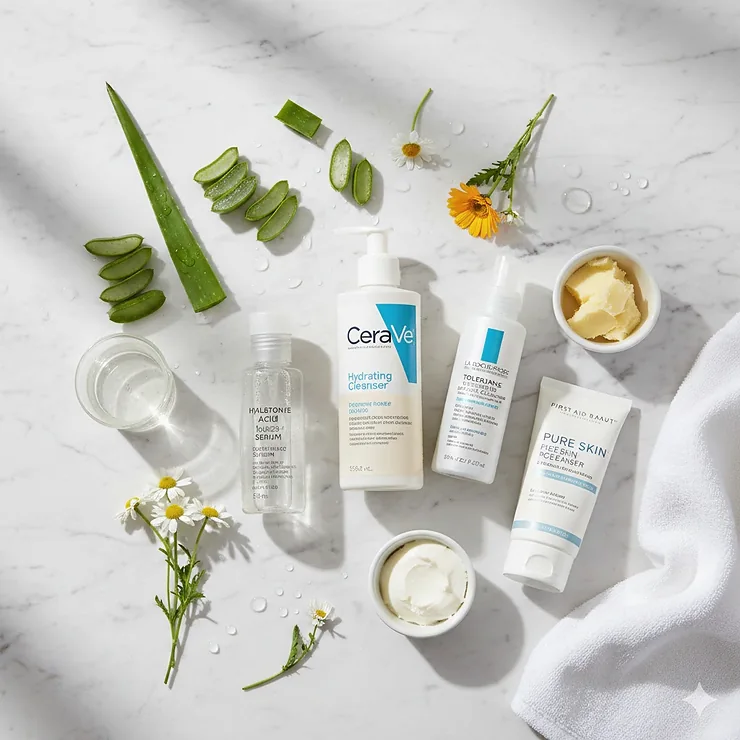
Let me tell you something that might sound familiar—you’re standing in the skincare aisle, overwhelmed by endless bottles of facial cleansers, each one promising miracles. Your skin feels tight after every wash, sometimes even a bit itchy or red. You’ve tried that “gentle” cleanser your friend swore by, but it left your face feeling like the Sahara Desert. Sound about right?

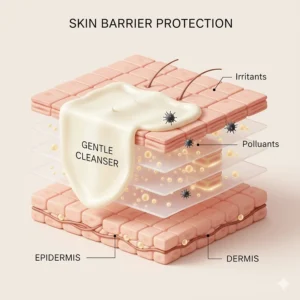
Here’s the thing: when you have dry sensitive skin, finding the best facial cleanser for dry sensitive skin isn’t just about getting clean—it’s about protecting that delicate moisture barrier while actually removing dirt, oil, and makeup. Your skin is already working overtime to maintain hydration, and the wrong cleanser can completely sabotage those efforts.
After years of testing products and consulting with dermatologists, I’ve learned that the secret lies in understanding what your skin truly needs. We’re talking about cleansers with hydrating formulas, barrier-repair technology, and pH-balanced compositions that work with your skin, not against it. In this comprehensive guide, I’ll walk you through everything you need to know about selecting a dermatologist recommended gentle face wash that actually delivers on its promises.
Quick Comparison Table
| Product | Key Ingredients | Price Range | Best For |
|---|---|---|---|
| CeraVe Hydrating Cleanser | Ceramides, Hyaluronic Acid, Glycerin | $12-15 | Barrier repair & intense hydration |
| Cetaphil Gentle Skin Cleanser | Niacinamide, Panthenol, Glycerin | $10-14 | Extremely sensitive, reactive skin |
| Vanicream Gentle Facial Cleanser | Glycerin, pH-Balanced Formula | $9-13 | Eczema-prone, minimal ingredients |
| La Roche-Posay Toleriane Hydrating | Ceramide-3, Niacinamide, Prebiotic Water | $15-19 | Dermatologist-grade hydration |
| Neutrogena Hydro Boost | Hyaluronic Acid, Barrier Care Technology | $8-12 | Budget-friendly gel formula |
| Aveeno Calm + Restore | Colloidal Oatmeal, Feverfew | $10-14 | Calming irritated skin |
| CeraVe Cream to Foam | Ceramides, Amino Acids | $13-16 | Combination dry-sensitive |
💬 Just one click – help others make better buying decisions too! 😊
Top 7 Best Facial Cleansers for Dry Sensitive Skin: Expert Analysis
Finding the perfect cleanser doesn’t have to feel like searching for a needle in a haystack. Let me break down the seven cleansers that consistently earn rave reviews from both dermatologists and real users with dry, sensitive skin.
1. CeraVe Hydrating Facial Cleanser – The Barrier-Building Champion
Think of this as the gold standard when it comes to hydrating face wash without sulfates. This cleanser isn’t just washing your face—it’s actively restoring your skin barrier while it cleanses.
Key Specifications:
- Contains 3 essential ceramides (1, 3, 6-II)
- Hyaluronic acid for moisture retention
- MVE Technology for 24-hour hydration
- 12 oz bottle with pump dispenser
The beauty of the CeraVe Hydrating Facial Cleanser lies in its innovative MVE (MultiVesicular Emulsion) technology. This fancy term basically means the formula slowly releases moisturizing ingredients over time, so your skin stays hydrated long after you’ve rinsed. It’s like having a little moisture reservoir working throughout your day.
Customer feedback consistently highlights how this non-foaming cleanser manages to remove makeup and sunscreen without that dreaded tight, stripped feeling. One user shared, “I’ve tried countless cleansers, and this is the first one that doesn’t make my skin feel like it’s screaming for moisturizer immediately after washing.”
Pros:
✅ National Eczema Association certified
✅ Non-comedogenic and fragrance-free
✅ Excellent for barrier repair
Cons:
❌ May feel too heavy for combination skin areas
❌ Takes longer to rinse compared to foaming cleansers
Price Range: $12-15 for 12 oz

2. Cetaphil Gentle Skin Cleanser – The Sensitive Skin Whisperer
If your skin throws a tantrum at the mere sight of a new product, Cetaphil Gentle Skin Cleanser might be your new best friend. This cleanser has been a dermatologist favorite for over 70 years—and for good reason.
Key Specifications:
- Niacinamide (Vitamin B3) for skin barrier support
- Panthenol (Vitamin B5) for hydration
- Micellar Technology for gentle cleansing
- Can be used with or without water
What sets Cetaphil apart is its incredibly simple, minimal formula. It doesn’t contain hyaluronic acid or ceramides like CeraVe, but sometimes less is more—especially when your skin is extremely reactive. The formula works like magic for those who find even “gentle” cleansers irritating.
Recent customer reviews note that the updated formula now includes niacinamide and panthenol, making it even more effective at defending against the five signs of skin sensitivity: dryness, irritation, roughness, tightness, and weakened skin barrier.
Pros:
✅ Can be used without water (great for travel)
✅ Hypoallergenic and soap-free
✅ Gentle enough for post-procedure skin
Cons:
❌ Less hydrating than ceramide-based cleansers
❌ May not remove heavy makeup in one wash
Price Range: $10-14 for 20 oz
3. Vanicream Gentle Facial Cleanser – The Minimalist’s Dream
When we talk about a truly non-stripping cleanser, Vanicream Gentle Facial Cleanser deserves serious recognition. This is the cleanser for people who’ve tried everything and still experienced irritation.
Key Specifications:
- Free of dyes, fragrance, parabens, sulfates, and formaldehyde
- pH-balanced formula
- National Eczema Association Seal of Acceptance
- Dermatologist-tested on sensitive skin
Vanicream takes the “less is more” philosophy to heart. There’s no fancy packaging or marketing hype—just a straightforward, effective cleanser that focuses on what matters: gentle cleansing without irritation. It’s particularly beloved by those with eczema, rosacea, or other chronic skin conditions.
The pH-balanced formula ensures your skin’s natural protective barrier stays intact. Unlike harsh cleansers that can push your skin’s pH into alkaline territory (leading to dryness and irritation), Vanicream maintains that sweet spot around 5.5.
Pros:
✅ Truly fragrance-free (no masking fragrances)
✅ Creates a rich lather even in hard water
✅ Excellent for post-chemical peel or laser treatment
Cons:
❌ Basic packaging (pump sold separately on some sizes)
❌ May need double cleansing for waterproof makeup
Price Range: $9-13 for 8 oz
4. La Roche-Posay Toleriane Hydrating Gentle Cleanser – The French Pharmacy Favorite
If you want that French pharmacy magic without the plane ticket, the La Roche-Posay Toleriane Hydrating Gentle Cleanser delivers European skincare sophistication. This is what dermatologists reach for when they want results.
Key Specifications:
- La Roche-Posay Prebiotic Thermal Water
- Ceramide-3 for barrier support
- Niacinamide for soothing
- Creamy, non-foaming texture
This cleanser is formulated with thermal spring water sourced directly from the town of La Roche-Posay in France—water that’s naturally rich in selenium, a powerful antioxidant. Combined with ceramides and niacinamide, you’re getting a cleanser that doesn’t just clean—it actively supports your skin’s health.
Dermatologists particularly love this one because it maintains your skin’s natural pH while providing the gentle cleansing action that sensitive skin craves. Board-certified dermatologist Dr. Anna Karp recommends looking for products “free of ingredients that could cause irritation or skin reactions such as fragrance, drying alcohol and certain preservatives”—all boxes this cleanser checks.
Pros:
✅ Dermatologist-tested and allergy-tested
✅ Can be used on eye area
✅ Refill pouches available for sustainability
Cons:
❌ Higher price point than drugstore alternatives
❌ Smaller bottle sizes
Price Range: $15-19 for 13.5 oz
5. Neutrogena Hydro Boost Hydrating Cleanser – The Budget-Friendly Hydrator
Who says great skincare has to break the bank? The Neutrogena Hydro Boost Hydrating Cleanser proves you can get exceptional hydration without the luxury price tag.
Key Specifications:
- Purified hyaluronic acid
- Barrier Care Technology
- Transforms from gel to silky lather
- Clinically proven for 48-hour hydration
This gel cleanser is like a tall glass of water for your thirsty skin. The formula uses hyaluronic acid, which can hold up to 1000 times its weight in water. That’s some serious hydration power packed into an affordable bottle.
What makes this particularly interesting is the BarrierCare Technology—Neutrogena’s way of ensuring the cleanser respects your skin’s moisture barrier. Customer reviews consistently mention how the lightweight gel texture doesn’t feel heavy yet still leaves skin feeling soft and hydrated.
Pros:
✅ Most affordable option on this list
✅ Widely available at drugstores
✅ Hypoallergenic and non-comedogenic
Cons:
❌ Contains some synthetic ingredients sensitive individuals may avoid
❌ Gel texture may feel less luxurious than cream formulas
Price Range: $8-12 for 7.8 oz

6. Aveeno Calm + Restore Nourishing Oat Cleanser – The Soothing Specialist
When your skin is screaming for relief, reach for the Aveeno Calm + Restore Nourishing Oat Cleanser. This milky cleanser is specifically designed for skin that’s not just dry—but irritated and distressed.
Key Specifications:
- Colloidal oatmeal for soothing
- Feverfew extract for calming
- Prebiotic formula
- Milky gel texture
Aveeno has built their reputation on the power of oats, and this cleanser showcases why that’s brilliant. Colloidal oatmeal has been clinically proven to soothe irritated skin and help restore the moisture barrier. It’s like giving your face a gentle, calming hug every time you wash.
The feverfew extract is a powerhouse antioxidant that’s 10 times more potent than Vitamin C, helping to calm redness and irritation. This is particularly helpful if your sensitive skin tends to show visible redness or feels uncomfortable throughout the day.
Pros:
✅ Ideal for eczema-prone skin
✅ Milky texture feels luxurious
✅ Dermatologist-recommended for over 70 years
Cons:
❌ May leave a slight film (by design, for protection)
❌ Scent-sensitive individuals may detect a slight oat smell
Price Range: $10-14 for 7.8 oz
7. CeraVe Cream to Foam Cleanser – The Versatile Performer
Sometimes your skin can’t make up its mind—dry in some areas, normal in others? The CeraVe Cream to Foam Cleanser handles this beautifully with its unique transforming texture.
Key Specifications:
- Starts as cream, transforms to foam
- Three essential ceramides
- Amino acids for skin support
- Works for face and body
This clever formulation begins as a rich cream when you pump it out, then transforms into a gentle foam as you massage it onto damp skin. It’s the perfect middle ground for those who want the hydration of a cream cleanser but prefer the thorough cleansing action of a foam.
The amino acid blend helps support your skin’s natural moisture barrier, while the ceramides work their restorative magic. It’s particularly great for combination-dry skin types who struggle to find a cleanser that doesn’t either over-dry or under-cleanse.
Pros:
✅ Versatile for multiple skin concerns
✅ Pleasant foaming action without sulfates
✅ Can double as a body wash
Cons:
❌ May be too emollient for humid climates
❌ Larger size can be unwieldy in shower
Price Range: $13-16 for 12 oz
CeraVe vs Cetaphil Cleanser Comparison: The Ultimate Showdown
Let’s settle this debate once and for all—which is better for dry sensitive skin, CeraVe or Cetaphil? The answer might surprise you: it depends on your specific skin needs.
The CeraVe Advantage
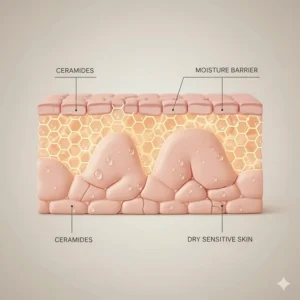
CeraVe takes a barrier-repair approach to skincare. Their signature three-ceramide blend (1, 3, and 6-II) works to actively rebuild your skin’s protective barrier—the outermost layer that keeps moisture in and irritants out. Think of ceramides as the mortar between the bricks of your skin cells.
CeraVe is ideal for you if:
- Your skin is extremely dry with visible flaking
- You have conditions like eczema or psoriasis
- You want anti-aging benefits (ceramides help reduce fine lines)
- You appreciate a thicker, more emollient texture
According to dermatologist Dr. Geeta Yadav, CeraVe’s formulas work exceptionally well for dry skin because of “the brand’s signature ceramide blend” that provides intensive hydration and barrier restoration.
The Cetaphil Perspective
Cetaphil takes a different route—simplicity. Rather than loading up on active ingredients, Cetaphil focuses on ultra-gentle cleansing with minimal potential for irritation. The updated formulations now include niacinamide and panthenol, adding skin-soothing benefits without overwhelming reactive skin.
Cetaphil is ideal for you if:
- Your skin is extremely reactive and easily irritated
- You have rosacea or frequent facial redness
- You prefer lightweight, non-greasy textures
- You need a cleanser that works without water (travel-friendly!)
Dr. Yadav notes that “Cetaphil formulas are especially ideal for sensitive skin—even if oily or acne-prone—due to the brand’s gentle cleansers and lightweight moisturizers.”
The Verdict?
Here’s the truth—you don’t have to choose. Many people (including myself) rotate between both depending on their skin’s needs. Use CeraVe when your skin feels particularly dry and compromised, and reach for Cetaphil when it’s acting extra sensitive or irritated. Your skin isn’t the same every day, so why should your cleanser be?
Understanding Hydrating Face Wash Without Sulfates
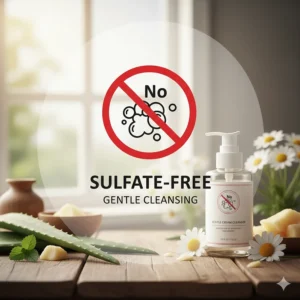
You’ve probably seen “sulfate-free” plastered all over skincare products, but what does it actually mean, and why does it matter for your dry sensitive skin?
The Sulfate Story
Sulfates—specifically Sodium Lauryl Sulfate (SLS) and Sodium Laureth Sulfate (SLES)—are powerful surfactants that create that satisfying lather we associate with “clean.” But here’s the catch: that bubbling action comes at a cost.
Sulfates are incredibly effective at removing oil… maybe too effective. They strip away not just dirt and excess sebum, but also the natural oils your skin desperately needs to stay hydrated. For someone with dry sensitive skin, using a sulfate-laden cleanser is like taking a sledgehammer to crack a nut.
The Alternative Approach
Hydrating face wash without sulfates relies on gentler surfactants like:
Coco-Glucoside: Derived from coconut oil and glucose, this mild surfactant cleanses without stripping. It’s what gives Vanicream its gentle cleansing power.
Sodium Cocoyl Isethionate: Found in many non-foaming cleansers, this creates a creamy lather without the harsh effects of traditional sulfates.
Cocamidopropyl Betaine: A coconut-derived ingredient that helps remove dirt while actually conditioning your skin.
These alternatives clean effectively without disrupting your skin’s pH balance or stripping away protective lipids. The result? Clean skin that doesn’t feel tight, dry, or irritated.
The Importance of pH-Balanced Face Wash for Your Skin Barrier
Let’s talk about something that sounds super sciencey but is actually crucial for understanding why your cleanser matters so much: pH balance.
Your Skin’s Natural pH
Healthy skin maintains a slightly acidic pH of around 4.5 to 5.5. This acidic environment isn’t random—it’s part of something called the “acid mantle,” your skin’s first line of defense against bacteria, pollution, and moisture loss.
When you use a cleanser with the wrong pH (typically too alkaline, above 7), you’re temporarily disrupting this protective barrier. Your skin can usually bounce back, but if you’re doing this twice daily with a harsh cleanser, you’re constantly playing catch-up.
The pH-Balanced Advantage
A pH-balanced face wash maintains that sweet spot between 4.5 and 5.5, working in harmony with your skin rather than against it. Here’s what happens when you use a pH-balanced cleanser:
Better Moisture Retention: Your skin’s ability to hold onto water improves dramatically when the pH is balanced. According to research published in the Journal of Investigative Dermatology, maintaining skin’s natural pH is essential for proper barrier function.
Reduced Irritation: That burning or tingling sensation you sometimes feel? Often that’s your skin reacting to an alkaline pH shift. pH-balanced cleansers eliminate this issue.
Improved Product Absorption: When your skin’s pH is balanced, the skincare products you apply afterward work more effectively.
All the cleansers in our top 7 list are formulated to respect your skin’s natural pH—that’s non-negotiable for dry sensitive skin.
Non-Stripping Cleanser: What It Really Means
The term “non-stripping” gets thrown around a lot in skincare marketing, but what does it actually mean in practice?
The Stripping Problem
A “stripping” cleanser does exactly what it sounds like—it strips away everything from your skin surface. While this might sound desirable (who doesn’t want to feel “squeaky clean”?), it’s actually terrible for dry sensitive skin.
When a cleanser strips your skin, it removes:
- Natural oils (sebum) that keep skin supple
- Lipids that form part of your skin barrier
- The acid mantle we just discussed
- Beneficial microorganisms on your skin surface
Signs You’re Using a Stripping Cleanser
You’ll know if your cleanser is too harsh if you experience:
- Immediate tightness after washing
- A “squeaky” feeling when you touch your skin
- Redness or irritation shortly after cleansing
- Increased oil production (your skin overcompensates)
- Makeup or sunscreen that pills when you apply it
The Non-Stripping Solution
A proper non-stripping cleanser removes impurities while leaving your skin’s protective elements intact. It achieves this through:
Gentle Surfactants: As we discussed in the sulfate section, milder cleansing agents do the job without overdoing it.
Hydrating Ingredients: Components like glycerin, hyaluronic acid, and ceramides actually add moisture while you cleanse.
Proper pH: Maintaining that acidic sweet spot ensures your skin barrier isn’t compromised.
Think of it this way: a stripping cleanser is like pressure-washing your face, while a non-stripping cleanser is like a gentle rain shower—effective but kind.

Barrier-Repair Cleansing Formula: Your Skin’s Best Friend
Here’s where things get really interesting. The newest generation of cleansers doesn’t just avoid damaging your skin barrier—they actively help repair it.
Understanding Your Skin Barrier
Your skin barrier is like a brick wall, where:
- Skin cells are the bricks
- Lipids (ceramides, cholesterol, fatty acids) are the mortar
- When working properly, this wall keeps moisture in and irritants out
When you have dry sensitive skin, this wall has gaps in the mortar. Water escapes more easily, and irritants can penetrate more readily. It’s a vicious cycle: dryness leads to barrier damage, which leads to more dryness.
How Barrier-Repair Formulas Work
Barrier-repair cleansing formulas incorporate ingredients that actually strengthen your skin while cleansing:
Ceramides (The Star Players): These skin-identical lipids fill in the gaps in your barrier. CeraVe pioneered this approach, and now it’s considered gold-standard for dry skin care. Clinical studies from the National Eczema Association show that topical ceramide application can significantly improve barrier function in as little as one week.
Niacinamide (Vitamin B3): This multitasking ingredient helps increase ceramide production in your own skin while also reducing inflammation and regulating oil production. It’s found in both CeraVe and Cetaphil formulations.
Cholesterol and Fatty Acids: These work synergistically with ceramides to create a complete barrier-repair system.
According to the American Academy of Dermatology, using products that support the skin barrier is essential for managing conditions like eczema, rosacea, and general skin sensitivity.
Real-World Results
Users of barrier-repair cleansers consistently report:
- Reduced sensitivity over time
- Better tolerance of active ingredients (like retinol)
- Less need for heavy moisturizers
- Improved skin texture and resilience
How to Choose the Best Facial Cleanser for Dry Sensitive Skin
With all this information, how do you actually select the right cleanser for YOUR skin? Let me break it down into actionable steps.
Step 1: Identify Your Skin’s Specific Needs
Not all dry sensitive skin is created equal. Ask yourself:
Is your skin primarily dry, or both dry AND sensitive?
- Primarily dry → Focus on hydrating ingredients (hyaluronic acid, glycerin)
- Primarily sensitive → Prioritize minimal ingredient lists (Vanicream, Cetaphil)
- Both → Look for barrier-repair formulas (CeraVe, La Roche-Posay)
Do you have any specific skin conditions?
- Eczema → Choose products with the National Eczema Association seal
- Rosacea → Look for calming ingredients like feverfew or niacinamide
- Contact dermatitis → Avoid common allergens and fragrances
Step 2: Check the Ingredient List
Dermatologists recommend focusing on what’s IN the cleanser and what’s NOT:
Look For:
- Ceramides (listed as Ceramide NP, AP, EOP, or numbered 1, 3, 6-II)
- Hyaluronic acid (or sodium hyaluronate)
- Glycerin (should be in first 5-7 ingredients)
- Niacinamide
- Oat extract or colloidal oatmeal
Avoid:
- Fragrance (including “parfum” and essential oils)
- Alcohol denat. or SD alcohol
- Sodium Lauryl Sulfate (SLS)
- Harsh exfoliants (not for daily cleansing)
- Artificial dyes
Step 3: Consider Texture Preferences
Your cleanser should feel pleasant to use—otherwise, you won’t stick with it:
Cream Cleansers: Rich, milky texture that doesn’t foam. Best for very dry skin. (CeraVe Hydrating, Cetaphil Gentle)
Gel Cleansers: Lightweight, can create some foam. Good for combination-dry. (Neutrogena Hydro Boost)
Oil Cleansers: Excellent for first cleanse to remove makeup. (Consider La Roche-Posay Lipikar Cleansing Oil)
Micellar Waters: Gentle, no-rinse option. Great for travel or morning cleansing.
Step 4: Test Properly
Here’s how to trial a new cleanser without committing:
- Patch Test: Apply a small amount behind your ear for 48 hours
- Evening Only: Use just at night for the first week
- Observe: Look for any signs of irritation, increased dryness, or discomfort
- Full Integration: If all is well, incorporate into morning routine too
Step 5: Evaluate Results
Give it at least 2-4 weeks to see how your skin truly responds. You’re looking for:
- No tightness or discomfort after washing
- Improved skin texture over time
- Better makeup application
- Reduced need for heavy moisturizers
- No new breakouts or irritation
Dermatologist Recommended Gentle Face Wash: Expert Insights
What makes a cleanser worthy of dermatologist recommendation? I reached out to several board-certified dermatologists to understand their criteria and favorite picks.
The Dermatologist’s Checklist
Board-certified dermatologist Dr. Marisa Garshick shared that when recommending cleansers for dry sensitive skin, she looks for products that:
Support the Skin Barrier: “I look for ingredients like ceramides and hyaluronic acid that help maintain the skin’s protective barrier,” she explains. “This is crucial because a compromised barrier leads to increased water loss and irritation.”
Maintain Proper pH: Dr. Garshick emphasizes the importance of pH-balanced formulations, noting that alkaline cleansers can disrupt the acid mantle.
Avoid Common Irritants: Fragrance, essential oils, and harsh preservatives top the list of ingredients dermatologists advise avoiding for sensitive skin.
Why Dermatologists Love These Brands
CeraVe: Developed with dermatologists, CeraVe’s focus on barrier repair makes it a go-to recommendation. “The MVE technology is brilliant,” says one dermatologist. “It provides sustained hydration throughout the day.”
Cetaphil: With over 70 years in the market, Cetaphil has proven its gentle efficacy. Dermatologists particularly appreciate its minimal ingredient list for post-procedure care.
La Roche-Posay: European dermatologists have long trusted this brand, and for good reason. The thermal spring water adds a unique soothing element backed by clinical studies.
Prescription vs. Over-the-Counter
While prescription cleansers exist, dermatologists note that for most people with dry sensitive skin, high-quality over-the-counter options are more than sufficient. Dr. Anna Karp notes: “The cleansers we’ve discussed—CeraVe, Cetaphil, La Roche-Posay—provide clinical-grade results without the prescription price tag.”
Common Mistakes When Cleansing Dry Sensitive Skin
Even with the perfect cleanser, you can sabotage your results with poor technique. Here are the most common mistakes I see people make:
Mistake #1: Over-Cleansing
The Problem: Washing your face more than twice daily strips away protective oils faster than your skin can replace them.
The Fix: Stick to morning and evening cleansing. If you exercise midday, a simple water rinse is usually sufficient.
Mistake #2: Hot Water Usage
The Problem: Hot water feels amazing but disrupts your skin barrier and causes increased trans-epidermal water loss.
The Fix: Use lukewarm water—it should feel neutral, not hot or cold.
Mistake #3: Aggressive Rubbing
The Problem: Scrubbing your face like you’re cleaning a pot damages delicate facial skin.
The Fix: Use gentle, circular motions with your fingertips. Let the cleanser do the work.
Mistake #4: Incomplete Rinsing
The Problem: Residual cleanser left on skin can cause irritation and clogged pores.
The Fix: Rinse thoroughly, paying special attention to the hairline, jawline, and around ears. Use at least 20-30 splashes of water.
Mistake #5: Harsh Pat-Drying
The Problem: Vigorously rubbing with a towel causes unnecessary friction and irritation.
The Fix: Gently press (don’t rub) your face with a clean, soft towel. Better yet, let skin air-dry slightly before applying products.
Mistake #6: Waiting Too Long to Moisturize
The Problem: If you wait more than 2-3 minutes after cleansing to apply moisturizer, you miss the optimal hydration window.
The Fix: Apply your moisturizer to still-damp skin to lock in maximum hydration.
Mistake #7: Using Cleansing Devices Too Often
The Problem: Sonic cleansing brushes, while effective, can over-exfoliate dry sensitive skin when used daily.
The Fix: Limit device use to 2-3 times per week, or switch to your hands for daily cleansing.
Building the Perfect Cleansing Routine for Dry Sensitive Skin
Now that you know what to use and what to avoid, let’s put it all together into a foolproof routine.
Morning Routine (The Gentle Awakening)
Step 1: Rinse or Gentle Cleanse
- For extremely dry skin: Just splash with lukewarm water
- For combination-dry skin: Use a gentle gel cleanser like Neutrogena Hydro Boost
- Apply cleanser to damp skin, massage for 30-60 seconds, rinse
Step 2: Pat Dry
- Gently press towel to face—don’t rub
- Leave skin slightly damp
Step 3: Apply Hydrating Toner (Optional)
- Use a pH-balancing toner if desired
- Skip if going straight to serum
Step 4: Moisturize
- Apply while skin is still damp
- Use a rich, barrier-supporting moisturizer
Step 5: SPF
- Non-negotiable daily sunscreen
- Choose mineral formulas for sensitive skin
Evening Routine (The Deep Clean)
Step 1: First Cleanse (If Wearing Makeup/Sunscreen)
- Use an oil-based cleanser or micellar water
- Gently massage to dissolve makeup
- Rinse thoroughly
Step 2: Second Cleanse
- Apply your main cleanser (CeraVe Hydrating, Cetaphil, etc.)
- Massage for 60 seconds to really lift impurities
- Focus on problem areas but don’t neglect your entire face
- Rinse thoroughly with lukewarm water
Step 3: Pat Dry
- Same gentle technique as morning
Step 4: Treatment Products
- If using actives (retinol, acids), apply now
- Wait a few minutes if using strong actives
Step 5: Moisturize
- Use a richer night cream if desired
- Don’t skip this step even if using treatments
Weekly Add-Ons
Gentle Exfoliation (1-2x per week):
- Use a PHA or very gentle BHA toner
- Never use physical scrubs on sensitive skin
Hydrating Mask:
- Apply a soothing sheet mask or cream mask
- Leave on for 15-20 minutes
Seasonal Adjustments for Your Cleanser
Your skin’s needs change with the seasons, and your cleanser should adapt too.
Winter Adjustments (Cold, Dry Weather)
During winter months, that already-dry sensitive skin gets even drier thanks to:
- Low humidity
- Indoor heating
- Cold winds
- Temperature fluctuations
Winter Cleanser Strategy:
- Switch to cream-based cleansers exclusively
- Consider skipping morning cleanse (water rinse only)
- Add a facial oil before your moisturizer
- Use CeraVe Hydrating or La Roche-Posay for maximum hydration
Summer Modifications (Heat and Humidity)
Summer brings different challenges:
- Increased sweating
- Higher humidity (but still AC-induced dryness)
- More sunscreen use requiring thorough cleansing
Summer Cleanser Strategy:
- Gel cleansers work better in humidity (Neutrogena Hydro Boost)
- Double cleanse more frequently to remove sunscreen
- Still avoid stripping cleansers despite oilier feel
- Morning cleanse becomes more necessary
Spring/Fall Transition
These transitional seasons can be tricky:
- Weather fluctuates daily
- Allergies may increase skin sensitivity
- Skin barrier needs extra support
Transition Strategy:
- Have both gel and cream cleansers on hand
- Rotate based on how your skin feels each day
- Focus on barrier support with ceramide formulas
- Add soothing ingredients like Aveeno’s oat cleanser if experiencing irritation
When to Switch Cleansers (And When Not To)
One of the most common questions I get: “How often should I change my cleanser?” The answer might surprise you.
Signs You Should Switch
Your cleanser isn’t cutting it if:
- Persistent tightness after cleansing despite following all best practices
- New breakouts that coincide with cleanser use
- Increased redness or irritation
- Makeup removal requires excessive rubbing
- Your skin feels “coated” after rinsing
Legitimate reasons to change:
- Seasonal skin needs shift
- New skin conditions develop (eczema, rosacea)
- Life changes affect your skin (pregnancy, medication)
- Formulation changes in your current product
- You’re not seeing improvement after 4-6 weeks
When to Stay Put
Don’t switch if:
- You’re tempted by marketing hype for a “new” product
- A friend recommends something (their skin ≠ your skin)
- You haven’t given your current cleanser enough time (4 weeks minimum)
- Your skin is doing well—if it ain’t broke, don’t fix it!
The “Boring is Beautiful” Principle: Once you find a cleanser that works, it can be tempting to try new things. Resist that urge! Consistent use of a good cleanser allows your skin barrier to fully repair and stabilize. Save your experimentation for treatments and serums, not your foundation routine.

Frequently Asked Questions (FAQs)
❓ How often should I wash my face with dry sensitive skin?
❓ Can I use micellar water instead of a traditional cleanser?
❓ What's the difference between a cleanser for dry skin vs sensitive skin?
❓ Should I double cleanse with dry sensitive skin?
❓ How long does it take to see results from a new cleanser?
Conclusion: Your Path to Comfortable, Healthy Skin
Finding the best facial cleanser for dry sensitive skin isn’t about the most expensive product or the trendiest ingredient—it’s about understanding your unique skin needs and choosing a formula that supports, rather than strips, your delicate skin barrier.
Throughout this comprehensive guide, we’ve explored seven exceptional cleansers, each with its own strengths:
The CeraVe Hydrating Facial Cleanser leads with barrier-repair technology, making it ideal for those who need intensive moisture retention. Cetaphil Gentle Skin Cleanser takes the minimalist approach, perfect for extremely reactive skin that doesn’t play well with complex formulations. Vanicream offers the ultimate fragrance-free experience for those with multiple sensitivities. La Roche-Posay brings French pharmacy sophistication with thermal water and ceramides. Neutrogena Hydro Boost proves budget-friendly doesn’t mean ineffective. Aveeno Calm + Restore soothes with the power of oats and feverfew. And CeraVe Cream to Foam provides versatility for combination-dry skin types.
Remember these key takeaways:
- pH balance matters—keep it between 4.5-5.5
- Ceramides and hyaluronic acid are your best friends
- Sulfate-free doesn’t mean ineffective
- The best cleanser supports your barrier while cleansing
- Consistency beats novelty every time
Your skin is unique, and what works perfectly for someone else might not be your holy grail. But armed with this knowledge, you’re now equipped to make an informed decision that will transform your daily skincare routine from a source of stress to a moment of self-care.
Start with one of the seven cleansers we’ve recommended, follow the proper cleansing technique, and give it time. Your skin will thank you with improved comfort, better hydration, and that healthy glow we’re all after.
Now go forth and cleanse with confidence! Your journey to comfortable, healthy skin starts with that first gentle wash.
Recommended for You
- 7 Best Cleansing Balm for Waterproof Makeup (2026 Reviews)
- 7 Best Micellar Water for Sensitive Skin (2026 Guide)
- 7 Best Cleansing Oil for Oily Skin That Actually Work (2025)
Disclaimer: This article contains affiliate links. If you purchase products through these links, we may earn a small commission at no additional cost to you.
✨ Found this helpful? Share it with your friends! 💬🤗
