
In This Article
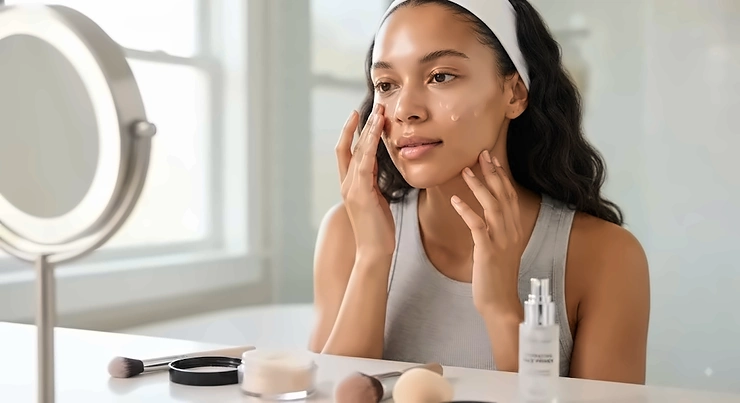
Somewhere between “just set your concealer” and “cake your whole face in powder and wait five minutes like it’s a science experiment,” baking became one of the most misunderstood techniques in makeup. Learning how to bake face with translucent powder is less about dumping product on your skin and more about timing, pressure, and knowing exactly where your concealer needs backup. Done right, it locks creasing-prone areas in place for hours. Done wrong, it turns your under-eyes into a powdery, cakey mess by lunchtime.
This guide breaks down the real technique — not the version that gets flattened into a 15-second video — along with seven real, currently available translucent and banana powders spanning drugstore to professional pricing. You’ll get honest analysis of what each formula actually does on skin, grounded in real specs and aggregated reviewer feedback, not invented hands-on claims. We’ll also dig into banana powder for baking, baking powder for under eyes, and how to adjust the whole approach when you’re wearing full coverage makeup. According to beauty editors who’ve tested dozens of formulas side by side, the right translucent shade should absorb oil effectively while avoiding the white cast and flashback that plague poorly formulated powders — which is exactly the balance we’re optimizing for here. You can see how editors weigh that trade-off in Vogue Scandinavia’s breakdown of top setting powders, a useful primer before you commit to a formula.
Quick Comparison Table: Best Translucent & Banana Powders at a Glance
| Powder | Best For | Type | Price Range |
|---|---|---|---|
| Laura Mercier Translucent Loose Setting Powder | Overall baking benchmark | Translucent, loose | High-$30s to high-$40s |
| Beauty Bakerie Flour Setting Powder | Purpose-built baking | Translucent, loose | Low-to-mid $20s |
| Morphe Bake & Set Loose Setting Powder | Best budget silica formula | Translucent, loose | $15-$20 |
| Anastasia Beverly Hills Loose Setting Powder Banana | Correcting under-eye darkness | Banana, loose | $30-$38 |
| Ben Nye Luxury Banana Powder | Professional artist kits | Banana, loose | $20-$30 |
The pattern worth noticing: banana shades cluster in the mid-to-premium range because color-correcting formulas require more precise pigment milling than a straight translucent base, while talc-free silica options like Morphe Bake & Set Loose Setting Powder undercut the category on price without gutting performance. If oil control is your only concern, you don’t need to spend $40. If you’re correcting under-eye darkness on deeper skin, the banana formulas earn their premium.
💬 Just one click — help others make better buying decisions too!😊
Top 7 Translucent & Banana Powders for Baking: Expert Analysis
1. Laura Mercier Translucent Loose Setting Powder — the industry benchmark for blurring
This is the powder most professional baking tutorials are built around, and for good reason. It’s finely milled with a talc-and-nylon base engineered to diffuse light rather than reflect it flatly, which is the entire trick behind that soft-focus effect. The formula is rated for up to 16 hours of wear, meaning it’s built to survive the “bake and forget” method where you apply it under the eyes and let it sit through the rest of your routine. Laura Mercier Translucent Loose Setting Powder works best for combination and oily skin types who need serious shine control without a powdery cast showing up in flash photos. Aggregated reviewer sentiment across major retailers consistently praises its smooth, non-cakey application, though a recurring theme in that same feedback is that the fine-milled texture can feel almost too light for very heavy bakers who prefer a denser payoff. At its price point, this is a splurge, but it’s also the powder most makeup artists reach for when a client needs all-day wear on camera.
Pros:
- ✅ Diffuses light for a genuine soft-focus finish
- ✅ Rated for up to 16 hours without reapplication
- ✅ Minimal flashback in flash photography
Cons:
- ❌ Premium price relative to drugstore alternatives
- ❌ Fine milling means less visible “payoff” for heavy bakers
Expect to pay in the high-$30s to high-$40s range depending on retailer; given the wear time and blurring performance, it’s a reasonable value for anyone who bakes daily rather than occasionally.
2. Beauty Bakerie Flour Setting Powder — built specifically for baking
Beauty Bakerie didn’t just add “baking” to its marketing copy — the brand’s entire identity is built around the technique, and the jar reflects it: a locking lid designed to survive being tapped onto a beauty sponge repeatedly without spilling. The formula is gluten-free, vegan, and finely milled to blur pores and soften texture while staying genuinely colorless on the skin. Beauty Bakerie Flour Setting Powder is aimed squarely at people who want a dedicated, no-guesswork baking product rather than a multi-purpose loose powder that happens to work for baking. Real customer reviews on the brand’s own site and third-party retailers repeatedly describe it as one of the most reliable pore-blurring powders they’ve tried, with several longtime users noting they repurchase it specifically for that blurring effect. The brand also recommends using a second, slightly deeper shade to bake concealer separately from foundation — a detail most competitors don’t bother mentioning.
Pros:
- ✅ Spill-resistant locking jar built for baking application
- ✅ Vegan, gluten-free formula with strong pore-blurring reviews
- ✅ Brand-specific baking guidance included
Cons:
- ❌ Smaller fill size (14g) means faster repurchasing
- ❌ Shade range narrower than some translucent competitors
At roughly the low-to-mid $20s, it sits comfortably in mid-range territory — a fair trade for a formula that’s genuinely optimized for the exact technique this article covers.
3. Morphe Bake & Set Loose Setting Powder — best budget silica formula
Talc-free setting powders used to mean sacrificing performance, but the silica base in this formula actually delivers real oil absorption instead of the parched, flat finish that talc-free alternatives were once known for. It’s designed to control shine for up to 24 hours and minimize the look of pores and fine lines, and the translucent shade is formulated to work across a wide range of skin tones without leaving the telltale white cast that plagues cheaper mineral powders. Morphe Bake & Set Loose Setting Powder is the pick for budget-conscious buyers who still want a formula that photographs cleanly under flash. Based on the spec comparison with pricier alternatives, the 24-hour oil-control claim is genuinely competitive with formulas costing twice as much — the silica-based science behind it isn’t unique to luxury brands. What most buyers overlook here is that talc-free doesn’t automatically mean gentler; silica-heavy powders can still feel drying if overapplied on dehydrated skin.
Pros:
- ✅ Talc-free silica base with genuine oil absorption
- ✅ 24-hour shine control at a drugstore-adjacent price
- ✅ Translucent shade avoids white cast across tones
Cons:
- ❌ Silica can feel drying on already-dehydrated skin
- ❌ Fewer independent long-term wear tests than legacy brands
Priced in the $15-$20 range, it’s arguably the best value-per-ounce entry on this list for anyone testing the baking technique for the first time.
4. NYX Professional Makeup HD Finishing Powder Banana — best drugstore banana pick
This pressed banana powder proves you don’t need a prestige price tag to get a usable color-correcting formula. The subtle yellow undertone is designed to counteract redness while the pore-minimizing, silky texture keeps the finish smooth rather than powdery. NYX Professional Makeup HD Finishing Powder Banana works especially well as an entry point for anyone curious about banana powder for baking but not ready to commit to a $30+ jar. Reviewers frequently point to its blendability and matte-but-not-flat finish as standout traits for the price bracket, and its pressed format makes it more travel-friendly than the loose powders on this list. The trade-off is milling: pressed powders are generally less finely ground than premium loose formulas, which can mean slightly more visible texture up close in daylight.
Pros:
- ✅ Genuine color-correcting yellow undertone at drugstore pricing
- ✅ Pressed format travels and touches up easily
- ✅ Reduces the appearance of fine lines and creasing
Cons:
- ❌ Coarser milling than premium loose powders
- ❌ Smaller compact means more frequent repurchasing for daily bakers
At under $10 to around $12, it’s the lowest financial commitment on this list — a smart way to test whether banana powder suits your undertone before investing further.
5. Anastasia Beverly Hills Loose Setting Powder Banana — best for correcting under-eye darkness
Available in four shade variations rather than a single one-size-fits-all yellow, this formula is built to handle the actual range of undertones people bring to the under-eye area — cool, neutral, and warm alike. The loose, finely milled texture is specifically marketed toward baking, meaning it’s engineered to sit on skin without settling into fine lines the way some heavier banana powders can. Anastasia Beverly Hills Loose Setting Powder Banana is the strongest pick on this list for anyone whose primary complaint is dark circles or shadowing rather than general oiliness. What the spec sheet won’t tell you, but reviewer patterns across retailers suggest, is that shade-matching matters more with banana powders than with true translucent ones — going too yellow on very fair skin can read orange under certain lighting, so patch-testing before a full bake is worth the extra five minutes.
Pros:
- ✅ Four shade options instead of one universal yellow
- ✅ Finely milled to resist settling into fine lines
- ✅ Purpose-marketed for baking, not just general setting
Cons:
- ❌ Shade-matching mistakes are more visible than with translucent powders
- ❌ Premium pricing relative to drugstore banana alternatives
Expect a $30-$38 range price point — a reasonable ask given the shade range solves a real problem that single-shade banana powders don’t address.
6. Ben Nye Luxury Banana Powder — pro artist’s baking staple
Ben Nye built its reputation supplying film, television, and theatrical makeup artists, and this banana powder reflects that professional-first design philosophy: it’s meant to be applied generously with a puff, pressed firmly into skin, and left to set under studio lighting and camera flash without breaking down. The yellow tint is specifically calibrated for correcting and brightening rather than simply mattifying, which distinguishes it from straight translucent formulas. Ben Nye Luxury Banana Powder is the choice for anyone who wants the same formula makeup artists actually use on set, not a consumer-marketed version of it. One pot reasonably lasts six to twelve months for personal use according to the brand, though professional artists working on multiple clients burn through it considerably faster. The honest trade-off is texture: this is a denser, more pigmented powder than most drugstore banana formulas, so a light hand matters more here than with almost anything else on this list.
Pros:
- ✅ Professional-grade formula used across film and TV makeup
- ✅ Strong correcting and brightening performance under flash
- ✅ Long-lasting jar for personal, non-professional use
Cons:
- ❌ Denser pigment requires a lighter application hand
- ❌ Packaging and branding skew toward professional kits, not casual use
Priced around $20-$30, it undercuts some prestige consumer brands while delivering formula quality built for far harsher lighting conditions than your bathroom mirror.
7. Danessa Myricks Beauty Evolution Setting Powder — most inclusive shade range
Founded by a working makeup artist, this line offers seven distinct shades with a consistently matte finish, addressing one of the most common complaints about setting powders: that “universal” often really means “designed for lighter skin.” Rather than a single translucent or banana option, the Evolution range lets deeper skin tones set makeup without fighting a formula calibrated for fair complexions. Danessa Myricks Beauty Evolution Setting Powder stands out for buyers who’ve struggled to find a baking powder that doesn’t gray out or ash on deeper tones — a persistent, well-documented issue with generic “translucent” formulas historically formulated primarily for lighter skin. Based on the spec comparison with single-shade competitors, the seven-shade range directly targets a gap the broader category has been slow to close. The honest caveat is that more shade options also means more room for a mismatch if you’re shopping online without swatching first.
Pros:
- ✅ Seven shades built for a genuinely inclusive range
- ✅ Consistent matte finish across formulas
- ✅ Founded by a working makeup artist with industry credibility
Cons:
- ❌ Requires more careful shade selection than one-size-fits-all powders
- ❌ Not available in every mass retailer, limiting in-store swatching
At roughly $28-$34, it’s positioned as a premium pick, but the shade-matching precision is the actual product you’re paying for, not just the powder itself.
How to Bake Your Face Step by Step: The Practical Usage Guide
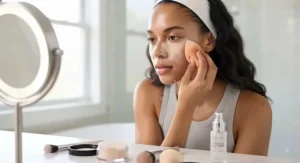
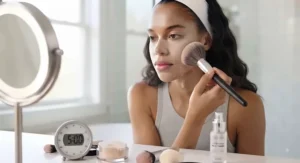
Baking technique makeup isn’t complicated once you understand the logic: you’re using a heavier-than-usual layer of loose powder to essentially “cook” your concealer or foundation in place using the heat and moisture of your own skin. Start by applying concealer as you normally would in your under-eye, chin, or T-zone areas — anywhere prone to creasing or oxidizing. Using a damp beauty sponge or a powder puff, press (don’t swipe) a generous layer of translucent or banana powder directly over that concealer. Let it sit untouched for three to five minutes while you finish the rest of your makeup — mascara, brows, whatever comes next in your routine. That waiting period is non-negotiable; it’s what allows your natural body heat to set the product. Finally, dust away the excess with a large, fluffy brush using downward strokes, which helps prevent settling into fine lines.
The most common first-30-days mistake is skipping the wait time entirely and brushing off the powder immediately, which defeats the entire purpose of baking. A close second is applying the technique to the whole face rather than targeted areas — full-face baking with a heavy layer can look flat and mask-like on camera, especially with flash. For maintenance, keep your baking brush separate from your foundation brush; cross-contamination with foundation residue builds up faster than most people expect and shortens the life of both the brush and the powder’s finish.
Real-World Scenarios: Who Should Actually Bake Their Face
Consider a college student commuting on public transit with an 8 a.m. class and an oily T-zone by 10 a.m. — for her, a light bake using Morphe Bake & Set Loose Setting Powder on the forehead and nose delivers hours of shine control without the cost of a premium jar she’ll refill constantly. Compare that to a bride sitting through a six-hour photography and reception timeline in humid summer weather; she needs the heavier-duty, camera-tested performance of Laura Mercier Translucent Loose Setting Powder, applied under the eyes and around the nose where sweat and tears are most likely to break down concealer first.
Then there’s the case of someone managing visible under-eye darkness on deeper skin tone who’s tried three translucent powders that all left a faint gray cast in photos. For her, switching to Danessa Myricks Beauty Evolution Setting Powder or Anastasia Beverly Hills Loose Setting Powder Banana solves a problem that more powder alone never would have — the issue was never quantity, it was undertone. Matching the product to the actual scenario, not just the price tag, is what separates a technique that works from one that just adds another layer of product.
Problem → Solution: Fixing Common Baking Mistakes
A cakey, powdery finish after baking almost always traces back to using too much product or too dry a sponge; the fix is switching to a slightly damp beauty sponge, which helps the powder adhere evenly instead of sitting on top of skin. Powder settling into fine lines during the wait period usually means the layer was applied too thick in one pass — thinner, buffed-in layers with Beauty Bakerie Flour Setting Powder or a similarly fine-milled formula tend to sit more naturally than one heavy dump of product. Flashback in photos, where the face looks unnaturally pale or ashy under flash, is a formulation issue more than a technique issue — swapping to a banana-toned option like NYX Professional Makeup HD Finishing Powder Banana typically resolves it, since warm undertones counteract the light-reflecting minerals responsible for flashback.
If your under-eye area still creases by midday despite baking, the concealer underneath is likely the real culprit — no amount of powder fixes a concealer formula that’s too heavy or too dry for your skin type. And if you’re noticing a chalky white cast specifically on deeper skin tones, that’s a strong signal to move away from a generic “universal” translucent powder entirely and toward a shade-inclusive line like Danessa Myricks Beauty Evolution Setting Powder.
Setting Under-Eye Brightener: The Under-Eye Baking Method
Baking powder for under eyes is arguably the single most popular use case for this entire technique, and it deserves its own approach separate from full-face application. The under-eye area is thinner-skinned and more prone to creasing than almost anywhere else on the face, which is exactly why a heavier, more deliberate powder application works there when it would look excessive elsewhere. Use a small, dense brush or the corner of a damp sponge to press powder into a triangle shape below the eye — covering the under-eye itself plus a bit of the upper cheek — rather than just a thin line directly under the lash line.
For setting an under-eye brightener specifically, banana-toned formulas like Anastasia Beverly Hills Loose Setting Powder Banana or Ben Nye Luxury Banana Powder tend to outperform straight translucent options, since the warm undertone actively counteracts the blue and purple pigments responsible for under-eye darkness rather than just sitting neutrally on top of it. Let the powder sit for the full five minutes before dusting off — under-eye skin moves constantly with talking and blinking, so it needs the longest set time of any area on the face.
Banana Powder for Baking vs Translucent Powder: Which Should You Use?
The distinction comes down to what problem you’re solving. Translucent powder is colorless by design, meaning it sets makeup without adding any pigment or corrective tone — it’s the safer, more universal choice when your only goal is oil control and longevity. Banana powder, on the other hand, carries a deliberate warm-yellow undertone specifically formulated to counteract redness and brighten areas like the under-eyes, and — like translucent powder — it’s sold in both loose and pressed formats.
| Factor | Translucent Powder | Banana Powder |
|---|---|---|
| Best For | General oil control, all-over setting | Under-eye brightening, redness correction |
| Undertone | None (colorless) | Warm yellow |
| Risk on Fair Skin | Low | Can read orange if mismatched |
| Example Pick | Laura Mercier Translucent Loose Setting Powder | Anastasia Beverly Hills Loose Setting Powder Banana |
Looking at the comparison above, translucent stays the safer default for most of the face, while banana earns its keep specifically under the eyes and around areas with visible redness or shadowing. A hybrid approach — translucent everywhere except a banana-toned product concentrated under the eyes — is genuinely how many makeup artists work, and it’s worth trying before committing fully to one or the other. For a deeper breakdown of undertone matching, Makeup.com’s banana powder guide offers useful additional context on how the yellow tint interacts with different skin tones.
Baking Powder for Full Coverage Makeup: When and How Much
Full coverage foundation and concealer already sit heavier on skin than sheer or medium formulas, which changes the baking calculus. With full coverage products, over-baking is the real risk — piling on more powder than a heavy foundation actually needs can push the whole look toward mask-like rather than flawless. The fix is restraint: use a slightly lighter dusting than you would with medium-coverage products, and lean on a finely milled formula like Beauty Bakerie Flour Setting Powder that blurs without adding visible texture on top of an already dense base.
Full coverage also means longer wear expectations, which is where a powder rated for extended hours, like Laura Mercier Translucent Loose Setting Powder‘s 16-hour claim, earns its price premium — a full-coverage look worn for a 10-hour event needs a setting product that won’t break down halfway through. The key adjustment: bake strategically at high-movement, high-oil zones (under eyes, nose, chin) rather than uniformly across a face already carrying a heavy product load.
Sculpted Makeup Finish: Using Baking to Contour and Define
Baking isn’t just a setting technique — used deliberately, it can sharpen a contour and create a more sculpted makeup finish than contour product alone typically achieves. Applying a slightly deeper-toned translucent or banana powder along the hollows of the cheeks, the sides of the nose, and the jawline, then letting it set before buffing away the excess, locks the shadow in place with far more staying power than cream contour worn unset. Danessa Myricks Beauty Evolution Setting Powder‘s deeper shade options work particularly well here, since they can double as a setting powder and a subtle contour-setter in one product.
The technique also works in reverse for highlighting: baking a lighter shade onto the high points of the face — cheekbones, brow bone, cupid’s bow — before blending creates a more diffused, longer-lasting glow than powder highlighter applied without baking underneath it. The trade-off is time; a fully sculpted bake-and-set routine adds several minutes to a normal makeup application, which is why most people reserve it for events rather than everyday wear.
How to Choose the Right Translucent or Banana Powder
- Identify your primary problem first. Oil control, under-eye darkness, and creasing each call for a different formula strength, so match the product to the actual complaint rather than buying whatever’s trending.
- Check the undertone before the price. A banana powder that reads orange on your skin defeats the entire purpose regardless of how well-reviewed it is elsewhere.
- Consider your skin type’s baseline moisture. Talc-free, silica-heavy formulas can feel drying on already-dehydrated skin, so dry-skin buyers may want a formula marketed for hydration.
- Match milling fineness to your finish goal. Finely milled powders blur more but “pay off” less visually; denser formulas show up more but risk looking heavier on camera.
- Factor in how often you’ll actually bake. Daily bakers get more value from a larger jar and a mid-range price point; occasional bakers may prefer a smaller, cheaper option like NYX Professional Makeup HD Finishing Powder Banana.
- Test flashback before an event, not during one. Take a flash photo after applying any new powder well before a big occasion to catch white-cast issues early.
- Read aggregated review themes, not star ratings alone. A 4.5-star average tells you less than recurring language about texture, longevity, or shade accuracy across dozens of real reviews.
Common Mistakes When Buying Setting Powder
The most frequent mistake is buying a “universal” translucent shade sight unseen and assuming it will work identically across all skin tones — as the shade-inclusivity gap in this category shows, that assumption still fails a meaningful share of buyers, particularly on deeper skin. A second common error is prioritizing brand name over formula type; a prestige translucent powder isn’t automatically the right choice if your actual problem is under-eye darkness that only a banana-toned formula addresses.
Buyers also frequently underestimate how much technique affects perceived product performance — a powder blamed for looking cakey is often a decent formula applied without the damp-sponge, thin-layer approach that prevents that exact issue. Finally, skipping the patch-and-flash-test step before an important event is a mistake that shows up in photos far more often than in the mirror.
Long-Term Cost & Maintenance
A 14-29 gram jar of loose setting powder, used for targeted baking rather than full-face application, typically lasts three to six months with regular use — meaning the true cost-per-use of even a premium pick like Laura Mercier Translucent Loose Setting Powder works out to roughly $1.30-$1.60 per week over a six-month span. Budget options like Morphe Bake & Set Loose Setting Powder stretch further per dollar but may require slightly more product per application to match the finer milling of pricier alternatives, narrowing the real-world cost gap more than the sticker price suggests.
Maintenance mostly comes down to keeping applicators clean; a baking sponge or brush loaded with old foundation residue degrades powder performance faster than the powder itself ages. Replace sponges every 2-3 months and wash brushes weekly if you’re baking daily, since buildup is a far more common cause of a “product stopped working” complaint than actual formula expiration.
✨ Don’t Miss These Exclusive Deals!
🔍 Take your baking technique makeup routine to the next level with these carefully selected products. Click on any highlighted item to check current pricing and availability. These tools will help you create an authentic, long-wearing finish your skin will love!
Safety, Regulations & Talc Compliance Guide
Most translucent powders, including several on this list, use talc as a base ingredient, which has been a genuinely contested topic in cosmetics regulation. As of late 2025, the U.S. situation shifted: the FDA withdrew its 2024 proposed rule that would have required manufacturers to test talc ingredients or finished talc-containing products for asbestos before use, pausing that specific rulemaking while the agency reassesses testing standards. That withdrawal doesn’t mean talc is untested industry-wide — the agency’s own 2023 sampling assignment tested 50 talc-containing cosmetic products and reported no detectable asbestos in any of them, using polarized light and transmission electron microscopy. For buyers who’d rather avoid the ingredient entirely regardless of testing outcomes, talc-free silica formulas like Morphe Bake & Set Loose Setting Powder offer a straightforward alternative that sidesteps the debate altogether. You can review the FDA’s current official guidance on talc in cosmetics directly for the most up-to-date regulatory status, since this is an area that continues to evolve.
Beyond talc specifically, general loose-powder safety guidance applies: avoid inhaling airborne powder during application, particularly with finely milled formulas that disperse easily, and discontinue use if any irritation develops, as several professional-grade brands note directly on their packaging.
Frequently Asked Questions
❓ How to bake face with translucent powder without it looking cakey?
❓ What is banana powder for baking used for?
❓ Is baking powder for under eyes bad for fine lines?
❓ Can you use baking powder for full coverage makeup without looking heavy?
❓ Does translucent powder work for a sculpted makeup finish?
Conclusion
Learning how to bake face with translucent powder really comes down to three things: picking a formula that matches your actual skin concern, applying it with patience rather than rushing the set time, and knowing when banana powder solves a problem translucent simply can’t. Whether you land on the drugstore-friendly NYX Professional Makeup HD Finishing Powder Banana or the professional-grade Ben Nye Luxury Banana Powder, the technique itself matters more than the price tag on the jar. Start with the area that gives you the most trouble — usually the under-eyes — before expanding the technique across your whole routine, and don’t be afraid to mix a translucent and a banana formula depending on what each zone of your face actually needs.
✨ Ready to try baking for yourself? Bookmark this guide and revisit your top picks before your next big event or everyday routine — small technique changes make a bigger difference than switching products alone.
Recommended for You
- Best Translucent Powder for Oily Skin in 2026: 7 Picks That Work
- 7 Best Pressed Powder for Oily Skin Picks That Actually Last (2026)
- Loose Powder for Oily Skin: 7 Best Picks to Stop Shine (2026)
Disclaimer: This article contains affiliate links. As an Amazon Associate, I earn from qualifying purchases. If you purchase products through these links, we may earn a small commission at no additional cost to you.
✨ Found this helpful? Share it with your friends! 💬🤗
